






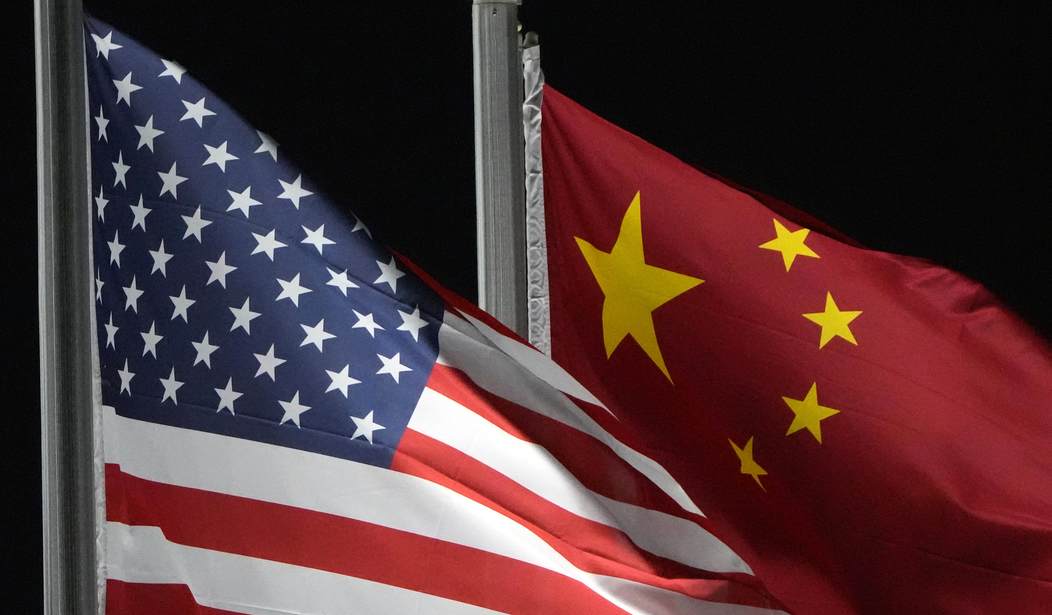
China should not be allowed to buy American farmland. A bipartisan group in Congress has a bill that would put Washington in that position.
The House Select Committee on China is back on offense. On Monday, the committee posted on X urging Congress to pass Republican Committee Chairman John Moolenaar's (MI-02) Protecting U.S. Farmland and Sensitive Sites From Foreign Adversaries Act, pairing it with a striking image of combine harvesters rolling across a field overlaid with the Chinese flag. The warning is blunt: Land purchases can put hostile governments close to military bases, infrastructure, and intelligence facilities.
We must pass Chairman @RepMoolenaar’s bipartisan Protecting U.S. Farmland and Sensitive Sites from Foreign Adversaries Act to close dangerous gaps in federal oversight of foreign land purchases. pic.twitter.com/Urwr7uP8YD
— Select Committee on China (@ChinaSelect) July 21, 2026
The committee also released a video laying out the case in under a minute:
“For years, foreign adversaries have purchased land in the U.S. Collecting intelligence. Legislation is needed to stop the CCP from buying more American farmland.”
Moolenaar introduced H.R. 8700 on May 7 with support from members of both parties. The bill would expand the authority of the Committee on Foreign Investment in the United States, better known as CFIUS, over purchases involving agricultural land and other sensitive real estate.
China is the focus, but the threat isn't hypothetical. Foreign adversaries, including Chinese state-linked entities, have already purchased thousands of acres of American farmland, some of it near active military installations. The legislation also covers buyers connected to Russia, Iran, North Korea, Cuba, and Venezuela, but Beijing is the primary target.
The bill creates a new class of "elevated risk real estate transactions" and flips the burden of proof. Under current law, the government has to build a case against a deal. Under H.R. 8700, any purchase of agricultural land or property near a military base, intelligence facility, port, data center, or power plant would be presumed a national security threat from the start. The buyer, not Washington, would have to prove otherwise.
Moolenaar said the current system leaves too many openings:
“Food security is national security, and we cannot allow foreign adversaries like China to buy up American farmland near our most sensitive military and critical infrastructure sites. This bipartisan legislation closes dangerous loopholes, presumptively bars foreign adversaries from purchasing land, and ensures the United States has the tools to stop these farmland deals before they threaten our security.”
The legislation would also add food security and agricultural biotechnology to the factors CFIUS must consider. The Secretary of Agriculture would participate in reviews involving farmland, agricultural technology, and other parts of the industry. State laws restricting land purchases by foreign adversaries would remain in place.
The bill has sat before three House committees since May with no floor vote. Beijing isn't waiting. Monday's post is the committee making clear it isn't either, and the farmland fight is just one front in a broader offensive against Chinese threats that have already landed inside American borders.
Read More: The Chinese Robots Are Already Here - Congress Is Finally Responding
In May, the committee held a hearing on China-linked criminal networks running industrial-scale fraud from fortified compounds in Cambodia, Burma, and Laos. Americans lost at least $10 billion to those operations in 2024. Witnesses described retired veterans and engineers losing their life savings to cryptocurrency and romance scams, then getting nowhere with local police, the FBI, or the Secret Service.
Moolenaar has also gone after Chinese-made robots already on the American market. His GUARD Act targets companies like Unitree, heavily subsidized by Beijing and documented to have ties to the People's Liberation Army, that are selling robots into U.S. warehouses, hospitals, and homes with no federal restrictions in place. Congress stopped Huawei. It stopped ZTE. It hasn't stopped this yet.
The question now is whether Congress moves before the land does.
Editor's Note: Do you enjoy RedState's conservative reporting that takes on the radical left and woke media? Support our work so that we can continue to bring you the truth.
Join RedState VIP and use promo code FIGHT to receive 60% off your membership.

Join the Conversation
VIP members get the ability to comment on articles.