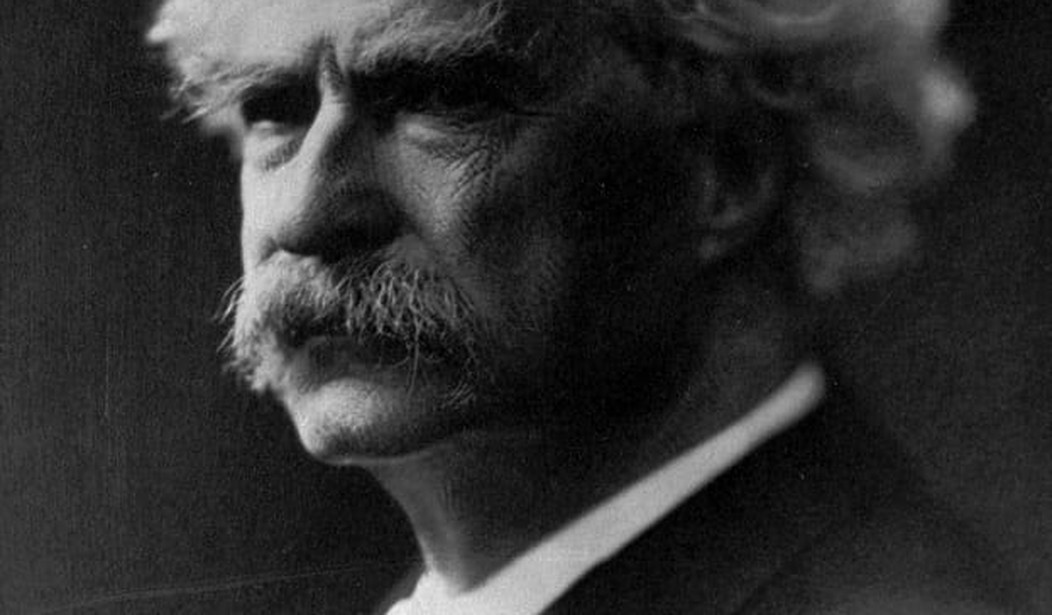

You don't know about the adventures of Huckleberry Finn without you have read a book of that name by a man named Mr. Mark Twain. He told the truth, mainly. There was things which he stretched, but mainly he told the truth. But that ain't no matter.
It's no stretcher to note we recently passed the 141st anniversary of the U.S. publication of ''The Adventures of Huckleberry Finn,'' a vernacular volume of 19th-century teenage mischief and misadventure, combined with serious social satire. That book changed the course of American literature forever, and it ignited the imaginations and enriched the lives of millions of readers, including me.
So much so that a few times in adulthood, I had to visit the book’s St. Petersburg, which was really the agricultural-supply center and riverfront community of Hannibal in northeast Missouri.
There, a little boy named Samuel Clemens passed his childhood, losing his father to pneumonia, making the friends who would populate his later stories, and absorbing the aura, dialect, and culture of 19th-century American life in mid-America. He went to work on the Mississippi River, the mammoth, moving artery of water that has made the Heartland so important in our history.
He went broke out west seeking gold, then tried journalism briefly. He adopted the pen name Mark Twain, a phrase from his riverboat days. Using a weighted rope, a crew member would measure the water’s hidden depth, calling out to the pilot house “Mark,” meaning measure, and “Twain,” meaning the safe depth of two fathoms, or 12 feet.
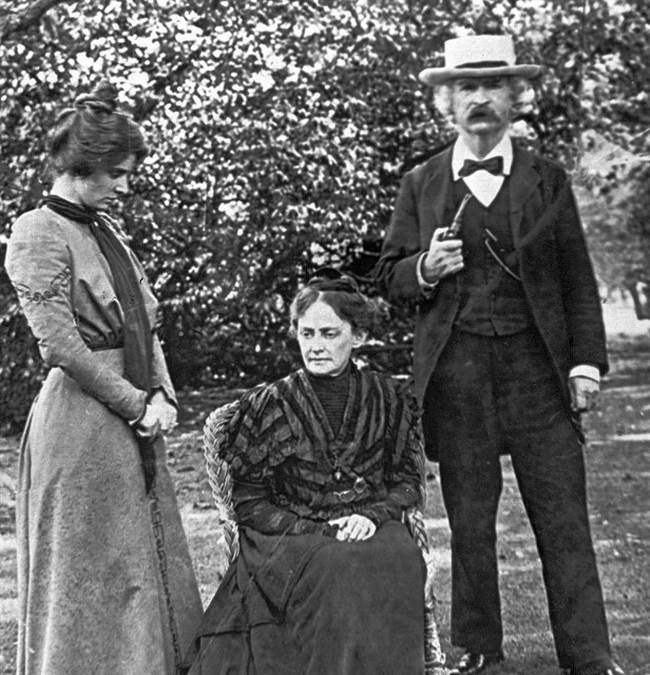
Then, thankfully, the mustachioed Twain in his trademark white-linen suit turned to writing fiction. His first novel was "The Adventures of Tom Sawyer," a huge hit in 1876.
Nine years later came "Huck Finn," which the author saw as a sequel. But it was much more, and would, with "Moby Dick" and "The Scarlet Letter," become a true American literary classic.
It was narrated by Huck himself. He spoke clearly but not in the well-versed, perfectly spoken, drawing-room style that had characterized American literature til then.
Huck laid a clear, honest, satirical, and less than grammatical eye on his everyday and late-at-night world, its crooks, lies, religion, and racism. The pioneering writing style forever freed American authors to shed the traditional cloak of prose propriety copied from Britain for a naked realism that has characterized our literature ever since.
One of those literary icons, Ernest Hemingway, once said, “All modern American literature comes from one book by Mark Twain called ‘Huckleberry Finn,’” adding, “There was nothing before. There has been nothing as good since.”
Like many new things in this country, however, "Huck Finn" was controversial. It was vulgar with poor grammar, they said. “Trash of the veriest sort,” one New England librarian declared. It still can be controversial for imagined reasons that have always escaped me.
More recently, Huck has been attacked for being racist, which means a satirical tale portraying a racist time and place is, well, realistic.
I missed all that. In grade school, I got wrapped up in the characters – Tom and Huck, Aunt Polly, Tom's sweetheart Becky Thatcher, the Duke, Injun Joe, the secret midnight signal of Tom and Huck, the feuding Grangerford and Shepherdson families, Jim, the generous and brave runaway slave.
And, of course, Huck and Jim’s epic raft journey downriver and the things they encountered. I hauled a large armload of scrap lumber to the woods a half-mile from home. There, I built a little raft for my own imaginary river adventure. Never mind it was just a wet spot with perhaps five inches of water.
So, it was a given that I would be drawn later to the Mississippi River many times. My first newspaper job was in Memphis, where I fell in love with the South.
Many days after work, I would go down to the riverbank just beyond Beale Street, sit on the century-old landing of giant cobblestones, and listen to the Mississippi murmur by on its never-ending journey.
I journeyed from the river's trickling Minnesota source, 2,350 meandering miles down to its broad mouth spewing some four million gallons of water into the Gulf every second. I flew over the bayous in a helicopter and walked on the broad mud flats there, where cattle graze at times.
And then, along with my photographer partner, Roger Strauss, I wrote a book about the fascinating people and places along its banks.
I visited the locks in the upper river and cruised with the Coast Guard river patrol, rearranging the buoys that steer shipping as the winding river constantly changes course and depth.
I learned how the flowing Mississippi is actually two rivers on top of one another, each moving at different speeds. Sometimes the twin flows don't get along, like many siblings, producing dangerous surface whirlpools the size of cars.
If you stand in the little park at the very bottom of Illinois in Cairo, you can see the immense Ohio River pouring in from the left and the even mightier Mississippi lumbering by on the right.
One is brownish, the other darker. They do not merge for miles. I had never seen two rivers flowing side-by-side.
As a teen, I spent much of a fascinating day with Hal Holbrook, the acclaimed movie and theater actor who devoted much of his professional life to his magical portrayal of Mark Twain on stage. He took the time to explain his craft to an eager listener, me. That was a previous Memory here.
And, of course, I visited Hannibal, about 100 miles north of St. Louis.
It was an intriguing place, annually attempting to live up to the imagination of millions of book readers over numerous generations. I know of few towns that change the names of local places to match the fictional ones from an author’s imagination.
Every year, the town selected a teen boy and girl to stroll the streets dressed as Tom and Becky to pose with tourists. A quarter-million visitors a year came to town in those days, delivering multiple millions in welcome income to Huck's hometown.
I talked with German high-schoolers making a pilgrimage to the American St. Petersburg they studied in school. I read how Aunt Polly was modeled on Twain’s mother; that his brother Orion was the model for Sid Sawyer. His childhood friend Tom Blankenship became the observant Huck, and died later far away in the Wild West.
Riverboats with their plaintive whistles don’t stop in Hannibal much anymore, though river barges do, picking up grains for the slow, twisting journey down to New Orleans and countries far beyond.
This time of year, crickets and frogs are re-emerging on the town's quiet riverfront. Following a tip one muggy afternoon, I drove west of town a few miles to a deeply shaded grove of cedar trees with birds chirping happily above.
There, in the old Big Creek Cemetery, lies a quiet indication of the impact of Huck and Tom 141 years after they first inhabited the imagination of one man who had lived there.
Among the granite headstones in the tall grass is the final resting place of Laura Hawkins. She was a pretty little girl when she lived across the street from a tousle-haired boy named Sam Clemens.
Many years later, Clemens confided a secret to his childhood pal and silent crush. It was a secret she could not keep in death.
And so today, Laura Hawkins's gravestone carries two names. One is Laura Hawkins, who died 98 years ago.
The other is Becky Thatcher, who lives forever, thanks to her admiring playmate.
This is the 40th in an ongoing series of personal memories. Links to all the others are below.
Malcolm's Memories: Making Oscars & Johnny's Toilet Paper Joke
Malcolm's Memories: She Loved Books So Much She Opened a Little Library
Malcolm's Memories: The Day Bill Buckley Asked My Help; Small Town Etiquette
Behind Johnny's Desk, Before Ford Was POTUS, and a Dog Makes Her Rounds
A Hooker in the House, Whistle War, and Ann Landers' Worst Mistake
More Neat People and a Nuclear Sub I've Met Along the Way
Malcolm's Memories: A Toddler's First Fourth
Malcolm's Memories: Train, Streetcars, and Grandma
The True Story of an Unusual Wolf, a Pioneer in the Wild
That Time I Wore $15K in Cash Into a War Zone
I Fell in Love With the South, Despite That One Scary Afternoon
More Memories: Neat People I've Met Along the Way
Unexpected Thanksgiving Memory, a Live Volcano, and a Moving Torch
The Horrors I Saw at the Three 9/11 Crash Sites Back Then
The Glorious Nights When I Had Paris All to Myself
Inside Political Conventions - at Least the Ones I Attended
Political Assassination Attempts I Have Known
The Story a Black Rock Told Me on a Montana Mountain
That Time I Sent a Message in a Bottle Across the Ocean...and Got a Reply!
As the RMS Titanic Sank, a Father Told His Little Boy, 'See You Later.' But Then...
Things My Father Said: 'Here, It's Not Loaded'
The Terrifyingly Wonderful Day I Drove an Indy Car
When I Went on Henry Kissinger's Honeymoon
When Grandma Arrived for That Holiday Visit
Practicing Journalism the Old-Fashioned Way
When Hal Holbrook Took a Day to Tutor a Teen on Art
The Night I Met Saturn That Changed My Life
High School Was Hard for Me, Until That One Evening
When Dad Died, He left a Haunting Message That Reemerged Just Now
My Father's Sly Trick About Smoking That Saved My Life
His Name Was Edgar. Not Ed. Not Eddie. But Edgar.
My Encounters With Famous People and Someone Else
The July 4th I Saw More Fireworks Than Anyone Ever
How One Dad Taught His Little Boy the Alphabet Before TV - and What Happened Then
Muhammad Ali Was Naked When We Met