



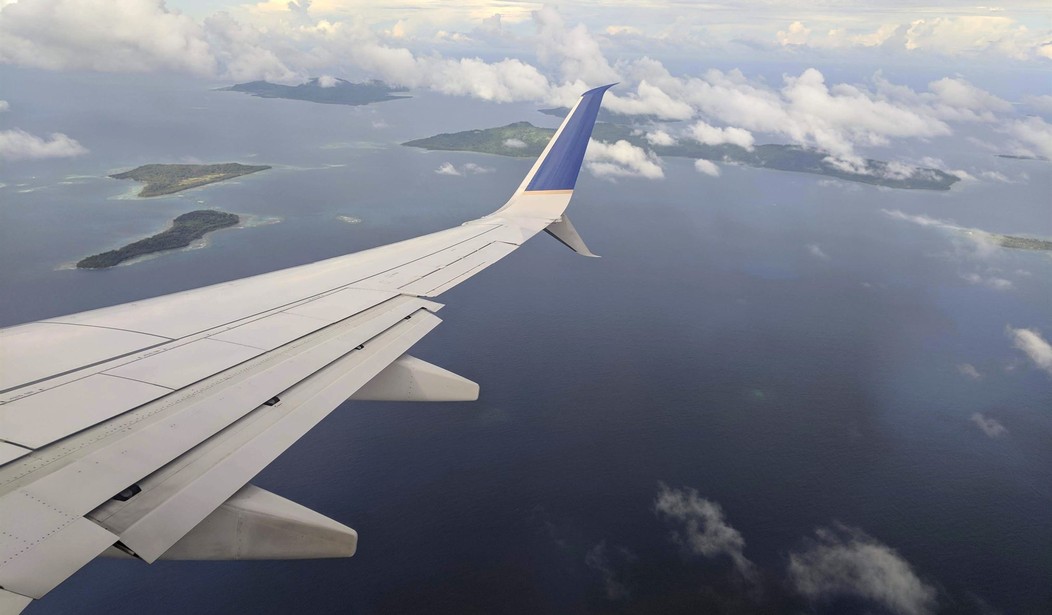
As of Saturday morning, the tangled web a communications shutdown hath woven over much of the United States is being unraveled. In a statement on X, the Federal Aviation Administration assured Americans that things were returning to normal.
We appreciate your continued patience as operations return to normal. Please continue to check your flight status with your airline and get real-time airport updates at https://t.co/9HQhAFJBaW.
— The FAA ✈️ (@FAANews) November 14, 2026
FAA Administrator Bryan Bedford also assures us that air travel will have returned to normal by the end of day, Sunday.
U.S. air travel should be fully recovered from the longest nationwide ground stop in 25 years by the end of Sunday, FAA Administrator Bryan Bedford said Saturday.
Bedford said the flights “will still have delays and cancellations” on Saturday but promised that the “worst is behind us.”
His comments came as airlines across the U.S. worked to recover from a ground stoppage that lasted four hours, stranding hundreds of thousands of passengers.
New technology being added to the nation’s air traffic control system overloaded antiquated equipment and caused “intermittent” communications and radar gaps, leading to the flight shutdown of more than four hours, Trump administration officials said.
This is work that has been going on for some time, in general upgrading and modernizing the FAA's systems, but this is the first such major disruption in almost four years.
Planes were taking flight and landing Saturday, Secretary of Transportation Sean Duffy said. But the effects could be felt for days. Officials say the system will likely return to normal in time to handle the Thanksgiving travel rush.
The nationwide stop was the first since January 2023, when another key Federal Aviation Administration computer system that sends notices to pilots malfunctioned, and the second since the Sept. 11, 2001, attacks.
Andrew Charlton, an aviation consultant, said Friday’s stoppage affected about a quarter of the 45,000 flights in the U.S. each day.
“The knock-on effect of that is incredible,” said Charlton, managing director of Aviation Advocacy. “The aircraft doesn’t just fly from A to B and back to B and then stop. It then moves onto C and then over to E and around and around and around. It is, of course, exacerbated if you’re talking about long-haul flights, international flights over the Atlantic or over the Pacific.”
With the expected Thanksgiving travel rush only days away, this is a matter of serious concern for a lot of Americans. The continental air traffic system seems to be a massive house of cards, wherein one regional disruption, like a storm, can have far-reaching effects. Those of us who do or did travel as an essential part of earning a living are all too familiar with how one local event can snarl air traffic for hours or days; this was, of course, a nationwide event. The FAA administrator assures us that air travel will be back to normal for the start of the business week, but in just a few more days, the systems that are being upgraded are in for another serious stress test.
This probably isn't over yet. Stay tuned.
Editor's Note: Do you enjoy RedState's conservative reporting that takes on the radical Left and woke media? Support our work so that we can continue to bring you the truth.
Join RedState VIP and use promo code FIGHT to receive 60% off your membership.


Join the Conversation
VIP members get the ability to comment on articles.