



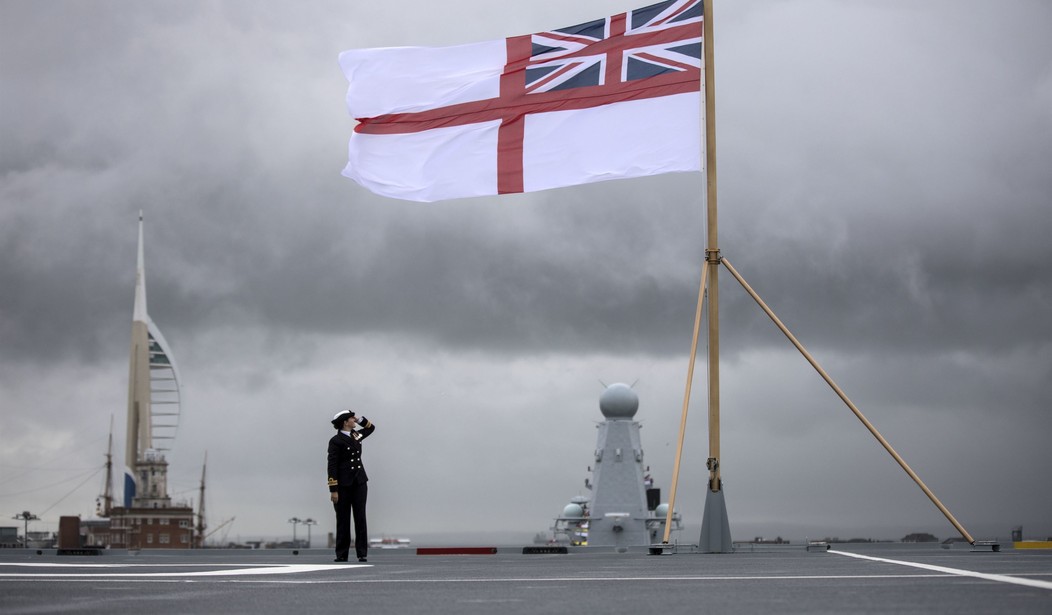
This legacy of slavery that so many people keep going on about is one of the more seriously overblown issues in public discourse today, in the developed world. This is so for two reasons: It's purely a matter of history, as there are no people in the Western world who have been enslaved or who have owned slaves; and most of the people who get the most worked up over this issue don't know a lot about the history. They want to blame the nations of Europe and North America for the problem; they like to shout about "colonialism," when it was in fact the nations of the Western world that put a stop to much of the international slave trade.
In fact, it was Arab slave traders that kick-started the trade and who kept it going as long as they could. It was the British Empire who did a great deal in the early 19th century to put a stop to the practice, even though they don't get much credit for it.
Except, that is, for the African nation of Malawi. They get it.
Across Africa, Britain has been called an oppressor and confronted with demands for slavery reparations.
But one nation is celebrating the British Empire as a liberator.
Malawi suffered from the brutality of Arab slavery, with its people captured by rival tribes and shipped to the Middle East, part of a 1,200-year-long traffic in human commodities that is often overshadowed by Europe’s transatlantic trade.
The country wants to tell the world about this forgotten slave trade – and how Britain ran a determined campaign to end it.
We have, of course, been over and over the "reparations" horse squeeze, time and again. We are none of us to blame for any misdeeds of our ancestors; nor are we entitled in any way for the suffering of our ancestors. This is an argument that should never have begun.
But back in the early 19th century, this was a very real issue, and the British Empire and the Royal Navy did a lot to stamp the practice out. Malawi, at least, understands that, and they see the British Empire not as colonizers, but as liberators.
Malawi’s government is overseeing plans to build a museum dedicated to slavery, preserve mosques and markets linked to the trade, and have them inscribed as World Heritage sites to “send a message” internationally about this neglected chapter of history.
Through its department of museums, Malawi will also celebrate the British Empire by conserving ruined forts built by colonial forces to protect Africans from marauding slavers.
“Britain was not a coloniser; it was a liberator,” said Moses Mkumpha, who is working on the government-backed project to preserve colonial buildings.
“The monuments that we have, that we conserve, they are linked with the British. If you look at how the slave trade was ended in Malawi, we owe that to the British.”
That's an amazingly astute observation, and plenty of people and even nations would do well to listen to Malawi on this topic. In fact, plenty of people right here in the United States could do with a few history lessons.
The fact is, the exploration of much of the globe by the Western nations did them far more good than harm. Without the influence of the Western world, most of Africa would very likely not have advanced to even modern Third World status, and slavery would still be widely practiced. In fact, if you want to see a place today where slavery is still practiced today, look at Africa. It was the Western world, in large part the British Empire, that first outlawed the practice in their own country then set forth to stamp out the trade on the world's oceans. And, yes, our study of history should include that, even though our educational establishments seem to harbor all the wrong notions about how all this happened.
For that matter, we had a pretty significant fight over the practice here in the United States before we made slavery illegal from sea to shining sea.
Yes, the people are all gone now. But we should remember what actually happened, the real history of who did what — lest we be doomed to repeat it. Malawi gets it.
Editor's Note: Do you enjoy RedState's conservative reporting that takes on the radical Left and woke media? Support our work so that we can continue to bring you the truth.
Join RedState VIP and use promo code FIGHT to receive 60% off your membership.

Join the Conversation
VIP members get the ability to comment on articles.