
I write these words on Tuesday, the 22nd of September, which day is remarkable for any number of reasons. The news of the day is with us as always. Events of politics command our attention, especially in the news and commentary business. There are always things to interest us and to make demands on our time. Family matters, jobs, economic decisions, all that.
This day is remarkable as well for another, far older reason, one that has always and still does happen regardless of any human interests or priorities: this day is the day of the fall equinox, the day when the sun crosses the celestial equator moving south, the day when the days and nights are equal in length, the day when summer ends and we must start to look forward to winter.
The Lowell Observatory describes this day thusly:
An equinox is the moment the Sun crosses directly over the celestial equator: an imaginary projection of Earth’s equator into space. Equinoxes occur twice a year, and on these days, daylight and nighttime hours are approximately equal in length. In most Northern Hemisphere cultures, the equinoxes mark the start of spring and fall.
The fall equinox (also called the September equinox or autumnal equinox) occurs around September 20 each year, with slight variation due to the Gregorian calendar’s leap year cycle. In 2026, the precise moment the Sun crosses the celestial equator falls on Tuesday, September 22, at 5:05pm MST.
That's the technical definition. We have more human things to mark this day.
When I was a boy I always looked forward to the fall, which was frequently welcomed with the smell of stewed squirrels. I learned a lot from a boyhood hunting squirrels; the nimble gray squirrels of the big timber on the hills, the wily fox squirrels of the creek bottoms. Wild squirrels outside of towns, squirrels that are hunted, are cautious and have keen senses; hunting them taught me patience, taught me how to move quietly in the woods, how to set up and execute a stalk. As fall progressed, on more days we left our fishing gear in the closet and picked up a .22 rifle or a shotgun, first for squirrels, later for grouse, rabbits, and in the agricultural lands to the south, pheasants and Hungarian partridge. Then, later, in December, in the last few weeks before the solstice marked the official start of winter, it was time to hunt the big farm-country white-tailed deer. My Mom happily cooked everything I brought in.
In those days and now, fall was when the bloodwind called, when it was time to hunt. But mostly, this is the time when summer ends, when we ready ourselves for the cold and dark to come.
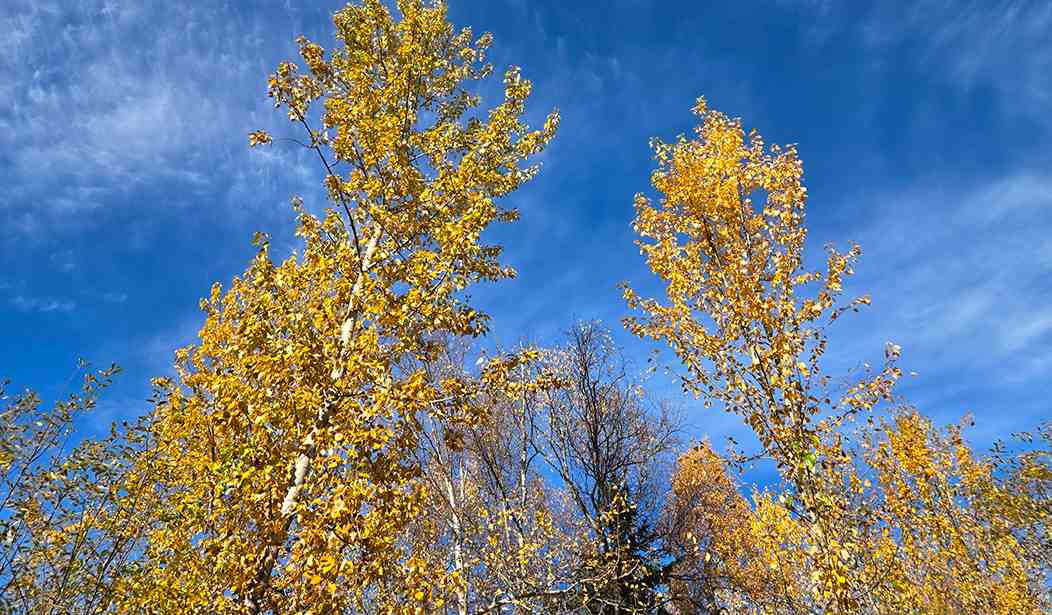
Here in the Great Land, the leaves have already turned and are starting to drop. The summer birds are gone. The chickadees, nuthatches, woodpeckers and gray jays are burning through the contents of our feeders, fattening up and storing seed away for the coming cold and dark. The bears are harvesting salmon and, indeed, eating all they can, to fatten up for their winter sleep. The moose calves are growing, from gangly calves to gangly yearlings, and it's sad to reflect that half of them won't make it through their first winter.
For the last few days we have had more guests; a spruce grouse calmly eating needles in the black spruce behind the office while a squirrel scolded it, a pair of juvenile mallard drakes gleaning seed under our big sunflower seed feeder, and a sharp-shinned hawk, looking to score a meal from one of the other birds. The hawk in particular is interesting to watch. Accipiters like this feed mostly on small birds, and they are quick and agile flyers, biological air-to-air missiles. But the robins are gone, the juncos are gone, the swallows are gone, and the sandhill cranes have formed up into flocks and flown away south. Our raspberry harvest is in and frozen, waiting to be used to make preserves, raspberry wine, and scones.
In a couple of weeks, I have planned a few days in the Interior, up around Delta Junction, where there are reportedly good numbers of spruce, ruffed and sharptailed grouse, along with snowshoe hares. That, too, is part of the fall, and part I have always looked forward to.
About this season, one of my favorite outdoor authors, Hal Borland, wrote:
Autumn is the eternal corrective. It is ripeness and color and a time of maturity; but it is also breadth, and depth, and distance. What man can stand with autumn on a hilltop and fail to see the span of his world and the meaning of the rolling hills that reach to the far horizon?
This wheel never stops turning. Now, it's fall. Soon enough it will be winter, when Alaska pulls a blanket of white over itself and, like the bears, sleeps until spring. But fall is also a promise; it's a promise that winter will come, but its arrival is also a promise that, just as even the weariest river winds somewhere safe to sea, every winter turns soon enough to spring, to the return of the sun, to the return of the summer green, of clear skies and warm days.
That's the endless promise of the fall equinox.