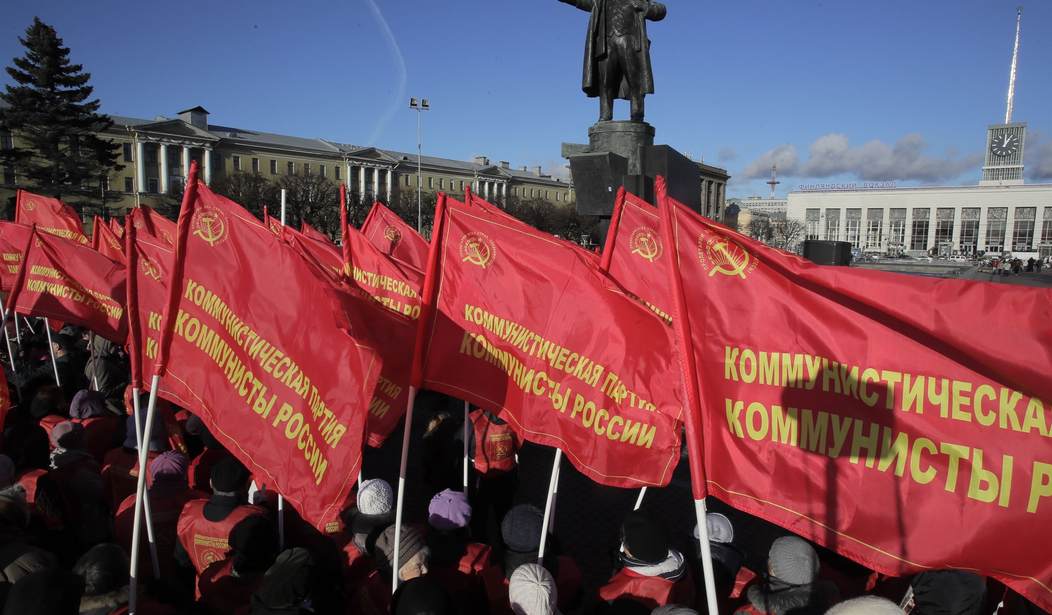

As we gather, around the country, to celebrate the 250th anniversary of American independence, we are reminded that there are people right here, in these United States, who are trying to sell the people on the notion of socialism, or as they call it now, "democratic socialism," or, to put it plainly, communism. These people - commies - have even won some elections, a few local positions, a few seats in the House of Representatives, and, of course, the Mayor of New York.
They like to proclaim how great life would be under their enlightened rule; of course, anyone conversant in the history of communism knows better. Even so, it's worth taking a look at life under communism on the national level - what was it really like?
So, to start with, since it's the height of the summer vacation season, let's take a look at what vacations were like in the Soviet Union.
The Soviet Union introduced paid time off well before other industrialized countries. France did not bestow this right until 1936; Great Britain followed two years later. Last was the United States, where PTO remained a luxury reserved for the middle and upper class until the end of the Second World War and where it remains controversial.
However, what truly set the Soviet Union apart in its approach to paid time off was that it also provided ways for workers to fill up that time and with whom to do so. It encouraged workers to vacation with groups of relative strangers as opposed to their friends and families. They were all part of a collective and that umbrella united them. In the Soviet Union, after all, the collective—not the family—was the most important social unit. Under Stalin, the state constructed summer resorts and tourism bases throughout the region. Each year, a limited number of accommodations at these locations were offered at a reduced cost or—in some cases—free of charge to one in every ten Soviet workers.
Well, that doesn't sound so bad, at least, until one remembers that when the State "encouraged" you to do something, like spend your vacation with a bunch of strangers, that they were patting you on the back with one hand and holding a 9mm persuader in the other. Note the reasoning behind that: The collective, the State, took precedence over family. Vacations were exercises to build worker solidarity.
The State dictated what vacation you took, and what you did - and these vacations were designed, not to provide you with a memorable experience, but to recharge your fading communist batteries so you could get back to work:
Broadly speaking there were two types of Soviet vacations: one where people stayed in a single place, and one where they moved around. The former took place at the aforementioned resorts, also referred to as sanatoriums or rest homes. Designed to refresh and reenergize workers for upcoming Five-Year-Plans, these resorts subjected their guests to daily wellness procedures, such as massages and mineral baths. They went on walks, played tennis or volleyball, and ate special diets. Resort staff imposed obligatory “dead hour” naps during the day, and offered movies, live concerts, plays, and dancing in the evening.
Nightly entertainment aside, Soviet resorts shared little with their Western counterparts. While drunks roamed Moscow, they were conspicuously absent from the tourist town of Yalta, where, Whetten says, “resting is a solemn business. Restful it is, but fun it is not!”
Even your vacations were controlled. And get that line: Restful it is, but fun it is not.
Read More: It's Socialism 'Til It's Communism
Inside the DSA: Over Half of Leaders Now Identify As Communists
In Soviet Russia, vacations controlled you.
It's worse. The quality of your vacations depended a lot on how hard you worked, and maybe rather more so, what connections you had.
Now, this started to change, as the Soviet Union was dragged, kicking and screaming, into the modern world. The Soviet Union may have been early in the game in offering workers paid time off, but the free world, including our own United States, set the example for letting people choose for themselves what vacations looked like - whether they would go to the beach, or go camping, or go visit Aunt Mabel in Albuquerque. As the Iron Curtain started to crack, even the sheltered people of the Soviet Union started becoming aware of that difference and demanding more say in their leisure time. That did have some effect; even the Politburo, at some level, had to realize that any government only exists with the consent of the governed, and that peasant revolts often succeed because there are just so many peasants. That's not what ended up happening to the Soviet Union, but that doddering superpower did come apart, although it's not at all clear that life in Russia today has improved all that much.
This is the pattern, though, and even then, only if the peasants - communist systems don't have citizens, only serfs - are allowed any leisure time at all. And if you think that can't happen, I'd encourage you to look at North Korea.
And why does this matter? Because this is what they would make life here look like. Never forget that. Especially on election day.