








A Pennsylvania judge just found out the hard way that there are, in fact, consequences for being overtly partisan.
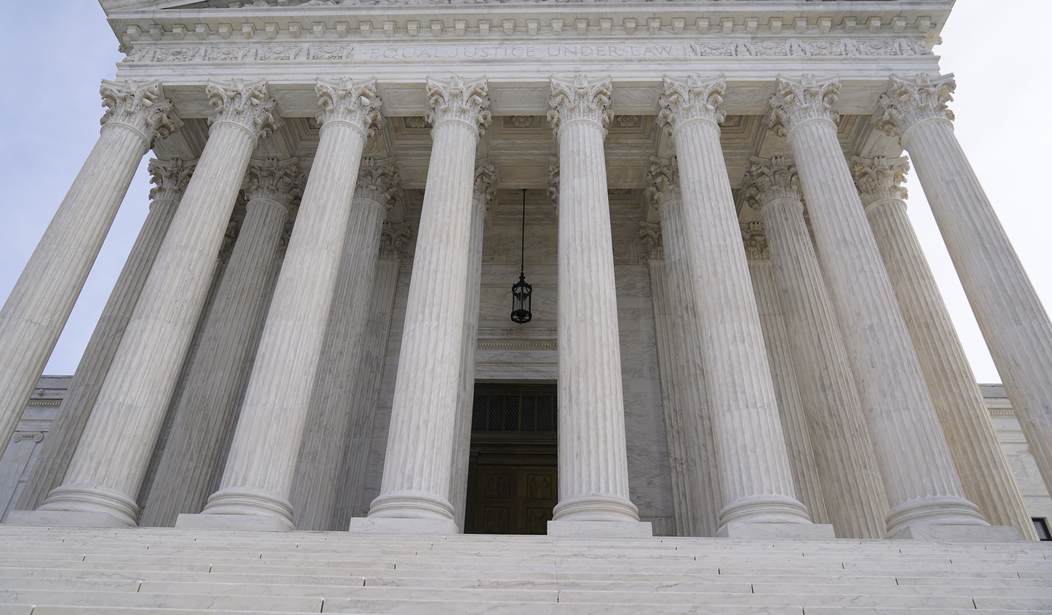
On Monday, the U.S. Supreme Court (SCOTUS) denied former Judge Mark Cohen's petition for certiorari, leaving in place a 2024 ruling by the Pennsylvania Supreme Court that upheld his suspension over a years-long stream of partisan Facebook posts.
Supreme Court won’t reinstate Pennsylvania judge suspended for partisan Facebook posts https://t.co/4CKXhPecVm
— The Hill (@thehill) October 5, 2026
Cohen wasn't particularly shy about letting his feelings be known on his page, posting everything from his unabashed praise of Pennsylvania's Democrat governor, Josh Shapiro, to his thoughts on Tennessee restricting Critical Race Theory (CRT) being taught in state classrooms (“Shameless retrogression!”).
In short, his public postings read like Democrat Party talking points.
Cohen apparently started his Facebook page back in 2007 when he was serving in the Pennsylvania House of Representatives, supposedly “to get people involved in the Democratic Party” and to inform his constituents about important issues.
A politician posting political messages on Facebook isn't a problem, but the expectations changed considerably when Cohen was elected to the Philadelphia Court of Common Pleas in 2017 and took office in January 2018. He was now expected to be impartial – something he seemed unwilling to be on his Facebook page.
A citizen eventually brought the page to the attention of Cohen's new bosses, who advised him to stop. He told them he'd seek the advice of an ethics attorney, but continued to post despite the warning. This provoked one of his superiors to refer him to the Judicial Conduct Board, which promptly began an investigation.
Among the posts that got Cohen into trouble were ones that praised Joe Biden, supported Josh Shapiro and John Fetterman, defended Democratic policies, advocated for unions, attacked Republican-backed policies, and provided commentary on things like abortion, gun control, student-loan forgiveness and, of course, January 6.
The Pennsylvania Court of Judicial Discipline suspended Cohen for the rest of his term and without pay in 2024. That decision was upheld in 2026 by the highest court in the Commonwealth.
When asked about the continued partisan nature of his posts, Cohen later testified that his purpose was to "engage people in discussion," which "enable[d him] to learn things and enable[d] others to learn things," which he considered a "positive good."
The volume of Cohen's posting was so great that the Pennsylvania Supreme Court would eventually conclude that his Facebook activity made him appear "little more than a spokesperson for the Democratic Party." Justice David Wecht’s concurrence actually described Cohen’s conduct as “partisan punditry and running online commentary on politics” that “poured forth continually from the keyboard."
Which brings us to SCOTUS.
“This Court’s guidance is sorely needed,” Cohen's attorneys wrote in his petition to the U.S. Supreme Court. “If allowed to stand, the Cohen decision will have a chilling effect on judicial speech, invite political interference in the judicial branch, undermine the rule of law, and have the perverse effect of impugning the integrity of the judiciary.”
This failed to sway the justices, who denied cert and sent the now-former judge on his way, leaving him to figure out how to pay for retirement after his pensions were stripped away.
He really has no one to blame but himself – if Cohen wanted to keep posting like a Democrat activist, he probably should've stuck with being one.
Editor’s Note: Every single day, here at RedState, we stand up and FIGHT, FIGHT, FIGHT against the radical Left and deliver the conservative reporting our readers deserve.
Help us continue to tell the truth about the Trump administration and its successes. Join RedState VIP and use promo code FIGHT to receive 60% off your membership.

Join the Conversation
VIP members get the ability to comment on articles.