
The Cornell 7 rape case is falling apart.
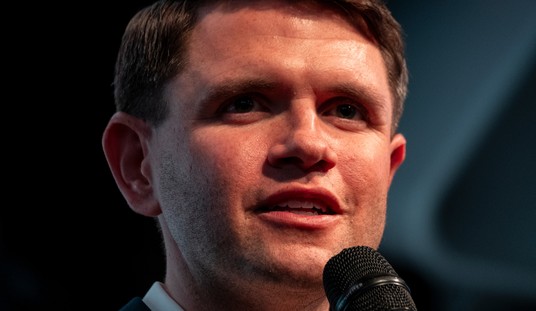
The release of a statement from the District Attorney that Gov. Kathy Hochul impetuously removed from the investigation, Matthew Van Houten, reveals in Jane Doe’s own words why the criminal case was not brought at the time of the shocking incident.
The D.A. statement and a series of recently divulged text messages between Jane Doe and a defendant are doing tremendous damage to the media’s cherry-picked narrative about the Cornell 7 rape case.
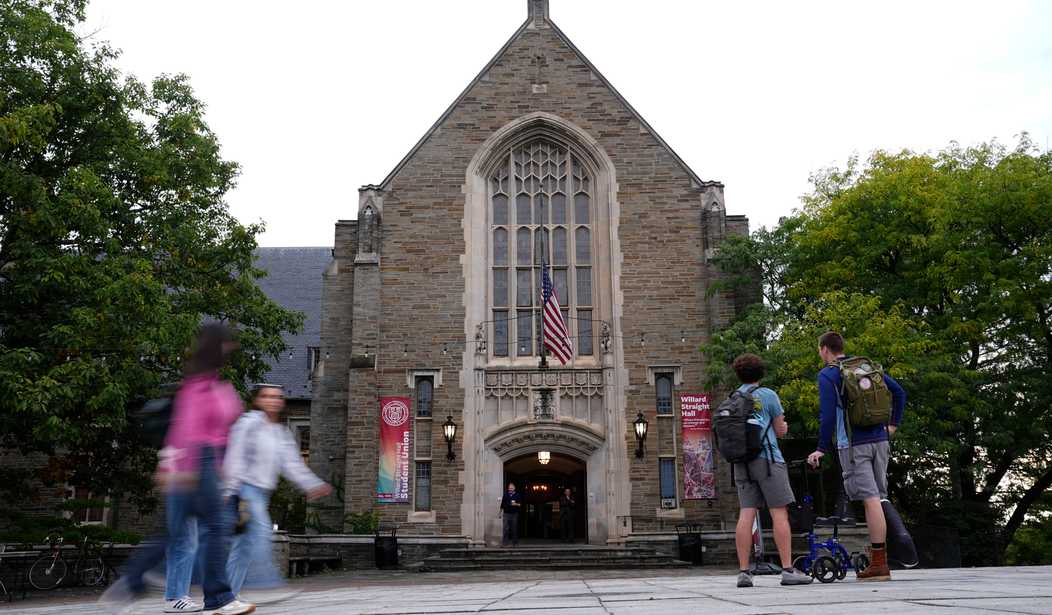
Here is a very brief overview of how we got here. The underlying incident allegedly occurred at Cornell's Chi Phi fraternity house in October 2024. Doe subsequently accused seven men of sexually assaulting her, alleging that she had been drugged and was unable to consent.
The Tompkins County District Attorney's Office declined to bring criminal charges after reviewing the original investigation, citing insufficient evidence. Doe later filed a civil lawsuit against Cornell, the fraternity and seven men, bringing national attention to the case.
Newly publicized text messages from the woman at the center of the case are raising serious questions about the narrative that helped turn the allegations into a firestorm.
Another Cornell Case Leak - “Our Body, Our Choice” I’m not sure “another leak” is the best way to describe it when portions of these messages have already been reported. Maybe the full leak has finally surfaced? 🤔 TMZ has now published a longer text exchange between Newell and Jane Doe. If other news outlets had the full exchange, why didn't they publish it? In the messages, Newell apologizes for how things got out of hand, calls Doe an “amazing person,” and says he genuinely hopes she isn't catching as much heat as they are. Doe responds that she appreciates his apology, acknowledges taking heat from her sorority sisters, including two who apparently couldn't stop talking about her. She seems to consider the gossip unsurprising. She also refers to the encounter as a “gangbang,” says they shouldn't feel ashamed, and declares, “our body our choice asf.” These messages could create significant challenges for the civil case and a future criminal case. What will we see next?
— Bridget Ayers (@BridgetAyers) October 8, 2026
And the conduct of two major news organizations, CBS New York and The New York Times, warrants major scrutiny.
Both left-wing outlets reported on a text exchange between the woman, identified in court proceedings as Jane Doe, and one of the men she later accused of rape.
Both provided excerpts in which she described her memories as clouded and acknowledged that she had enjoyed being with two of the men.
On September 29, CBS New York investigative reporter Mahsa Saeidi published an article titled "Exclusive text messages reveal new details in alleged gang rape at Cornell University."
The outlet said it had obtained screenshots of messages exchanged between Doe and defendant Jonathan Newell two days after the alleged assault.
CBS reported that Newell apologized for how the encounter unfolded, saying he and another man had been too intoxicated to stop things before they got out of control.
Doe's response, according to CBS, acknowledged that her memory was cloudy and that those involved had been heavily intoxicated.
She also wrote, "non(e) of the sexual stuff was illegal."
The report noted that Doe said she enjoyed being with Newell and another man. It also quoted a later suggestion that they get together again, "but like leave out the extra 5 billion men and ketamine."
What neither included were “problematic” statements in that same text exchange that do not comport with the activist left’s narrative that the Cornell 7 accused should be presumed to be rapists.
As The Federalist's Brianna Lyman reported Friday, those omitted passages included Doe describing the encounter as a "gamgbang" [sic] and declaring, "our body our choice."
On October 8, TMZ published the additional screenshots showing what it reported was the fuller exchange.
The message included this passage:
aw jonathan i really appreciate this text. my memories super clouded too. i think we were all way to [redacted] drunk and high. i’m getting a little heat (pi phi girls ([redacted] and [redacted]) can’t get my name out of their mouth)) but that’s to be expected. but at the end of the day non[e] of the sexual stuff was illegal and honestly I really liked being w u and Matt. so anything anyone has to say about the gamgbang is out of their jurisdiction. I don’t think we should feel any shame for the part. our body our choice asf…
This is a message reportedly written just two days after the incident, in which Doe characterized the sexual activity as lawful, expressed affection for two participants and defended the encounter against criticism from other students.
Lyman's reporting for The Federalist is especially damaging to CBS because she obtained an acknowledgment from the network about what its reporter had reviewed.
"Our reporter reviewed the full text exchange before publishing, and our editorial decisions reflected that review," a CBS New York spokeswoman told The Federalist.
When asked why the omitted passages were not included, the spokeswoman added: "We also included her attorney’s explanation and gave our audience the context necessary to understand why some of those messages may be disputed."
CBS had the complete exchange, according to its own spokeswoman, but chose not to publish some of the statements that most directly complicated the allegations.
Readers received Doe's acknowledgment that the sexual activity was not illegal, along with her attorney's explanation that she had been traumatized and in denial. They did not receive her additional language defending the encounter against outside criticism.
The New York Times faces similar questions, although the evidence of what its reporters possessed is less conclusive. In its October 1 report, the Times quoted Doe's response to Newell: "At the end of the day non of the sexual stuff was illegal and honestly i really liked being w u and matt."
Yet the longer message published by TMZ continued with the references to the "gamgbang" [sic] and "our body our choice."
Journalist Emily Jashinsky flagged the omission on X, noting that the Times appeared to have relied on documents from Cornell's Title IX proceedings.
"This is going to raise questions for NYT," Jashinsky wrote.
See also @JSweetLI's note about CBS New York here: https://t.co/9tLNfvrnhT https://t.co/FwJGfuRXEz
— Emily Jashinsky (@emilyjashinsky) October 8, 2026
She also cautioned that it was unclear whether the Times deliberately omitted the additional language or had received only partial excerpts. The Times did not respond to The Federalist's questions about its reporting, according to Lyman.
The question is no longer simply what happened at Cornell. It is why major news organizations presented readers with selected excerpts while withholding other statements that could have changed the public’s understanding of the allegations.
Regardless of the information available to the Times, the stories illustrate the danger of publishing fragments of disputed evidence in a case where the public has not seen the complete investigative record.
Here are the last two pages of Jane Doe’s sworn statement to Cornell Police. “[REDACTED] were asking me to have sex so many times that I finally gave in. To me, that felt like coercion.” #CornellSeven https://t.co/1TRMrwiZXd
— Lauren Conlin (@conlin_lauren) October 11, 2026
Doe's attorney, Thomas Giuffra, has offered an explanation for the text messages. He told CBS that his client was traumatized and in denial after the encounter. He said she was trying to understand what happened and believed that taking an aggressive tone with Newell would make it more difficult to obtain answers.
That explanation is worth consideration. Cornell's disciplinary proceedings also produced a finding against Newell. According to TMZ, Doe's attorney said the university expelled him after determining that he had engaged in sexual activity without obtaining affirmative consent.
A person familiar with the panel's decision reportedly confirmed that the finding involved the absence of affirmative consent. Thus, there is already some evidence of potential wrongdoing in the case. Whether or not that means there is ample evidence for criminal charges is another matter.
It is critical to consider why the District Attorney did not initially pursue criminal charges. Tompkins County District Attorney Matthew Van Houten issued a public statement on September 28 explaining why his office had initially declined to pursue charges.
His explanation should be evaluated against the evidence available at the time, including the original police materials, subsequent interviews and any information that was not initially forwarded to prosecutors. But his statement is compelling:
Jane Doe’s sworn statement in November of 2024 did not allege that she was drugged against her will or gang raped. On the contrary, Jane Doe’s statement described her participation in drug use and sexual conduct as voluntary, conscious, and consensual. My office obviously did not and could not have based our November 2024 decision on the allegations in a civil lawsuit that would not be filed until nearly two years later. Furthermore, I have never been contacted by Jane Doe’s attorneys. Not to inform me the original statement was inaccurate and not to ask me to reconsider our decision. Rather, I reached out to Jane Doe’s attorneys after the lawsuit was filed to understand the discrepancy between the original statement and the lawsuit’s allegations and the proper path forward in light of the lawsuit’s allegations.
Then the D.A. makes a statement that everyone involved should agree with.
While the behavior of certain Chi Phi fraternity members was without question disgusting and morally reprehensible, the foundation of the criminal justice system is that criminal prosecutions must be based upon evidence and not emotion.
The full statement is available through the Tompkins County District Attorney's Office.
Here are the last two pages of Jane Doe’s sworn statement to Cornell Police. “[REDACTED] were asking me to have sex so many times that I finally gave in. To me, that felt like coercion.” #CornellSeven https://t.co/1TRMrwiZXd
— Lauren Conlin (@conlin_lauren) October 11, 2026
While the activist media and Democrat politicians have acted as if the men who sexually engaged with Jane Doe are criminals, the contention that Jane Doe is a sexual assault “survivor” is still being investigated.
That is despite the assertions by New York Attorney General Letitia James, who has bafflingly been selected by Gov. Hochul to lead the state’s investigation.
RedState warned when Hochul appointed James that placing such a polarizing figure at the center of the investigation would undermine public confidence.
On September 28, James publicly expressed support for Doe.
What this young woman has been forced to endure is horrific and unacceptable. I’m holding her in my heart and in my prayers. To her, and to all survivors: you’re not alone. We stand with you. https://t.co/az4ViQwgy1
— NY AG James (@NewYorkStateAG) September 28, 2026
"What this young woman has been forced to endure is horrific and unacceptable," James wrote. "I’m holding her in my heart and in my prayers."
"To her, and to all survivors: you’re not alone," she added. "We stand with you."
As RedState previously reported, defendant Gillio Lopes subsequently filed an Article 78 challenge seeking to overturn James' appointment, arguing that her public comments demonstrated bias toward Doe.
Then there is Kathy Hochul. She appointed James after publicly criticizing the original investigation and questioning how Cornell police handled Doe's allegations.
Another New York politician jumped into the fray. Rep. Alexandria Ocasio-Cortez made sweeping accusations about the defendants in the civil lawsuit.
AOC makes WILD claims on Cornell 7: “Seven men drugged and gang raped a 20-year-old woman. They lured her into a frat house, drugged her with ketamine, and took turns gang raping her for seven hours.” https://t.co/rtraTKkt81
— TheBlaze (@theblaze) October 1, 2026
"Seven men drugged and gang raped a 20-year-old woman. They lured her into a frat house, drugged her with ketamine, and took turns gang raping her for seven hours."
This is the kind of loaded verbiage you get from the activist left that confuses “the patriarchy” with actual human beings who have not been found guilty of a crime.
In the eyes of the radical left, men are “guilty” of being males and assumed to be predatory.
Thus, we get a politically charged conversation in the messy “court” of public opinion: on one side, the activist left characterizes the men as “predators”; on the reactionary side, we get those who dismiss Jane Doe as a “slut"; thus, she must be a false accuser who was simply upset about her sullied public reputation.
Both assumptions are wrong-headed. Neither hot-iron brand on the human beings involved in the case are appropriate when delving into a civil lawsuit or a potential criminal case, as they tend to “file away” facts that can frustrate emotionally based narratives and shut off empathy for everyone involved.
At the end of the day, we may be talking about a “victim” who had a very bad day, and who compounded it with bad judgment. This person may have found others with similarly bad judgment, and while they were severely impaired due to illegal behavior such as drug usage, they engaged in morally reprehensible behavior.
However, we don’t know if anyone is criminally culpable or civilly liable. Thus, it is best to save the political arguments about actual policies, and not to politicize a legal case that is still unresolved, given the tremendous ramifications for the parties involved.
This is simply trying to look out for everyone’s best interest in society; thus, it is why we should not weaponize our courts for partisan agendas.
Apparently, that is asking a bit too much of radical activists.