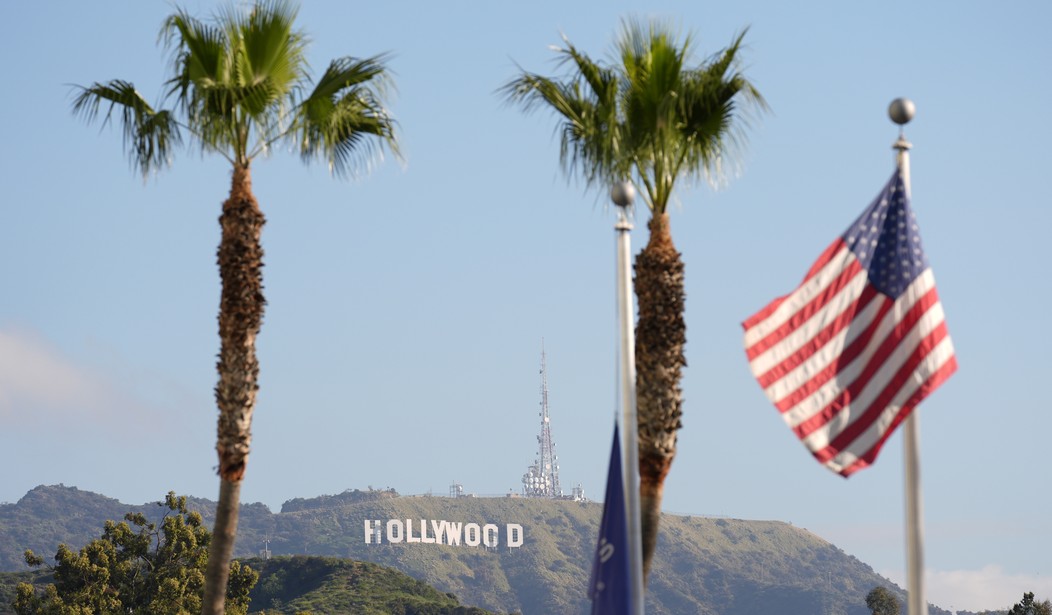

Paramount Skydance recently reached a groundbreaking settlement with a dozen blue states, led by California, that cleared the way for its acquisition and merger with Warner Bros. Discovery.
Buried deep in the settlement is a provision about the future of CNN and CBS News that is causing a lot of politics observers to shake their heads.
We've seen this story all before — and it is enough to make one wonder if one seemingly innocuous clause was really what the lawsuit was all about.
When it comes to political power in America, the primary source of the Democrat Party's strength is its absolute domination of the culture.
Whether it is the education system from pre-school through grad school, the creative arts, and the mass media as a whole, the radical left marches in lockstep.
If you saw it in the American media, the odds are pretty good that a radical leftist was behind it. And the same applies to the news media.
Now that the Paramount/Warner Bros. merger has gotten the greenlight, we are likely to hear a cease to the caterwauling about this 'existential threat' to a massive power base for the hard left.
As my RedState colleague Ward Clark reported Monday, the merger can now move ahead after months of legal wrangling over a transaction valued at roughly $111 billion. Paramount had also been staring at a $7 million-per-day ticking fee beginning Oct. 1 if the transaction remained unfinished.
The settlement is sprawling. Paramount agreed to release at least 30 movies annually during the first two years, increasing that to 32 during the following three. It committed at least $1.5 billion in additional U.S. film production over five years and another $47.5 million for workers displaced by the merger. Miss the annual movie target, and Paramount faces a $30 million penalty for every film it comes up short, along with a requirement to divest Miramax.
California Attorney General Rob Bonta, who led the 12-state coalition, emphasized that the settlement was "not a vote of support" for the merger. But California and the other states are dropping the antitrust challenge that threatened to derail it. The settlement still requires court approval.
There was plenty for California to lose if negotiations collapsed. The Los Angeles Times reported that Gov. Gavin Newsom took Paramount's threat to leave the state seriously and advocated behind the scenes for a settlement, according to two people familiar with the discussions.
But one provision in the settlement deserves particular scrutiny: CNN and CBS News are getting an "Editorial Independence Board."
The five-member board will oversee editorial independence at both news organizations. According to The Hollywood Reporter, it will establish "News Editorial Principles" drawn from the standards and practices of CNN and CBS, covering journalistic integrity, accuracy, fairness and editorial independence.
The board won't merely publish those principles. It will resolve disputes between CNN or CBS employees and management involving alleged violations of them, including disputes over reporting bias and failures to meet agreed standards of fairness. It will also monitor whether the networks adhere to journalism industry standards and maintain independence from the company's owners and shareholders.
David Ellison's combined company will appoint the five members through its board of directors within 180 days of closing. Members must have at least 10 years of journalism experience and will serve three-year terms, with removal permitted only for good cause. No more than two members may be affiliated with the same political party. Government officials cannot serve, and no federal, state or local government entity gets approval authority over the appointments.
This isn't a board onto which California officials can simply appoint their preferred journalists. But the structure still raises a reasonable question about what happens when Paramount's management tries to change CNN.
The Warner Bros. acquisition doesn't just give Paramount another movie studio and a huge entertainment library. It gives Ellison CNN, while CBS News is already under the Paramount umbrella. The Hollywood Reporter notes that the combined CNN-CBS operation will have enormous scale following the corporate separation of NBC News, MS NOW and CNBC.
That doesn't mean CNN will suddenly become conservative. It does mean its new owners will inherit a formal mechanism capable of hearing complaints from journalists who believe management has crossed the line on political bias, fairness or editorial independence.
That's where the composition of the board becomes important. The political-affiliation restriction doesn't necessarily guarantee ideological balance. The agreement says no more than two members may be affiliated with the same political party, but party registration and journalistic worldview are hardly synonymous.
The Hollywood Reporter noted that potential candidates could conceivably include current CNN or CBS journalists. RedBird Capital, Ellison's partner in the merger, also employs prominent former journalists including Chris Wallace, Graydon Carter and Matthew Garrahan. The publication noted that overtly partisan appointments would likely attract scrutiny from critics and press-freedom groups.
Critics of legacy media have long argued that ostensibly nonpartisan professional institutions can reflect a predominantly left-wing worldview even without formal Democrat Party control. Supporters of those institutions generally counter that professional standards such as accuracy, independence and fairness aren't inherently partisan. Which understanding prevails on this board will depend heavily on who gets appointed and how those members interpret their mandate.
That could become especially relevant if CBS News editor-in-chief Bari Weiss or other senior executives try to push the combined news operation toward a different editorial culture. The board could conceivably become an obstacle to that effort, but an aggressive attempt to block ordinary editorial decision-making could itself create an argument that the board was interfering with the independence it was created to protect.
There is also the possibility that none of this amounts to much. The Hollywood Reporter pointed to News Corp.'s own editorial board arrangement and noted that Paramount's version may ultimately prove to have limited practical power.
The board could function as little more than a standards-and-practices backstop. It could provide legitimate protection for journalists facing pressure from corporate ownership. Or it could become a battleground whenever Paramount executives attempt to change the political direction of CNN or CBS News.
We won't know until the members are appointed and begin making decisions. But California and 11 other states have helped place a new layer of editorial oversight between management and journalists at two of America's largest news organizations, with explicit authority to referee disputes over bias, fairness and editorial independence.
The fact that California and blue states would fight so hard over CNN and CBS News' direction is a red flag the "editorial independence board" is itself a major news story worth following.