








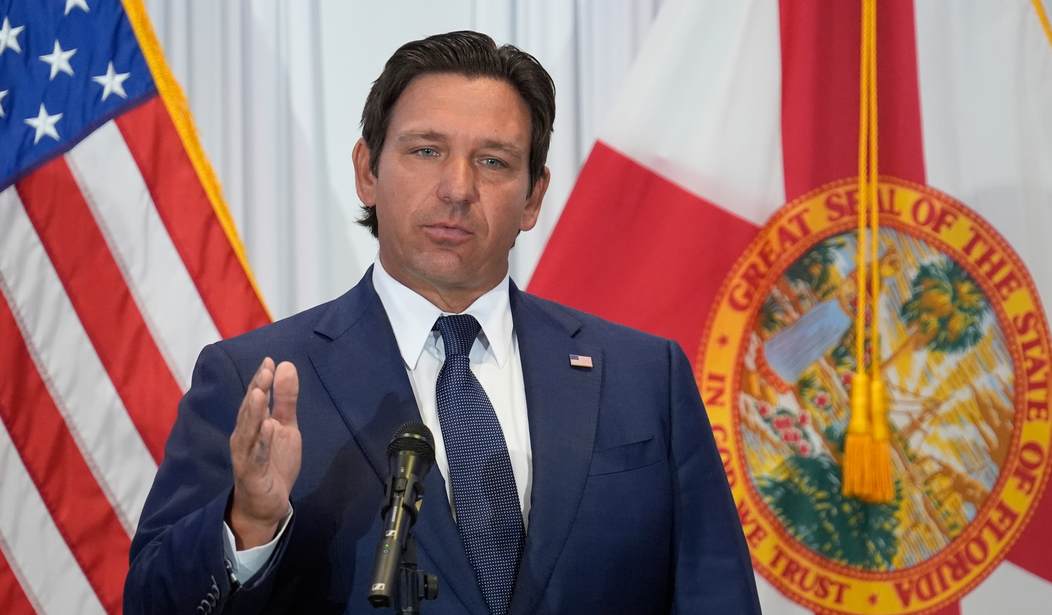
Florida families in Palm Beach County got letters this past month telling them Medicaid would no longer pay for their children’s autism therapy, with no real explanation attached.
That story, reported by WFLX, is already being used as proof that Gov. Ron DeSantis is coming after sick kids to save a buck. It is the wrong read on what is actually happening in Florida, and getting the story right matters, because Florida is running the most serious state-level experiment in the country right now on how to stop Medicaid fraud without gutting the program that legitimate families depend on.
Start with what DeSantis actually built. In June, he rolled out a statewide Medicaid Integrity Initiative aimed squarely at fraud, not at the therapy itself. Florida’s Agency for Health Care Administration is partnering with the identity-verification firm SentiLink to catch stolen and synthetic identities and hidden ownership structures before a provider ever gets enrolled, not years later after federal prosecutors show up. Every active Medicaid provider in the state has to revalidate their credentials or get dropped from the program. High-risk provider categories now face enrollment moratoriums.
The AHCA has already terminated or denied enrollment to more than 3,200 providers over the past two years, and the state says it recovered more than $72 million in improper payments in the last year alone. None of that touches what a legitimate provider gets paid for a legitimate hour of therapy.
That distinction is the whole ballgame, and the money behind it is real enough to explain why. Sen. John Kennedy laid out the national picture in a National Review piece in June. Medicaid spending on autism therapy, he noted, nationally jumped 403 percent between 2019 and 2024. Minnesota’s spending rose from $670,000 to $342.8 million in that stretch, a 50,988 percent increase, and federal prosecutors there have already charged two clinic operators with billing $46.6 million for therapy that allegedly never happened. An HHS Office of Inspector General audit found Maine made at least $45.6 million in improper Medicaid payments for autism services in one review period alone, part of a broader federal look that flagged up to $600 million in questionable billing across Indiana, Wisconsin, Maine, and Colorado.
Florida has not been hit with a headline-grabbing indictment on that scale yet, but DeSantis is not waiting for one.
Compare that to what other states are calling fraud reform. Axios reported that Nebraska cut Medicaid payments for Applied Behavior Analysis therapy by up to 80 percent last year. Indiana lawmakers have floated payment caps. New York is weighing similar rate reductions, and Colorado Gov. Jared Polis has proposed budget cuts that families and providers there say could gut access for kids who genuinely need care. Those are across-the-board rate cuts that hit fraudsters and legitimate clinics alike, because those states ran out of budget discipline somewhere else and needed savings fast. Families pushing back in Colorado and New York have every right to be angry about it. Nobody in Florida is losing a therapy hour because DeSantis needed to balance a budget.
This argument only holds up if Florida gets the execution right, and Palm Beach County is the test case. Families connected to Reflection Services ABA Therapy in Lake Worth say their children lost coverage abruptly and AHCA never told them why. If DeSantis wants his integrity initiative to be the national model, and it should be, the state owes those families a straight answer about what happened to their provider and a fast path back to care if the provider turns out to have done nothing wrong. A screening program that cannot tell a crooked operator from an innocent family hands-free ammunition to everyone eager to paint fraud enforcement as a benefits cut. Getting that distinction right, case by case, is the hard part of this fight, and it will decide whether Florida’s approach spreads or gets written off as a cautionary tale.
The case for the fight itself is simple enough. Kennedy’s piece points to a deeper problem behind the fraud numbers. Private equity has bought its way into more than 500 autism centers over the past decade, four out of five of those deals closing in just the last four years. When the same company owns the clinic that diagnoses a child and profits every time that child gets billed for another hour of therapy, the incentive runs toward more diagnoses, not better outcomes. Children on Medicaid are now 2.5 times more likely to receive an autism diagnosis than children on private insurance, and nobody serious thinks that gap is purely medical. Every dollar that setup extracts from Medicaid is a dollar that does not reach a Lake Worth family whose son needs 40 hours of real therapy a week.
Other states should be watching Florida closely, not Washington. Protecting kids with autism and protecting taxpayers were never actually in tension. Building a system that can tell a legitimate provider from a fraudster wearing a Rolex he bought with somebody else’s therapy dollars serves both. Florida is closer to building that system than almost anyone else in the country. Whether it can do that without leaving families like the ones in Lake Worth stuck and confused is the part still left to prove.
Editor’s Note: The Democrats are actively fighting against all attempts to fight fraud in healthcare, government benefits, and voting. They want the country to fund fraudsters and grifters at YOUR expense.
Help RedState continue to report on the Democrats’ radicalism and inform voters as our nation faces a crossroads. Join RedState VIP and use promo code FIGHT to receive 60% off your membership.

Join the Conversation
VIP members get the ability to comment on articles.