






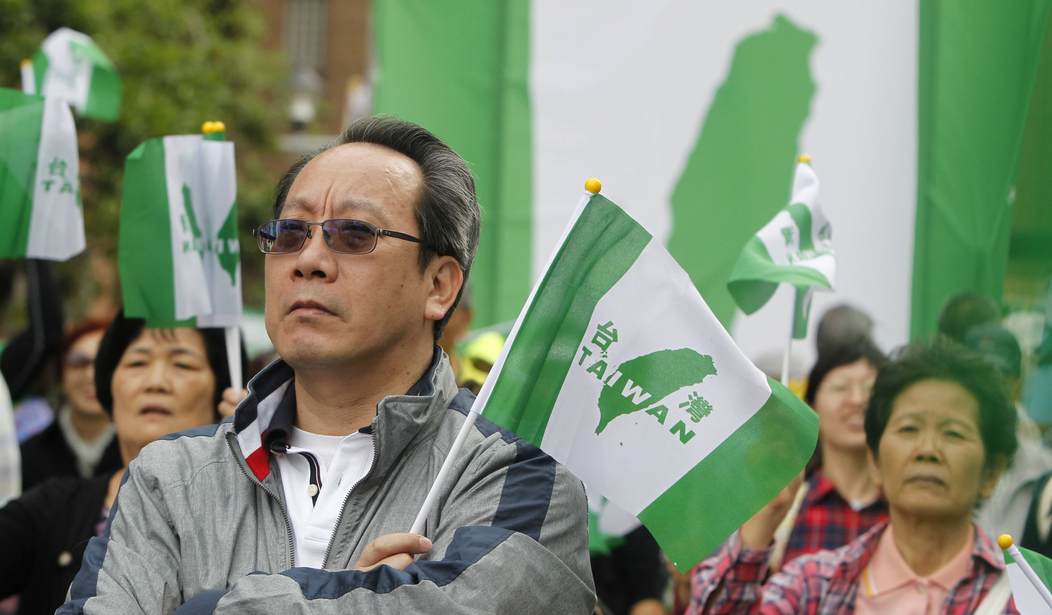
On Tuesday, President Trump signed into law the Taiwan Assurance Implementation Act, which requires the State Department to review and report its guidelines concerning relations with Taiwan to various federal agencies not less than every five years, an amendment to the Taiwan Assurance Act of 2020. This comes amid an escalating row between Tokyo and Beijing over Taiwan.
Taiwan’s president, minister of foreign affairs, and secretary-general of the Taiwan National Security Council expressed their gratitude for the law, while Beijing voiced strong opposition.
Greatly appreciate President @realDonaldTrump’s signing of the Taiwan Assurance Implementation Act, underlining the importance of #US engagement with #Taiwan. Going forward, we’ll work even more closely with the US in all sectors to ensure regional peace, stability & prosperity.
— 賴清德Lai Ching-te (@ChingteLai) December 3, 2025
Grateful to President Trump for signing the Taiwan Assurance Implementation Act into law, & to the U.S. Congress for passing it unanimously. This reaffirms the rock-solid #Taiwan–#US partnership. We will continue working with our American friends to advance our shared security &… pic.twitter.com/qdEDzdDiam
— 林佳龍 Lin Chia-lung (@chia_lung) December 3, 2025
This reaffirms the rock-solid #Taiwan–#US partnership. We will continue working with our American friends to advance our shared security & prosperity.
Sincere appreciation to the US #Congress for passing the Taiwan Assurance Implementation Act & to President @realDonaldTrump for signing it into law. The #Taiwan-#US partnership grows ever stronger. We remain deeply committed to maintaining the #statusquo & #peacethroughstrength. pic.twitter.com/6j90F6cQ1Q
— Joseph Wu (@josephwutw) December 3, 2025
The National Security Strategy (NSS) released on Thursday maintains Washington’s longstanding declaratory policy regarding Taiwan, and reaffirms the administration’s commitment to deterring conflict over the self-governed island, with the support of regional allies:
A favorable conventional military balance remains an essential component of strategic competition. There is, rightly, much focus on Taiwan, partly because of Taiwan’s dominance of semiconductor production, but mostly because Taiwan provides direct access to the Second Island Chain and splits Northeast and Southeast Asia into two distinct theaters. Given that one-third of global shipping passes annually through the South China Sea, this has major implications for the U.S. economy. Hence deterring a conflict over Taiwan, ideally by preserving military overmatch, is a priority. We will also maintain our longstanding declaratory policy on Taiwan, meaning that the United States does not support any unilateral change to the status quo in the Taiwan Strait.
We will build a military capable of denying aggression anywhere in the First Island Chain. But the American military cannot, and should not have to, do this alone. Our allies must step up and spend—and more importantly do—much more for collective defense. America’s diplomatic efforts should focus on pressing our First Island Chain allies and partners to allow the U.S. military greater access to their ports and other facilities, to spend more on their own defense, and most importantly to invest in capabilities aimed at deterring aggression. This will interlink maritime security issues along the First Island Chain while reinforcing U.S. and allies’ capacity to deny any attempt to seize Taiwan or achieve a balance of forces so unfavorable to us as to make defending that island impossible.
Read More: With the New U.S. National Security Strategy, Trump Revives Monroe Doctrine
Taiwan President Lai Ching-te praised President Trump's decision to include Taiwan at length in the NSS.
Greatly appreciate that the #US National Security Strategy prioritizes deterring a conflict over Taiwan & highlights the security of the First Island Chain. #Taiwan will continue to be a reliable partner deeply committed to strengthening our self-defense to uphold regional peace.
— 賴清德Lai Ching-te (@ChingteLai) December 6, 2025
As I've been arguing since October, the Trump administration has no intention to abandon or “sell out” Taipei as part of a China deal, contrary to the claims of the mainstream media. Taiwan is not up for grabs; the administration recognizes its strategic importance.
Despite our deepening support for Taiwan, the China-friendly opposition Kuomintang (KMT) — along with the Taiwan People’s Party (TPP), the KMT’s coalition partner — continues to undermine President Lai’s efforts to secure Taiwan, with consequences for the security of America and our regional allies, especially those comprising the First Island Chain.
On Wednesday, the KMT blocked President Lai’s eight-year, $40 billion special defense budget from the legislative agenda. The State Department had welcomed Lai’s proposal.
This special defense budget, separate from the defense budget for the next fiscal year, aims to strengthen Taipei’s asymmetric and long-range strike capabilities, including developing the T-Dome air defense system, similar to Israel’s Iron Dome; enhance military training and civilian preparedness; and prioritize U.S.-Taiwan production and procurement cooperation.
Fu Kun-chi, the KMT caucus whip, said that the KMT supports measures to protect Taiwan and urged President Lai to appear before the Legislative Yuan to explain his proposed supplementary budget. Technically, Taiwan’s president can address the legislature only on a voluntary basis.
It’s ironic that Fu is claiming that his party supports protecting Taiwan. He has led multiple delegations to China. On one occasion, Hong Kong authorities detained a member of his delegation. He failed to aid her, and properly report the incident to Taiwanese officials.
Fu also recently introduced legislation to make it easier for Chinese spouses of Taiwanese nationals to hold political office.
Other pro-China legislation includes establishing a free trade zone on Taiwan’s outlying islands of Matsu and Kinmen. It would open the door to Chinese dumping, relabeling, smuggling, and nationals (which means more espionage).
These bills show where the KMT’s priorities lie — appeasing China at the expense of relations with Washington and Taiwan’s national security.
Meanwhile, Beijing is deploying naval and coast guard vessels to waters around Taiwan — from the Yellow Sea and the East China Sea down into the heavily contested South China Sea — reaching over 100 at one point. Taiwan’s opposition seems unfazed by this unprecedented spike in Chinese maritime activity.
What will happen to both the supplementary budget and the annual budget is yet to be seen. The KMT has shown no interest in debating the substance of the supplementary budget.
Considering the KMT’s rejection of the special budget, the KMT chair’s staunch opposition to raising defense spending to the level proposed by the Lai administration, and the opposition’s decision to freeze and cut parts of the defense budget early this year (reversed prior to the recalls), I’m not bullish about the 2026 defense budget.
Read More: Washington, Get Ready for Taiwan's New Opposition Leader
Taiwan’s Failed Mass Recall Vote: What Is Next?
Failure to approve the budget would directly undercut the Trump administration’s efforts to raise military spending among Washington’s allies and to boost deterrence against China. The recently released NSS, linked above, also stresses the need for Taiwan, along with other partners, to increase its military spending:
We will also harden and strengthen our military presence in the Western Pacific, while in our dealings with Taiwan and Australia we maintain our determined rhetoric on increased defense spending.
According to a poll commissioned by the KMT, the majority of Taiwanese support increasing the island’s military spending.
Will some members of the KMT and TPP who are concerned about reelection ultimately heed public opinion and vote in favor of the budget increase? It’s unclear whether these legislators would be willing to face disciplinary action from party leadership.
Once again, it is critical that Washington exert pressure on the KMT and the TPP to avoid obstructing the defense budget. Should Taiwan’s opposition block the budget, the U.S. government must impose costs.
This is a developing story. The battle over Taiwan’s defenses is only beginning.
Editor's Note: President Trump is leading America into the "Golden Age" as Democrats try desperately to stop it.
Help us continue to report on President Trump's successes. Join RedState VIP and use promo code FIGHT to get 60% off your membership.
Join the Conversation
VIP members get the ability to comment on articles.