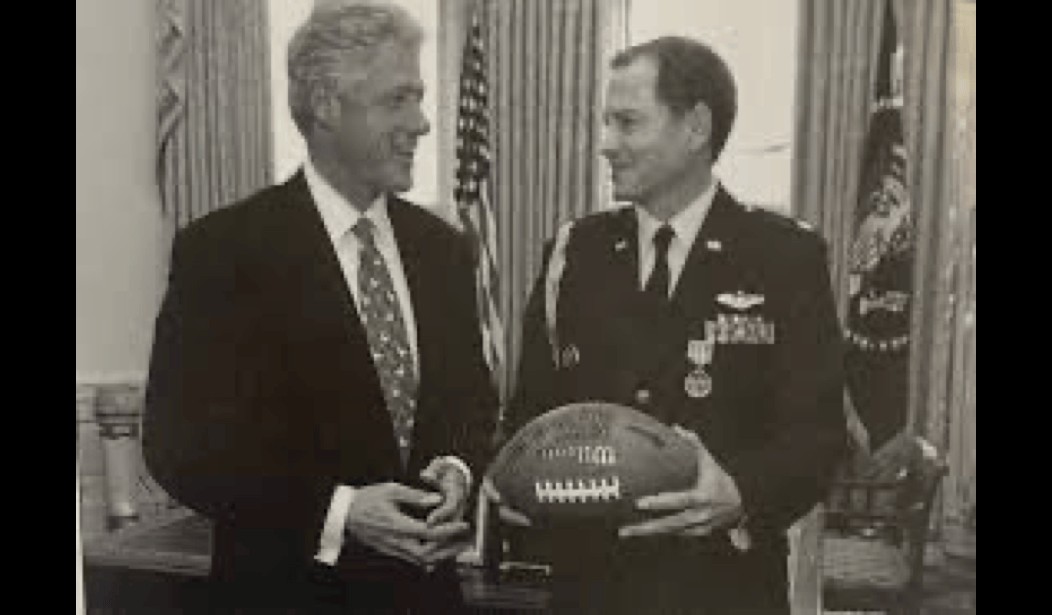

I talk about it often, but I don’t think I’ve ever laid out the full story of my old job and that famous “Nuclear Football.” You’ve seen them: those sharp, uniformed officers always glued to the President’s side—state dinners, motorcades, golf courses, or some godforsaken crisis at 3 AM. They’re the President’s Military Aides, and their lineage is pure Americana, stretching back to the founding of the Republic.
It began with General George Washington’s aides-de-camp—trusted officers who carried battlefield dispatches, delivered counsel, and handled whatever the Commander-in-Chief needed. That tradition of personal military support never faded. Through every administration, aides stayed close, but the role became more structured as the White House itself grew.
In 1902, President Teddy Roosevelt—never a man for half-measures—formalized things after the White House expansion. He created the White House Military Social Aides program, pulling in sharp young officers (O-2 to O-4, all branches) to manage the exploding social calendar. Protocol, dignitaries, logistics—they made sure every event ran with dignity and precision. These officers became assistant hosts at every major function. Today, 40 to 50 of them still volunteer their evenings while keeping their regular duties. It’s a high honor that puts them ringside to history.
Then came the Cold War, and the mission turned deadly serious.
By the late 1950s under President Dwight D. Eisenhower, the permanent Military Aides—one senior officer from each branch (Army, Navy, Air Force, Marines, and now Coast Guard)—took on the ultimate responsibility: carrying the “football.” That 45-pound Presidential Emergency Satchel holds the Black Book of nuclear strike options, authentication codes, secure communications gear, and some stuff I can’t talk about.
READ MORE: Buzz's Bedtime Stories: Why I Joined the Air Force
Review: Brendan Fraser, Andrew Scott Bring to Life a Little-Known Detail About D-Day in 'Pressure'
The following excerpt will give you a flavor of Ike's "concept," which The New York Times published in 1957:
No President before him has created such an elaborate executive and administrative apparatus for getting the work of the Presidency done, nor relied so heavily upon it. And not many, certainly, have assembled such an impressive battery of anonymous confidants to counsel them in private. Mr. Eisen- hower's genius both as a military com- mander and an executive lies not in his capacity as an innovator but in his ability to synthesize a course of action out of the views and judgments of other people.
"The President likes to have every aspect of a problem laid before him, the dissents as well as the concurrences," one of his intimates said the other day.
"Then he will pick and choose until he finds what he believes the right thing to do.
"Don't forget that this man grew up under the intellectual discipline of the Army. The staff system is a natural part of his mental equipment-and, by the way, he was one of the best staff men, either as chief or subordinate, the Army ever had.
"He doesn't go in for long, rambling philosophic discussions of a problem he's working on. He assumes that the people who are working with him have done that. But he will ‘kick it around, so to speak, at dinner or on the golf course or almost anywhere else with someone whose judgment on the matter he respects."
...
Identifying and assessing "the men around the President" is always an intriguing enterprise in Washington. In many Administrations it has been fairly easy, for so-called "palace guards" have usually stood out in bold -and often boastful-relief. It is less easy in the case of President Eisenhower
...
Somewhere between the staff and the Cabinet in the rather fuzzy table of organization of the Presidential Office there is a box labeled "Special Assistants to the President." The half a dozen functionaries so represented are watchdogs for the President over certain specialized and crucial areas of Presidential responsibility— atomic energy, foreign economic programs, cold-war activities and, among several others, national security affairs.
...
Mr. Eisenhower's concept is that of an efficient and all- comprehending machine which embraces features both of the military staff and the corporate board of directors. He has brought this concept to a high state of operational perfection and relies upon it with confidence. So much so, indeed, that the job-"splendid misery" or not-never seems to get him down.
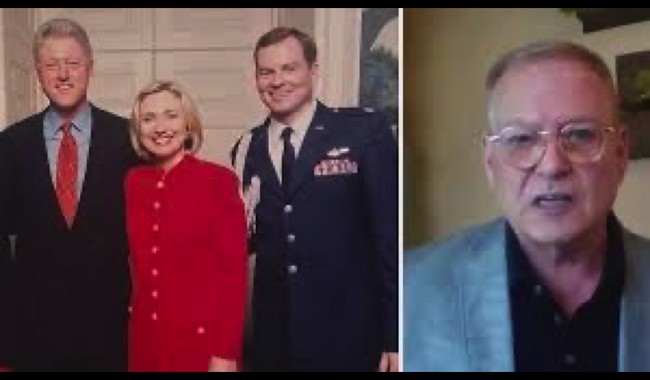
I had the profound honor of serving as one of those Military Aides to President Bill Clinton. I carried that football myself on more trips than I can count. You feel the literal and figurative weight of the world in your hands. It’s a constant reminder that America’s military doesn’t just defend freedom on distant battlefields. A small handful of us stand ready at the President’s side to preserve it right here at home—no matter the hour or the threat.
Unsung, relentlessly professional, and deadly serious. That’s the history and the living legacy of the President’s Military Aide.