

Continuing with the trend of this column celebrating the drinking of our founders, we reach even a bit further back, to that period that predated the Revolution. The initial colonists faced many challenges in the New World, and upon establishing a beachhead in this foreign land, setting up a normal life was the first order of business. Housing, food, and other protections were the priority. Soon after, other expected aspects of their lives were then established.
Dipsology: Beyond the Basics - Brewing Up History, Literally, With Founders Recipes
Dipsology: Beyond the Basics - The Surprising Spirit of ‘76 That Fueled the Revolution
Among those were setting up stills on their property. Ward Clark recently covered how there is a court case over distilling whiskey on private property percolating towards the Supreme Court. There are, of course, many facets to the case, but it seems to strike against the very fabric that helped build this nation. Home crafting of alcohol was an adapted trait of those first arrivals, and it only grew along with the nation.
The making of distilled spirits was not because intoxication was a desire, but because the product, and especially the alcohol, served a variety of purposes, even beyond consumption. There were medicinal applications, or it could be used as a food preservative, serve as a fuel source, as well as a cooking ingredient. It could even be employed in making crude perfumes. But drinking was also a need.
Water in that early era was a dicey challenge. Deep well water sources were not yet in play, and so potable water was not always a dependable product. Waterways could have questionable organism effects, and even after dependable sourcing was established, it was quickly corrupted by human waste, animal runoff, and standing water, which could feed the proliferation of insects, leading to more problems. Alcohol therefore became a reliably safe alternative, and at one time was so prevalent that people who were reduced to drinking water were looked down on as being impoverished.
Personal brewing and distilling were soon so commonplace that homes were expected to have a variety of drinking options. A base whiskey was the norm, but women were also commonly crafting a brew in the kitchen called “small beer,” a low-potency option that was around 1% alcohol. Soon the colonists were developing towns, and then cities, and among the first public buildings cropping up were inns and taverns, and these were locations thirsty for spirits to offer the public.
The Europeans brought over various skills with them, and soon these establishments could be supplied with the needed products. The prevalent beer of this time was a hearty dark brew along the lines of porters or stouts, trending in the 6% ABV range. Early whiskeys were becoming the norm, as crops were gradually developed, and molasses became a reliable crop from the Caribbean to make rums.
Eventually, liquor and beer became plentiful enough that it was used as a bartering product and also a form of payment to workers. It was also a trading commodity with Native Americans, with furs and other products the tribes were adept at gathering. This became a point of contention for some tribal leaders, as problems emerged, and it was even speculated that unfair trade deals were agreed upon while under the influence of fire water.
But all was not completely secure in the early going of the 1500s to 1600s. Toxicity was becoming seen in those early days, and the fear became that those copper stills, which were commonly found, were to blame. This was a rather accurate diagnosis. Part of the problem was from improperly cleaned stills developing the green verdigris growth. This itself was not the main cause, but the creation of copper salts led to gastrointestinal distress.
A more dangerous, and even deadly, cause of problems was with the pewter commonly used for soldering together components of those first stills, leading to lead poisoning. As a result, until proper construction methods developed, home distillers resorted to stills of glass, or even stoneware.
As the colonies became more civilized, more options were developing for more product. Gin was a common option in Europe, and the juniper-based drink was made, with varying degrees of quality (read: little quality to be found). Soon enough, another crop in the New World served as a source for crafting spirits: apples.
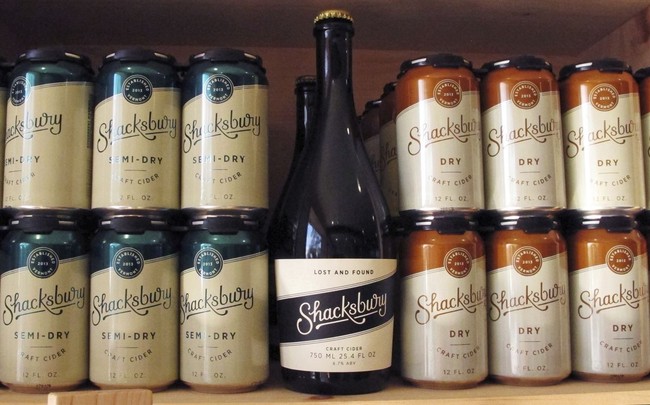
With grapes not being a serviceable crop in that temperate zone, the easily fermentable apple crops were utilized. Hard cider was the first obvious product, and that was stepped up to another option. Dubbed “Applejack,” this was recognized as a more potent liquor made from the fruits. And then there was the desire to take it further, and an apple-based version of moonshine was developed, called “Jersey Lightning,” for obvious reasons.
This was the stage in our history when we were becoming our own, and production was likewise developing. As the primary crop in the Americas was corn, this was turned to as a source of fermentation, leading to that wholly American spirit, bourbon.
It is clear that fermentables were a key to the establishment of the colonies, and eventually it fed the growth of this land. As we became more of a nation, we became a nation with more drinkers, and eventually more options, more products, and more developments. We have thousands of breweries, our own native spirit, and more options coming out all the time.
The U.S. is a country of constant movement and development, and alcohol has been our turbo-charging fuel for centuries. It made us, and it is making us.
Cheers!