








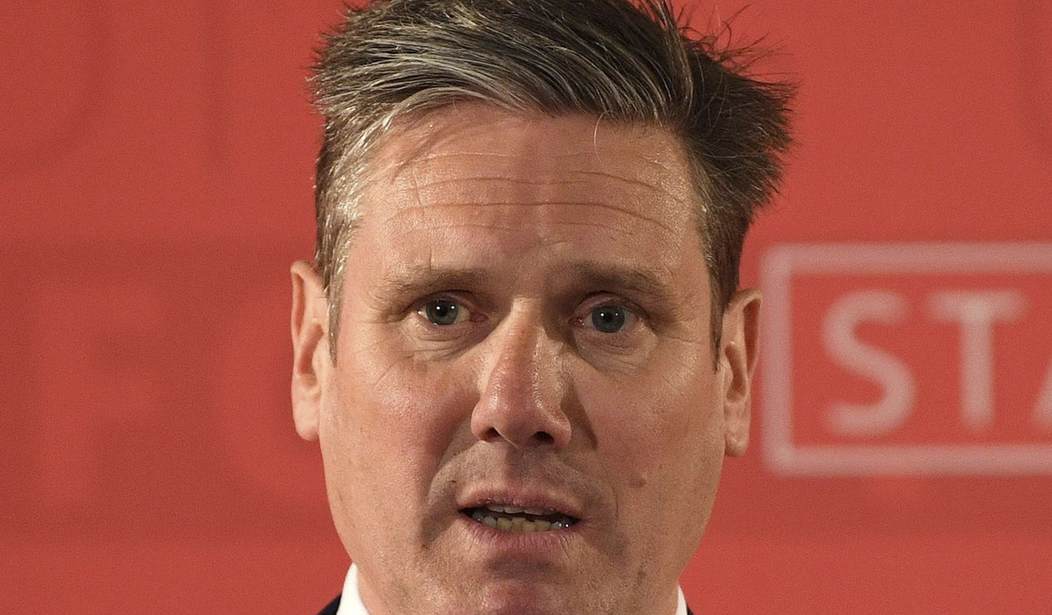
Twenty-four hours ago, Labour insiders were discussing what Keir Starmer's exit might look like.
Monday morning, standing outside Number 10 Downing Street, he confirmed it himself.
Keir Starmer is resigning as Labour leader and Prime Minister and will leave Downing Street once his party chooses a successor, bringing an abrupt end to a premiership that won a landslide less than two years ago.
🚨 WATCH: Keir Starmer's full resignation speech as Prime Minister pic.twitter.com/1svZnEF6Ui
— Politics UK (@PolitlcsUK) June 22, 2026
"The question my party is asking now is whether I am best placed to lead us into the next general election.
"I have heard the answer of my parliamentary party to that question, and I accept that answer with good grace.
"That is why I will resign as leader of the Labour Party."
Starmer said he had spoken with King Charles Monday morning and would remain prime minister until Labour completes a leadership contest expected to conclude before Parliament returns in September.
If you've been following the story over the last ten days, none of this is surprising.
First came "Bloody Thursday."
Defence Secretary John Healey resigned. Hours later, Armed Forces Minister Al Carns followed him out the door. Seven ministers had quit Starmer's government in a month. The department responsible for Britain's defense was in open revolt.
Healey accused Starmer and the Treasury of refusing to provide Britain's military with the resources needed to confront growing threats.
"You have been unable, and the Treasury has been unwilling, to commit the resources that the nation needs to defend the country at this time of rising threats.
"Without a DIP that meets the moment in this way, I am being forced to make decisions that would reduce the readiness of our Forces and increase the risk to personnel on operations, and could make the country less safe."
Carns reached a similar conclusion.
"We are asking our Armed Forces to operate in a more dangerous world on a budget written for a calmer one.
"A serious country funds its defence to meet the threat it actually faces, not the threat it wishes it faced."
Governments survive ministerial resignations all the time.
Two senior figures walking out of the Ministry of Defence on the same day is something else entirely.
Then came Makerfield.
Andy Burnham's by-election victory did more than return him to Westminster. It gave Labour MPs something they had been missing for months: an alternative.
Burnham's supporters claimed more than 200 Labour MPs were prepared to back a leadership challenge if Starmer refused to go voluntarily. Whether that number was real or inflated almost didn't matter. The message had already landed.
Over the weekend, reports suggested cabinet ministers, advisers, donors, and trade union leaders were all pushing Starmer toward the same conclusion. One Labour peer told reporters that stopping the "chaos" was no longer possible by staying. Another said the prime minister had run out of support.
By Sunday morning, Labour figures were openly discussing succession.
Read The Entire Bloody Series: Bloody Sunday? Keir Starmer Reportedly Preparing Exit Plan
After 'Bloody Thursday,' Labour Is Already Planning for Life After Starmer
Bloody Thursday for Starmer: Two More Ministers Quit, Seven Gone in a Month
By Monday morning, Starmer was announcing it.
He spent part of the speech defending his record. He pointed to defense spending increases, support for Ukraine, NHS reforms, trade deals, and efforts to reduce illegal migration. He argued that Labour had inherited a broken country and left it stronger than it found it.
That was the case Starmer wanted to make.
The problem is that the people who needed convincing were sitting behind him, not standing in front of him.
Cabinet ministers were urging him to establish a departure timetable. Labour MPs were counting numbers. Burnham was preparing to return to Westminster. By the time Starmer stepped behind the lectern Monday morning, the argument had already been settled inside his own party.
Nigel Farage wasted little time responding, calling for a general election and arguing that Labour should not simply install another prime minister without returning to voters.
Reform demands an election, and we are ready to deliver radical change.
— Nigel Farage MP (@Nigel_Farage) June 22, 2026
If Labour thinks it can shove another professional politician into No 10, it has another thing coming.
Read my second essay to Britain. 👇
In his speech, Starmer promised an orderly transition.
"I will remain in post as Prime Minister until the contest is complete, and I will do everything I can to ensure an orderly handover of power.
"I will also give my successor my full and unequivocal support."
Now Labour gets the fight it spent weeks trying to avoid. Burnham enters Westminster with momentum, Reform UK is demanding a national vote, and potential challengers are still weighing whether to make their move. The leadership question that dominated British politics for days is no longer whether Starmer goes. He is gone.
The question now is whether Labour can convince voters that changing the name on the door will solve the problems that brought Starmer to this point. Ten days ago, he was dealing with a revolt inside his defense ministry. Over the weekend, Labour figures were openly discussing succession. By Monday morning, the prime minister walked outside Number 10 and made it official.
The collapse was fast. The warning signs were not.
Editor's Note: Do you enjoy RedState's conservative reporting that takes on the radical Left and woke media? Support our work so that we can continue to bring you the truth.
Join RedState VIP and use promo code FIGHT to receive 60% off your membership.
Join the Conversation
VIP members get the ability to comment on articles.