
Now, why would President Donald Trump covet possession of a frozen Arctic island misleadingly named Greenland by a Viking explorer named Erik to attract settlers one thousand years ago?
It’s not an insignificant question since the American president’s renewed insistence on possessing the icy place threatens the existence of NATO, history’s strongest enduring alliance, and has become unpopular in polling. This weekend the U.S. president slapped a 10 percent tariff on eight European allies until Denmark sells him the immense island.
READ MORE: New: Trump Hitting Europe With Tariffs Over Greenland
'Going to Be a Big Problem for Him': Trump Smacks Down Greenland PM Who Says He ‘Chooses Denmark’
"The United States needs Greenland for the purpose of National Security,” Trump declared on Truth Social this month. “It is vital for the Golden Dome that we are building.”
What is it about this forsaken frozen place that suddenly makes it such a hot topic at the moment?
First of all, the Greenland interest is not sudden. Do you remember William Seward? We wrote about him here a while back. He’s one of the more interesting and foresighted characters in American history.
A former governor and senator from New York, Seward was a competitor of Abraham Lincoln’s to head the new Republican Party's presidential ticket in 1860. Seward lost. But Lincoln wisely made him a Cabinet teammate as Secretary of State. Kind of like Trump named one-time rival Marco Rubio to the same high-profile job (and a few others, in fact).
Like Lincoln, Seward was a staunch opponent of slavery and a firm believer in American expansion as key to trading routes and naval bases for a global U.S. commercial empire. He was responsible, for example, for annexing Midway Island in the Pacific Ocean, a territorial possession that became the key turning point to Japan’s World War II defeat.
In 1867, Seward took advantage of the Russian tsar’s cash crunch after his unsuccessful grab for Crimea. He purchased Alaska for $7.2 million. Seward also had eyes on the Danish West Indies and – you guessed it – Greenland.
But Seward's serious injuries as a target in the Lincoln assassination conspiracy were debilitating. And he was so severely mocked for “Seward’s Folly,” the deal for that vast good-for-nothing Alaska place, that he let the Greenland grab die.
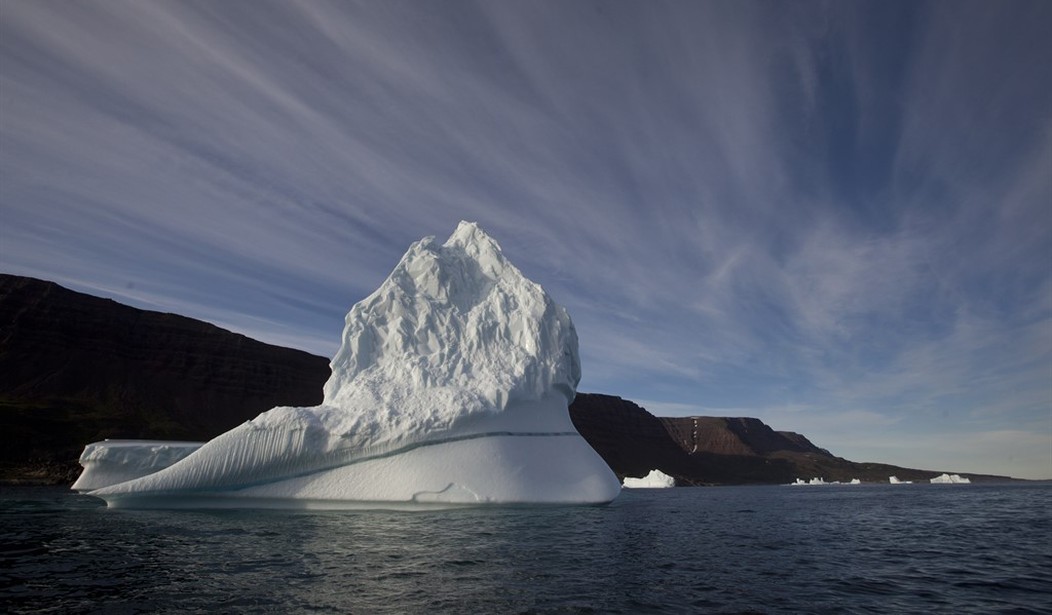
On the surface, Greenland is indeed another good-for-nothing place. It crosses the Arctic Circle and is the world’s largest island, more than three times the size of Texas, containing a smaller population than any NFL playoff stadium this weekend. Over 80 percent of inhabitants are Inuit.
Erik the Red, a Viking warrior exiled from Iceland for murder, was wandering across the North Atlantic around 982 when he came upon the place after about 800 turbulent sailing miles.
Like any ambitious real-estate developer, he called it Greenland, hoping to encourage settlers to flock there. Some did. But Erik lied. Greenland isn’t green.
(Erik’s son, Leif Erickson, later sailed farther West and discovered a newfound land he called Vinland, now a Canadian province named Newfoundland.)
Iceland, which is actually green in parts, is hospitable because it gets brushed by the warm Gulf Stream. Greenland does not.
More than 80 percent of that non-green place is smothered by a thick, massive sheet of ice. That’s a spread of ice the size of California, Texas, Montana, and Utah combined.
Greenland has no road beyond coastal communities. It is reachable only by boat or air. They eat a lot of fish there. Greenland doesn’t even have a McDonald’s, if you can believe such a place exists.
The island, nearly 2,000 miles northeast of New York City, is formally an autonomous territory of the kingdom of Denmark and was granted self-rule in 1979, except for defense and foreign policy.
After the Nazis occupied Denmark in 1940, its ambassador in Washington signed an executive agreement with President Roosevelt allowing the presence of numerous U.S. troops, facilities, and operations.
The U.S. made an unsuccessful offer to buy Greenland for $100 million in gold bullion in 1946.
Then, in 1953, Denmark formally allowed construction of a U.S. air base at Thule (renamed Pituffik Space Base in 2023) as part of an Arctic early-warning radar system during the Soviet Cold War era.
“NATO becomes far more formidable and effective with Greenland in the hands of the United States,” Trump has said. “Anything less than that is unacceptable.”
Denmark and the Trump administration have created a formal working group to discuss the president’s demands, which Denmark calls “a fundamental disagreement.” Denmark’s leaders have said they are open to a significantly enlarged U.S. military presence, though not relinquishing sovereignty.
In a sign of joint solidarity against Trump’s threats, alliance members Sweden, France, Norway, the Netherlands, and Finland have all sent small military contingents to the island, a signal of unusual NATO discord that must please Russia’s Vladimir Putin.
Article 5 of the NATO treaty stipulates that any attack on one of the 32 members is regarded as an attack on all. The Article has been used only once since 1949, when allies rallied to the U.S. side after 9/11.
Trump has suggested that without U.S. assured control of Greenland, China or Russia might take over the isolated island.
The American president says Greenland is necessary for full construction of the Golden Dome anti-missile defense plan he envisions for the United States.
Lockheed Martin, a major defense contractor no doubt willing to participate in such an expensive project, calls Golden Dome “a Manhattan Project-scale mission” that is
a layered defense shield, safeguarding the American homeland with unwavering precision, ensuring the security and resilience of our nation….for deterring adversaries from attacks on the homeland. This next generation defense shield will identify incoming projectiles, calculate trajectory, and deploy interceptor missiles to destroy them mid-flight.
We should point out there's another reason buried in this controversy. A less discussed but important part of Greenland’s strategic import is the suspected potential for substantial natural resources sealed beneath the ice cap.
Partial surveys, hampered by the harsh conditions and steep costs, found iron ore, oil/gas, gold, and rare earth elements, including lithium.
But serious local opposition, fear of radiation, and the high costs of extraction at past prices in that hostile environment made that impractical.
Greenland’s deposits of cryolite, a key mineral in the production of aluminum, have been mined for decades, especially during World War II.
Public opinion polls in this crucial midterm election year have shown an unusually large volume of bipartisan opposition to acquiring Greenland, either through purchase or military action.
Nothing should seem impossible in these days of fast-moving and often surprising events. But it’s hard to believe that anyone in NATO, faced with the very real threat of an ambitious Russia and China, would willfully cause the demise of such a successful alliance that endured and ensured peace in the early age of nuclear weapons and the Cold War.
Since the legal precedent for a large-scale U.S. military presence in Greenland for decades already exists, actual land ownership of the entire island seems like a negotiable concern subject to negotiation and financial agreements.
Remember, Poland and the Czech Republic agreed with the Bush administration early this century on construction there of a vast U.S. missile defense system with Iran and Russia in mind.
In a naïve and useless attempt to buy friendship with Vladimir Putin, President Barack Obama unilaterally canceled the defense systems’ plans without consultation with allies.
In response, Putin sold Iran a sophisticated air defense system, other arms, and a nuclear reactor, and sent Russian troops and aircraft to help Syria’s dictator combat a civilian uprising.