
Well, wasn’t that a bang-up way to begin a new year? Donald Trump out-Trumped Donald Trump. ¡Feliz año nuevo, vecinos!
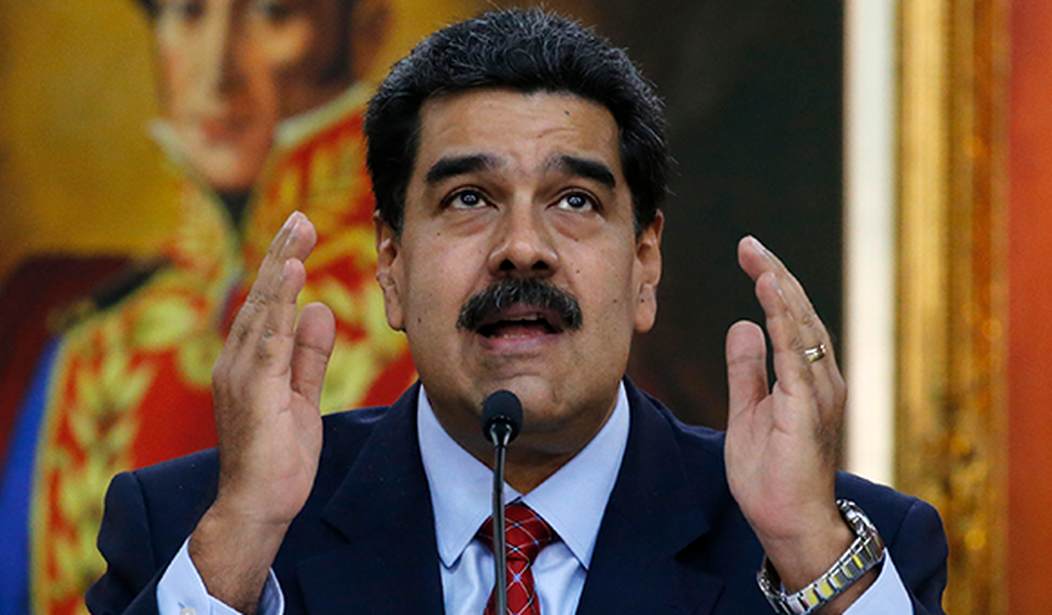
In a stunning and amazingly well-coordinated, lightning-quick, snatch-and-grab operation early Saturday, Delta Force operators arrested the illegitimate president of Venezuela and his wife to stand trial in the United States on narco-terrorism and weapons charges.
More importantly, the military’s flawless execution of the 47th president’s orders freed the South American neighbor nation of some 28 million to return to democracy after 13 years of dictatorship and economic decay. Socialism has a way of accomplishing that.
The bold Trump act ignited spontaneous street celebrations by millions across that nation, which is about half the size of Alaska, and in Florida, where many South American expatriates live.
The successful strike immediately severed seriously growing Chinese and Russian influence in, and access to, the oil-rich nation. A senior Chinese delegation was stranded in place.
China, which has territorial eyes on nearby Taiwan, still denounced the U.S. commando raid, as did Russia, which invaded its neighbor, Ukraine, nearly four years ago.
The resulting impact on Communist Cuba, Venezuela’s welfare-island client, remains to be seen but will be serious, hopefully.
The successful surgical military operation by all-volunteer forces was in planning and rehearsal for months. And it involved detailed on-the-ground tracking of the 63-year-old Maduro’s movements.
All while maintaining remarkable secrecy for such a massive undertaking involving thousands of military and civilian planners across two continents, and assembling scores of aircraft and a carrier task force at sea.
If you want something broadcast immediately, tell someone in Congress and say it’s Secret. Which is why Trump wisely didn’t.
“A lot of good planning and lot of great, great troops and great people,” Trump told the N.Y. Times in a brief phone interview after the raid.
The casualty-free Venezuela operation, dubbed Absolute Resolve, involved commandos and the famed Night Stalkers, helicopter crews highly-skilled at low-level night flight. And it comes after last June’s carefully choreographed support flights by hundreds of aircraft for the intercontinental attacks by U.S. B-2 bombers on Iran’s nuclear-weapon development facilities.
Both represent a stark contrast to the bumbling and lethal on-again-off-again U.S. exit from Afghanistan in 2021 ordered by President Joseph Biden. And Russia’s murderous sledgehammer assaults on Ukraine.
In 2011, also without congressional notification, President Barack Obama ordered U.S. naval forces to join European powers in ousting Libya’s dictator Moammar Gaddafi. That took nine months of bombing, and Gaddafi was murdered by a mob.
But there was nothing strong enough left to govern Libya, which turned into a lawless state where terror groups like ISIS and al Qaeda train to infiltrate Africa and other Mideast nations and back proxy forces competing for control.
In 1988, President George H.W. Bush ordered U.S. forces to capture Panama’s Gen. Manuel Noriega, who had overturned elections to maintain power and, like Maduro, was under U.S. indictment for drug trafficking.
After days of fighting and standoff, Noriega surrendered in 1989 on Jan. 3, the exact same date as Maduro’s capture 37 years later.
Panama's properly-elected president was installed, and democratic elections have proceeded. Noriega was convicted, imprisoned, and later returned to Panama, where he died nine years ago.
On Saturday, Maduro and his wife, Cilia Flores, arrived in New York City, which just inaugurated a socialist mayor, Zohran Mamdani. The Maduro couple is expected to be arraigned Monday on charges of Narco-Terrorism Conspiracy and Cocaine Importation Conspiracy, among others, that could result in life sentences.
As intricate, superbly-executed, and widely welcomed as Maduro’s removal was, that may prove to be the easy part of restoring Venezuelan democracy. Just as militarily ousting Iraq’s Saddam Hussein proved much easier than the reconstruction, which ignited sectarian and political violence, score-settling, and lethal retributions.
The U.S. is superb at government overthrows, going back into the 19th century. But not so good at nation-building. (See Libya, Afghanistan, South Vietnam.) So, arms-length would be a good post-coup strategy.
The military raid was a triumph.
But real victory in Venezuela involves the long-term task of rebuilding a democratic government and judicial system methodically dismantled by the dictator, plus the operational infrastructures accompanying both, a functioning free-enterprise economy, and the important social trust that glues together such institutions.
Also on the reconstruction agenda comes rooting out the corrupt accomplices of Maduro, the former Caracas bus driver and union organizer, and imposing justice on them.
Then there's the need to welcome home and resettle many of the estimated eight million Venezuelan refugees who fled to other Latin American and Caribbean countries since 2014 and are likely to return, albeit to homelessness. That’s about one million more refugees than have fled the Russian invasion and resulting war in Ukraine.
Who will run the country in the potentially dangerous interim is unclear. Trump suggested the U.S. would, but that’s a diplomatic, political, and public-relations hornet’s nest best avoided.
Currently in charge in Caracas is Vice President Delcy Rodriguez, a skilled political operator in her own right and (Warning Lights Flashing) a hardline socialist like the man who picked her. There could be a lot of document-shredding underway there now.
Trump’s unilateral operation was, well, very Trumpian — sudden, dramatic, unexpected, well-planned. It followed Maduro's bold challenge last summer to "Come get me!"
Last summer's complex attack on Iran came at the precise end of Trump's 60-day ultimatum to enter serious negotiations on ending its nuclear weapons development.
His ordered assassination of the notorious Iranian Gen. Qasem Soleimani, arriving in Iraq in January 2021, came as suddenly as the Hellfire missile that shredded the car of the man responsible for so many American deaths.
Also surprising to many was Trump’s success after blunt threats in convincing North Korea’s dictator Kim Jong-Un to join him in two summits, something three previous U.S. presidents had failed to do.
This weekend’s events sparked admiration from allies — even from the Washington Post — and predictable criticism from others. Venezuela’s Nobel Prize Winner Maria Corina Machado praised President Trump and said:
The time for freedom has arrived. We are going to restore order, release the political prisoners, build an exceptional country, and bring our children back home.
With her piercing intellect, Democrat Rep. Alexandria Ocasio-Cortez of New York suggested the operation was to deflect attention from the Epstein files and health care costs. Kamala Harris didn't like the president's action either.
Similar criticism was voiced after the Panama operation of Bush, who was Republican, but not after the Libyan orders of Obama, a Democrat.
In fact, Obama actually told media about his decision to join the intended Gaddafi coup almost as an aside while departing on a South American trip with his mother-in-law.
Trump’s operation launched an important political year for his historic second term, now 24 percent complete.
We’re just 15 days from the first anniversary of President Trump 2.0. And 43 Tuesdays away from the crucial midterm elections that will determine the political fate of the 47th president’s agenda in his final two years.
Given the blizzard of decisive actions, legislation, and Trump decisions in the first quarter of this term, most presidents could be satisfied with that record for an entire term.
Of course, the Trump name will be on no ballot anywhere this year. Nonetheless, modern midterms have become oblique interim verdicts on a sitting president’s job as rendered by voters on his party in Congress.
Mainstream media have already pronounced a looming – and wishful — legislative doom on the Democrat Party’s worst nightmare.
Leading up to November's elections, you will soon encounter more “news” stories about Trump’s age. Photographers have caught him blinking at times, suggesting he’s fallen asleep in public, as you-know-who did routinely. Reporters have also eagerly noted occasions when Trump failed to hear a reporter’s shouted question.
Trump turns 80 in June, still nearly four years younger than his predecessor, the oldest president ever, who had trouble with screen doors and speaking coherently. Please, let me know if Trump ever asks an audience where a dead member of Congress is, as President Biden did.
Trump has had none of those problems, and instead of staff hiding him from the public as Joe Biden’s did, Trump engages with media regularly, often several times a day. His social media announcement of the Venezuelan operation came at 4:30 a.m.
History suggests Republicans will lose their slim House control in November and maybe the Senate too. In the 20 most recent midterm elections, a president’s party has lost Senate seats in 15 and House seats in 18.
But beware of applying the past too strictly to Trump. History – and media – suggested a rookie politician in his very first election had no chance of winning a presidential election.
Let alone one against Hillary Clinton, who was so sure her destiny involved becoming the first female POTUS that she didn’t bother campaigning in several Democrat strongholds that then didn’t bother voting for her.
Of the 17 GOP primary candidates in 2016, most of them political veterans, the least likely to detect and tap into the Heartland’s abiding anger with Washington elites was the Fifth Avenue billionaire with his own jumbo jet. Clearly, Trump’s campaign was hopeless.
These ensuing 10 years have proven that — and so much more — very wrong about the expectations of Donald J. Trump.