








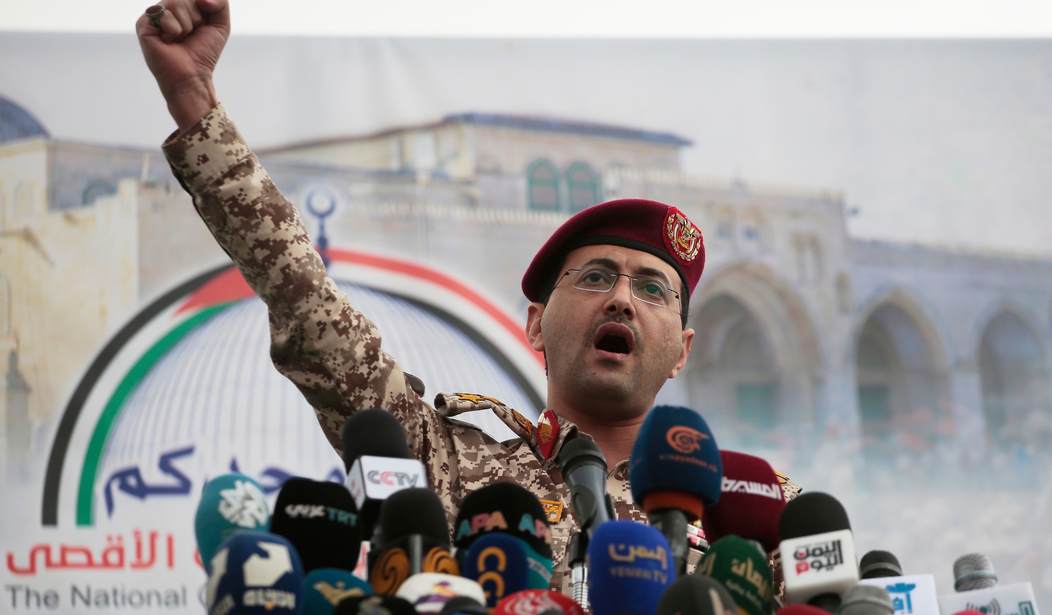
Houthi rebels in Yemen, we learned on Sunday morning here in the United States, are still pushing their way up the eastern coast of the Bab el-Mandeb Strait, and have launched attacks on Saudi Arabian installations in the area. This represents a significant escalation by the Iran-backed rebel group.
Iran-backed Houthis in Yemen overnight claimed new attacks on neighboring Saudi Arabia, as the Saudi-backed Yemeni government described the rebels’ swift advance along the Red Sea coast as a “painful” development in a new front in the Iran war.
The Houthis’ capture of a key port city and an island on the Bab el-Mandeb Strait, a crucial shipping alternative to the Strait of Hormuz, in recent days has alarmed markets and Yemeni civilians who fear a return to devastating civil war.
The Houthis claimed more attacks with missiles and drones on Saudi Arabia, which supports Yemen’s internationally recognized government.
A Houthi military spokesperson, Brig. Gen. Yahya Saree, claimed in a statement that they targeted a military base in Sharurah province in Saudi Arabia’s Najran region. He didn’t provide evidence or say when the attack occurred.
Here's the onion:
The Houthis’ advance also puts the Iran-backed rebels just 20 miles (32 kilometers) from the U.S. military base in Djibouti, on the other side of the Bab el-Mandeb. It’s the main U.S. base in Africa and one of several foreign military bases in Djibouti, including those of China, France and Japan.
There's no indication (yet) that the Houthis have any ill intent on that American base; striking it in any way would probably put the Houthis in a very, very bad position vis-à-vis the United States. But the proximity alone, if this is accurate, has to be causing some concern in the Pentagon.
So far, the Saudis, who are supporting Yemen's established government against the Houthis, have not made any substantial moves in response to the latest Houthi advance and attacks. Israel-based i24 News reports that thousands of refugees are now fleeing the Houthis' advance, with some taking to boats to cross the Bab el-Mandeb Strait to Djibouti.
About 1,400 people have fled Yemen for Djibouti due to fighting between government forces and Iran-allied Houthis, Djibouti's minister of economy and finance, Ilyas Moussa Dawaleh, said Saturday. In a post on X, Dawaleh wrote that "1400 refugees arrived in Djibouti from Yemen in just 24 hours."
The Houthis, who control large parts of northern Yemen including Sanaa and Hodeida, have advanced rapidly along the coast in recent days, seizing the port city of Mocha on Thursday and tightening their grip Friday on the Bab al-Mandeb Strait, a vital corridor for global shipping through the Suez Canal.
The news of people leaving for Djibouti comes as the International Organization for Migration said Friday that at least 76,000 people have been displaced in Yemen since July, up from 46,000 just days earlier and nearly quadruple last week's total. The IOM is calling the crisis "a rapidly worsening displacement crisis unfolding by the hour."
The Houthis are, again, Iranian proxies, funded and equipped largely by Tehran.
The question is: How far can the Houthis push? How much land and how many installations can they seize? The answer, as always, will come down to logistics, and here the deck may not be as stacked against the Houthis as one might think. The rebels travel light; they are almost certainly confiscating resources along the line of advance, and their capture of the port city of Mocha yielded a fair amount of equipment abandoned by the forces of the Yemeni government as they fled the city. Fuel may end up being the primary limiting factor.
On the other hand, Iran is no longer in any position to offer material support to the rebels, and should the Saudis decide that it's time for the gloves to come all the way off, they have a substantial army and air force with which to settle the Houthis' hash. As of this writing, however, there has been no statement from the Saudi government on the matter.
As of this writing, oil prices are stable but high, with American crude (USOIL) trading at 99.98, and UK Brent (UKOIL) at 104.31.
Editor’s Note: Thanks to President Trump and his administration’s bold leadership, we are once again respected on the world stage, and our enemies are being put on notice.
Help us continue to report on the administration’s peace through strength foreign policy and its successes. Join RedState VIP and use promo code FIGHT to receive 60% off your membership.


Join the Conversation
VIP members get the ability to comment on articles.