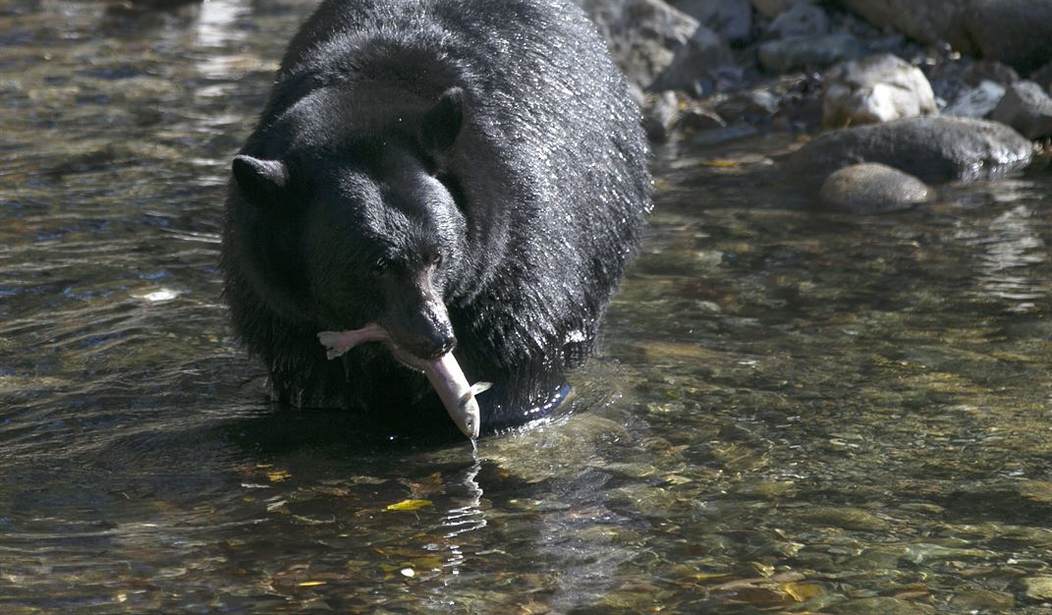

The American black bear (Ursus americanus) is a common critter across much of the United States, from Florida to Alaska, from Maine to California. They are great survivors: Smart, adaptable, omnivorous. They can subsist on a wide range of foods, and they deal with harsh winters by sleeping through them.
They also do very well living in proximity to humans. People in New Jersey find bears raiding their trash cans, while we have reports from California of black bears setting up a den in the crawlspace under a human resident's house.Bears find human rural communities and even city suburbs to be pretty congenial places, and as more and more humans in places like Colorado move out into the woods for that real country living, well, bears find their properties congenial sometimes, too; and that can lead to problems. When bears start associating humans with food, it generally ends badly for the bear, and sometimes for a human. Furthermore, black bears spend much of their summers and autumns feeding, trying to pack on fat for that overwinter sleep, and that feeding frenzy will often have them moving into human gardens, trash cans, and even kitchens.
Here's the catch: Climate scolds seize on these encounters in the implication that human-caused warming is somehow responsible, and that's just plain not true.
A recent article in Fortune Magazine “Climate change pushes thirsty bears into Coloradans’ cars — one honked a horn for hours from 3am onward,” from The Associated Press (AP), blames climate change for bears breaking into cars and homes in Colorado. This is false. Bears have gone in search of food and water amid a drought in Colorado, that much is true, but it’s not because of long term climate change.
“Millions of people live in or near bear habitat across the Rockies, where widespread drought has reduced supplies of nuts, berries and plants that bears eat,” the article explains this is “prompting the animals to roam far and wide for food.”
This is nothing unusual, except perhaps in the amount of bears that had dangerous contact with humans this year. The article blames climate change for the increase in bear encounters, but one of the most glaring issues with this AP piece is that it does not even once address the fact that there are significantly more bears than ever.
This isn't a new trend. Best estimates of black bear populations in Colorado in 1940 were about 4,900 animals. That number steadily increased until, in the early 1990s, there were around 12,000 bears. The current estimate has increased to around 20,000. And throughout this time, the human population of Colorado has exploded as well. It's inevitable that, with greater numbers of humans and bears, the number of encounters will increase as well - no climate change required.
There's another problem. Colorado is a beautiful state, especially in the mountains, and it attracts a lot of people who are looking for a quieter rural lifestyle. As someone who lived in Colorado for 30 years, I'm familiar with and understand the appeal. But this has one predictable result: It's not only the number of people increasing, it's the number of people who are living in prime bear habitat that is increasing. They aren't moving into our neighborhoods any more than we are moving into theirs.
In addition to there being more bears, there are also more people living in what were once remote areas, so bear encounters will naturally increase. Food availability draws bears even when their natural sources are not suppressed. As land is developed, more contact with the wild animals that used to live and forage there should be expected.
It's true that Colorado has seen some dry years, and dry years reduce many of a bear's traditional late summer foods, like scrub oak acorns and berries. In fact, if you're ever in Colorado in September, a beautiful time of year in the Rockies, watch a hillside covered with scrub oak in the early morning or evening and, likely as not, you'll spot a bear or two shaking down the oaks for acorns.
Those same dry years do drive bears into alternative food sources, like human garbage cans.
All of these things are true. Yes, bear encounters are increasing. Yes, there are more bears and more humans in Colorado. Yes, there have been a few warm, dry years in Colorado, and that trend is increasing, as it is in many places; the entire Northern Hemisphere has been in a long-term warming trend since the end of the last major glaciation. But the Fortune article attempts to do a lateral arabesque from that into climate change, implying human-caused warming is to blame.
That is, of course, horse squeeze. For one thing, a look at the actual data for Colorado is informative; Colorado's warming trend is not driven by hotter daytime temperatures, but by warmer overnight temperatures, and even in September, in the thin, dry air of the mountains, temperatures can drop well below freezing.
As long as current trends continue, there will be more human/bear encounters in Colorado, and it doesn't look as though any of those trends will be changing. Bear numbers are increasing, and so are the numbers of humans moving into bear habitat. That's the only explanation we need for this current trend; the attempt to tie this into human industry, to anthropogenic climate change, is not supported by the data and is, frankly, irresponsible.