
Every war, throughout history, has been won or lost by logistics. This isn't a new thing, and it didn't begin with mechanized warfare; read Julius Caesar's Gallic Diaries, where he describes his conquest of what is now France, and you will see he discusses at length the difficulties encountered in provisioning- getting his hands on enough grain to feed his army. With the advent of mechanized warfare, the problems grew orders of magnitude worse, with even the inestimable General George Patton once being halted by a lack of fuel. The Wehrmacht and the SS couldn't stop Patton, but a lack of fuel could and did.
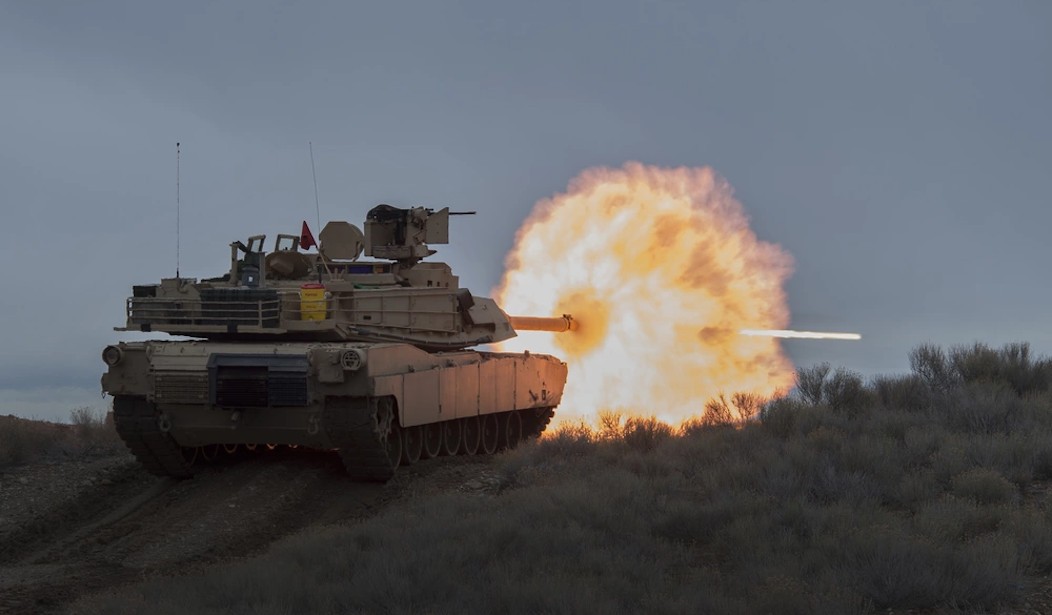
This problem isn't about to go away. Modern military aircraft and fighting vehicles are as efficient as we can make them, but the very nature of military hardware, the necessity of carrying weapons and armor, precludes any chance of them having great gas mileage. Now, though, in Europe and here in the United States, climate scolds and anti-fossil fuel campaigners are trying to restrict the very thing on which a modern military runs: Fuel.
The Dutch Ministry of Defense has published its Energy Security Roadmap, a national strategy to ensure that its armed forces have reliable energy supplies. While produced by a single NATO member, the document reflects a broader reality: Energy security is inseparable from military power.
The “roadmap” defines energy security as the continuous availability of reliable and affordable energy for both peacetime activities and military operations. It explicitly references NATO’s “single fuel policy,” which standardizes military logistics around liquid fossil fuels, particularly kerosene, to guarantee interoperability between allied forces. Currently, more than 95% of Dutch military aircraft, ships, and vehicles are powered by hydrocarbons.
Nonetheless, the European Union’s (EU’s) decarbonization proponents continue to demonize fossil fuels and advance wind and solar technologies that account globally for slightly more than 3% of energy supplies after two decades of subsidies. Even the Dutch document pays homage to EU decarbonization, but the need for liquid hydrocarbons will not be satisfied by climate rhetoric.
This is, effectively, a suicidal course for any modern military. And national security, now more than ever with the particular problems facing Europe, depends on fuel for not only military but also police vehicles. Even if we were to accept the premise that the burning of fossil fuels by humans is causing possibly dangerous climate change - I don't - that's small potatoes next to the very real and immediate threat that might be posed by an adversary that worries about no such thing.
The restriction of a modern nation's fuel supply is a tacit advertisement of national weakness. And one major power, remember, is not in the slightest worried about climate change, their constant posturing about "green" energy aside: China.
Throughout history, energy has been the foundation of state power. Nations with secure access to affordable energy possess stronger economies, greater military capabilities, and more freedom of action. Nations dependent on external suppliers expose themselves to coercion and worse.
Global energy trends reinforce these facts. According to the 2026 Statistical Review of World Energy, 86% of global primary energy consumption was fed by fossil fuels. Despite growth in renewable technologies, the world remains overwhelmingly reliant on oil, natural gas, and coal. Many major powers are adapting to this reality, as the Brussels bureaucracy seems to ignore it.
China, for example, is expanding renewable generation while simultaneously building new coal capacity and securing control over supply chains for strategic minerals. This strategy prioritizes energy availability and resilience as foundations of national power. China is strengthening both its economic position and its long-term security.
China is strengthening its military logistics chain even as Europe is weakening its own. Here in the United States, "drill, baby, drill" has become the order of the day, but that may last only as long as the Trump administration. If the Democrats win back the White House in 2028, that may well all come crashing down.
No, let me amend that. It all will come crashing down, along with border enforcement, tax cuts, and everything else that is good for national security and our economy.
Since 1945, the United States has not been in a near-peer conflict that really, really tested our logistics capabilities. Not in Vietnam, not in the Middle East, not anywhere. From 1941 to 1945, despite the United States' overwhelming industrial might, there was still rationing of meat, of gasoline, of tires. The government collected scrap metal of all sorts. My grandfather grew hemp for rope and storage bags. All went to the war effort. And, in that war, like every war, it was logistics that won the war for us.
We haven't had to go to that extreme since. But if ever another near-peer conflict rears its bloody head, we will, and fuel will be our first and foremost concern, even over weapons; weapons, after all, are of no use unless you can transport them, their users, and their ammunition to the place you need them. There's an old saying I remember from my own time in Uncle Sam's colors: that the Army runs on diesel fuel and coffee. And that's the rub: We can survive without coffee.
This isn't just about the environment anymore. This is about national security. This is about our ability to win wars. That concern is paramount.