








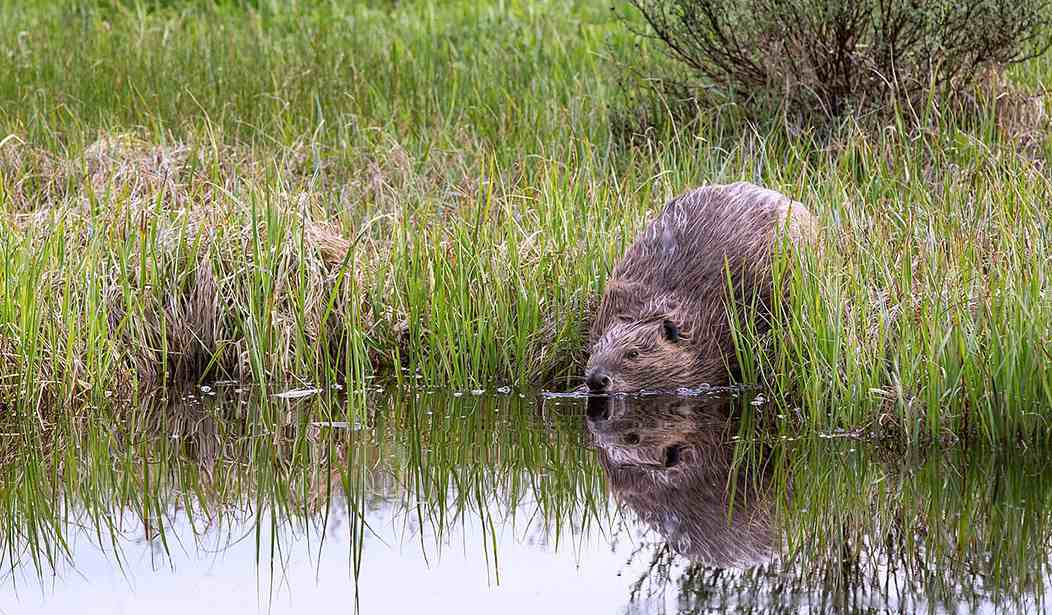
Beavers are a circumpolar genus of big aquatic rodents, comprising in part the North American beaver, Castor canadensis, and the Eurasian beaver, Castor fiber. These are famously industrious critters, one of the few creatures besides us humans to change their environment through engineering, with their extensive dams and lodges. They are also a creature that expands their range, as young leave their parents' lodges and ponds to seek new, undammed stretches of water. Russia is home to a lot of the Eurasian beavers, with the population having doubled in the last few years.
The beaver population in Russia has nearly doubled since the early 2000s and continues to grow. The Ministry of Natural Resources believes that in some regions, the growing beaver population requires "regulatory measures," as the animals can damage infrastructure. Experts argue that preventative action is needed. We explain how many beavers there are in Russia today and whether they pose a threat.
Notice that nowhere in the taxonomy of the genus Castor will one find Castor NATO, and yet it is that non-existent species that is concerning Russia right now, as their media has unconfirmed reports crying foul over NATO beavers invading the streams of the area around Russian Kaliningrad. Dam straight.
Russian media reports have cast beavers migrating into the Kaliningrad region from Poland and Lithuania as an “invasion” from NATO territory.
Residents have complained for about two months that dams built by the animals are causing waterways to overflow, flooding fields and forests and contributing to waterlogging.
According to Russian reports, around 100 volunteers have dismantled 43 dams, including some near Russia’s borders with Poland and Lithuania.
Now, before we address the fact that the Russian authorities frequently get carried away, due to having chips on their shoulders, we should admit that they do have some reason to be concerned. Beaver dams can be large and can flood expansive areas, including land used for agriculture. But the NATO angle, well, that's something to chew on.
Mind you, Kaliningrad is in something of a strategic location; it's a place that's worth gnawing about.
Veterinary scientist Alexander Muromtsev dismissed the geopolitical framing, saying the animals are simply migrating and that Russian beavers also move into neighboring countries.
Kaliningrad, a Russian exclave wedged between Poland and Lithuania, has significant military importance and frequently features in tensions between Moscow and NATO.
A report on Russian disinformation documented claims portraying NATO exercises near the region as preparations for a blockade.
It's a safe bet that nobody in NATO is planning to blockade any Russian port, near Kaliningrad or anywhere else, and if they were, they almost certainly wouldn't begin the effort by sending in a vanguard of big aquatic rodents. Although, mind you, there was a time when the United States was training beaver paratroopers.
Read More: Band of Beavers: That Time America Parachuted Beavers Into Idaho
No, if this is happening, these beavers are just doing what they do naturally, expanding into new areas. Beavers, after all, aren't just industrious. They are smart and inquisitive. Back in my trapline days, I always had a few beaver sets out, as beaver pelts were fetching a decent price in the mid-1970s. I had better luck catching muskrats and even raccoons, though, and raccoons also have a well-deserved reputation for being wary and clever. In any chomp-etition of brains, it's hard to know which critter would win.
There are stronger indications that beavers may be taking sides in the Russo-Ukrainian War. It's not known if this is related.
As flood waters rise following the potentially 'catastrophic' destruction of a dam - which Ukraine has blamed on Russian forces - a beaver has been spotted making its way through floodwater in Kherson.
A video of the semiaquatic animal has been shared widely on Ukrainian social media as a sign of defiance following what many labelled a 'terrorist' act carried out by Putin's forces.
In closing, I'll share the recollection of my grandfather's recipe for beaver tail: You take the beaver tail, nail it to a hickory plank, place it in a fire until the beaver tail is black around the edges and the hickory plank is partly burnt away. Then, discard the beaver tail and eat the board.
I'll show myself out.
Editor's Note: This article was edited for clarity post-publication.
Editor's Note: Do you enjoy RedState's conservative reporting that takes on the radical left and woke media? Support our work so that we can continue to bring you the truth.
Join RedState VIP and use promo code FIGHT to receive 60% off your membership.



Join the Conversation
VIP members get the ability to comment on articles.