






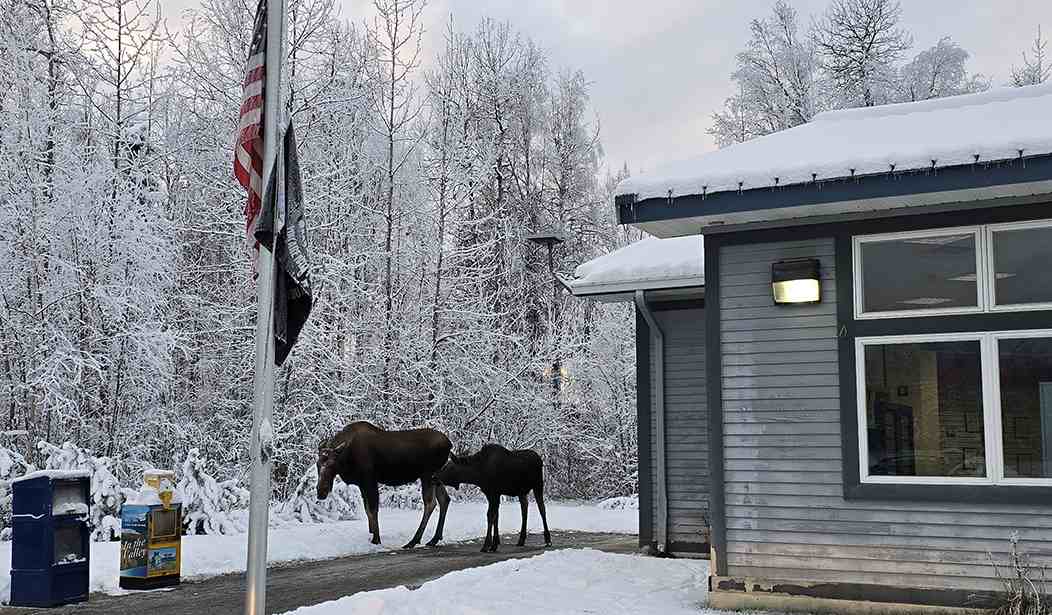
Alaska is a place like no other. It's a state like no other. Here in the Great Land, we live in a state into which you could drop Texas, California, and Montana, and still have room left over. We have more seaside shoreline than all of the lower 48 combined. Minnesota has 10,000 lakes? Alaska has over three million. I'm fond of describing my state with four words: Clean, wild, vast, and free. Most people, even Alaskans, have a hard time wrapping their heads around how big Alaska really is.
We are also a state with a small population for such a vast land. As of this writing, there are about 739,000 residents in the Great Land. We are number 48 in the list of states by population, with only Wyoming and Vermont having fewer residents. We have, by a wide margin, the lowest population density, in part because the land is so vast, but also because more or less half of the state's population lives in the Anchorage metropolitan area.
So, a small political tilt could change things in Alaska. We have a gubernatorial election this year, and in a disturbing note, we are now seeing a lot of big-money donors from the lower 48, especially California, dumping big bucks behind the Democratic candidate, Jonathan Kreiss-Tomkins.
Jonathan Kreiss-Tomkins, a Democratic former state lawmaker from Sitka, has raised more campaign funds than any other of the 17 candidates in Alaska’s governor race, according to reports filed this week.
Kreiss-Tomkins has brought in $1.8 million since entering the race in February. The majority of it came from wealthy donors who live in the Lower 48.
His top contributors include six employees of Anthropic, a California-based artificial intelligence company, who collectively gave Kreiss-Tomkins $372,000.
That may actually be a problem. There are a lot of Alaskans who don't care for political meddling by people from Outside. (When an Alaskan refers to the rest of the world as "Outside," you can hear that capital "O" snapping into place.) The other Democrat in the race seems to get that, but then, he comes from an old Alaska political family.
Tom Begich, the only other Democrat in the running, reported a total haul of $1.1 million, coming in third among the candidates. Begich, a former state lawmaker from Anchorage, reported raising most of his funds from wealthy Alaskans. His top contributors were Justin Weaver, a prolific donor from Anchorage who gave Begich more than $250,000 in recent months, and Robin Brena, an Anchorage attorney who gave Begich $275,000.
Fortunately, what polling we have, and Alaska doesn't draw a lot of attention from pollsters, has Republican Bernadette Wilson with quite a lead. She's leading in fundraising too.
Read More: Polls Now Forecast Total GOP Domination in Alaska in 2026
Why would Democrats be so concerned with turning Alaska blue?
Two possibilities come to mind.
First, Alaska is, yes, sparsely populated, and what's more, it's politically divided, with Democratic Anchorage city balanced by some of the Republican-leaning outlying suburbs and by the Matanuska-Susitna Borough. Perhaps Democrats see a chance to flip a red state, but for three presidential electoral votes and one House seat? That seems a stretch, especially since Republican Nick Begich III is the strong favorite to win Alaska's at-large House seat.
Second: Alaska is seeing the start of a boom in energy and mineral development. Alaska is, as I'm fond of pointing out, America's treasure chest. The Trump administration is opening that chest up and preparing to pass around the contents, and there are few things Democrats hate more than "drill, baby, drill" and "mine, baby, mine." Could they be hoping to install an anti-drilling, anti-mining cabal in Juneau?
There are also national security issues. Alaska occupies a commanding position in the North Pacific, and if Democrats don't understand that, well, China and Russia sure do.
Read More: Arctic Showdown: US Coast Guard vs. Chinese 'Research' Ships
One more thing: Ranked-choice voting is on the ballot for repeal in November. In 2024, a similar repeal came within 700 votes of success, and the pro-repeal side was outspent almost 10-to-1, again, largely by money from Outside.
Democrats seem to be using Alaska as a political guinea pig, and I'm here to tell you, that won't resonate well with a lot of Alaskans.
Editor's Note: The Democrat Party has never been less popular as voters reject its globalist agenda.
Help us continue exposing Democrats' plans to lead America down a dangerous path. Join RedState VIP and use promo code FIGHT to receive 60% off your membership.

Join the Conversation
VIP members get the ability to comment on articles.