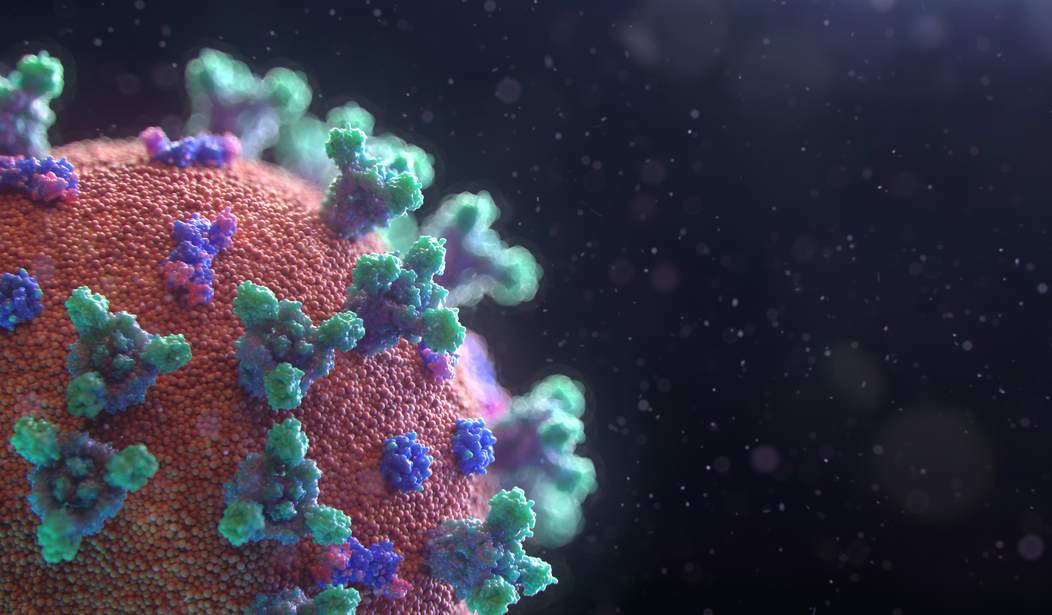

Viruses are odd little things. They aren't really alive in the usual sense; they don't metabolize in the sense that plants, animals, fungi, and protists do. They do reproduce, but many viruses aren't very good at it. Viruses like the big three people seem worried about right now- the COVID-19 virus, the Hantavirus, and the Ebola virus- are all little more than a twist of RNA in a protein sheath. But when they get into a living organism, like a human, they go nuts; they commandeer the body's materials to make copies of themselves, over and over, leaving havoc in their wake.
Here's the problem: For a bacterial infection, even the notorious Hansen's Disease (better known as leprosy), some antibiotics can kill the invading organism, but with a viral infection, that's a little harder. Some vaccines have been in use for many years and are known to be effective, like the smallpox vaccine. Others are newer, some using unproven technology, and with a fast-changing RNA vaccine, require constant boosters.
The best way to handle these bugs, according to Dr Andrew Bamji, a retired Consultant Rheumatologist and former President of the British Society for Rheumatology, is not to try to prevent the problem, but to treat the severe autoimmune overreactions that are the real killers. These reactions are called a "hyperimmune response," or a cytokine storm. Dr. Bamji describes what he calls the "Three Bogey Viruses" thusly:
What do all these (viruses) have in common? Three things.
Firstly, they are all RNA viruses. This means that they are all prone to mutation. SARS-CoV-2 has been through several identified iterations and is almost certainly derived from an existing and not very toxic strain through gain-of-function research; the recent Hantavirus outbreak (if it can be called that, as it is rather small) is due to the Andean strain, a mutant version of the original Korean version and the recent Ebola epidemic is likewise due to a variant.
As noted, these are agile little bugs. They reproduce, but they are inefficient, as RNA has no proofreading capacity like DNA does. That's why, for example, in an Ebola outbreak, you start seeing the virus grow less virulent over the course of a few generations. In the linked column, Dr. Bamji provides a host of links to studies, peer-reviewed studies, supporting his arguments.
- From Zanza C et al. Cytokine Storm in COVID-19: Immunopathogenesis and Therapy. Medicina (Kaunas). 2022 Jan 18;58(2):144.
- From Moore RA, Griffen D. Hantavirus Pulmonary Syndrome. Hantavirus Pulmonary Syndrome – StatPearls – NCBI Bookshelf
- From Younan P et al. Ebola Virus Binding to Tim-1 on T Lymphocytes Induces a Cytokine Storm. mBio. 2017 Sep 26;8(5):
- From Chousterman BG, Swirski FK, Weber GF. Cytokine Storm and Sepsis Disease Pathogenesis. Semin Immunopathol. 2017 Jul;39(5):517-528.
Data. Facts. That's what we should base pandemic policy on.
Dr. Bamji continues:
The next thing they have in common is that all of them provoke, or may provoke, a hyperimmune response, otherwise known as a cytokine storm (CSS). The clinical features of this have been well-described over several decades. The features of this include pulmonary damage with fluid loss into the air sacs or alveoli, clotting problems leading to bleeding (Hantavirus was originally known as Korean Haemorrhagic Fever), cardiac damage – specifically myocarditis – renal damage probably as the result of both inflammation and haemorrhage, and inflammation in the brain, or clotting/bleeding problems including stroke.
In the case of Ebola, the clotting and bleeding problems are horrendously severe, leading to patients literally bleeding out through every orifice.
Dr. Bamji, though, describes one case he saw personally, where a cytokine storm seemed to appear without an obvious infection. Noting that the clinical features of the cytokine storm in his patient were the same as such an event arising from an infection, he was able to successfully treat the syndrome with steroids, which are relatively inexpensive and readily available. That's key.
So let us return to our three bogey viruses. We have three somewhat different viruses that all end up producing the same common path – a CSS. Not, of course, in everyone. Why a small proportion of those infected get it remains unclear, although there is a genetic predisposition element, and it is possible that underlying immunological sensitivity may play a part. That said, if one has an underactive immune system, or immunocompromise, it might protect against the development of CSS – which is counterintuitive to clinicians brought up to believe that immunocompromise raises the risk of infection. That is likely, but the serious consequence of that infection – CSS – may be less likely.
If antivirals do not work (because they are not treating the CSS) and vaccination does not work (for the same reason, and because it is misdirected as the virus has changed) we are left with the inescapable. You treat the CSS. Steroids are cheap. Interleukin blockers such as tocilizumab and anakinra are not, but in the developed world not exorbitant for the relatively small number that need them.
Of course, there's not a lot of money to be made in a readily available treatment that is, by comparison, inexpensive.
Read More: Pre-Existing Immunity Could Have Ended Lockdowns Sooner: The Evidence WHO Ignored
And that's the rub, isn't it? Look, I was still involved in the medical device/biotech/pharmaceutical industries when the COVID-19 panic hit. I know people who worked on the development of one of the mRNA vaccines - I won't mention which one. At the time, it seemed an interesting new possibility. In practice, at least against the COVID-19 virus, it sure didn't work out that way.
And that is the third thing SARS-CoV-2, Hantavirus and Ebola have in common. They cause widespread panic. Not necessary. Small earthquake, not many dead?
That's the problem. Not science, not data, but panic. The COVID-19 outbreak was used to conduct what many people now see as an experiment in excessive government; an experiment to determine whether the American people, by and large, would submit to being locked in their homes, wearing surgical gloves and face masks to venture outdoors, to wiping down every nearby surface with alcohol wipes. Millions lost their jobs and businesses. Billions in economic damage was done. The costs are still being counted.
And they will try it again. Dr. Bamji has given us some new reasons for skepticism, but overbearing government officials aren't interested in facts. They are, and always have been, interested in control, and the COVID-19 event has proven to us that a frighteningly large portion of the American public will go along with it.