
The aftermath of the COVID-19 panic will be with us for some time yet. Some truly ridiculous things happened during that spate of societal madness; people were arrested for surfing, in open water, nowhere near another person. Kids missed months of school, along with all the social skill development that comes with being around other kids. We were subjected to some truly ridiculous requirements: Masks everywhere, one-way grocery store aisles, businesses shuttered, many never to recover.
Perhaps the worst part is that, as time goes on, we find out more and more just how badly the powers-that-be overestimated the necessary response. This was a panic, pure and simple, and we're going to be paying the price for it for years to come.
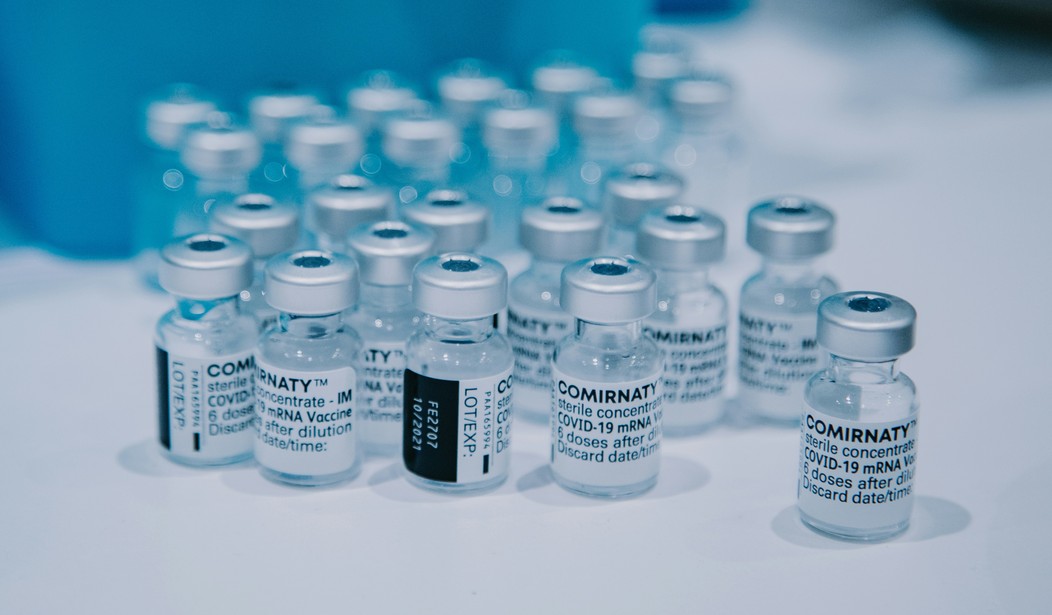
Among the things we are learning now - or, in some cases, as some people were saying all along - is that the World Health Organization, or WHO, in addition to overreacting in many ways, badly underestimated the natural immunity many people already had to coronaviruses, which is the family that the COVID-19 virus belongs to. In a column at the Daily Sceptic, Dr. Rachel Nicoll, a medical researcher and writer, has some details.
Pre-existing Covid immunity is important because it would normally mean we have already built up some immunity to the virus from earlier exposures, making our response to COVID-19 less severe. And in fact, many of us had COVID-19 very mildly and sometimes with no symptoms at all.
It’s important to point out, however, that pre-existing immunity will not be the only reason for mild COVID-19. A healthy vitamin D level and absence of risk factors such as older age, obesity and other underlying medical conditions will also play a part.
Several scientists have pointed out that recognition of our pre-existing immunity could have considerably improved pandemic decision-making. Additionally, there would have been less need to generate the fear which became government policy during the pandemic and the pandemic measures could have been confined to the vulnerable, as suggested by the Great Barrington Declaration.
We should note that COVID-19 is a coronavirus, but it's not the only coronavirus. The upper respiratory syndrome we call "the common cold" is caused by a variety of viruses, mostly rhinoviruses, but about 20 percent of cases are caused by various coronaviruses. And, yes, recovery from one of those can confer some level of immunity to the COVID-19 virus. Mind you, immunity isn't a switch to be flipped; it's not binary. It's more of a spectrum, which can be affected by various inputs.
Dr. Nicoll continues:
There was, in fact, every reason to expect that we had some pre-existing immunity to COVID-19.
Firstly it is a coronavirus. There are six other known human coronaviruses: SARS (mainly confined to Asia in 2003), MERS (the Middle East in 2012) and four common cold viruses. While we may never have encountered SARS or MERS, we have certainly come in contact with at least one of the common cold coronaviruses (the clue is in the name). More than 90% of the human population has antibodies to at least three of the four common cold coronaviruses.
Furthermore, there is 65%-69% genetic similarity between SARS-CoV-2, the virus causing COVID-19, and the common cold coronaviruses, so it would be surprising if there were not some pre-existing immunity.
In any case, the WHO had acknowledged in 2009 that “the vulnerability of a population to a pandemic virus is related in part to the level of pre-existing immunity to the virus”. But no-one in the WHO apparently remembered this or bothered to check back.
Nobody in the WHO may have questioned this, but here at RedState, we sure questioned the entire COVID-19 panic as it was happening.
Read More: CDC Data, Global Sources Show Majority of Omicron Variant Cases Are Among Fully-Vaccinated
And we were not the only ones questioning the panic-mongering.
Those of us who went through this panic will never forget the overreaction. When the panic first hit, I was working in New Jersey, as deep-blue a jurisdiction as one will find, and among many of the local people, the panic was tangible; one would think that the very air had turned toxic. People were frantically sterilizing everything. Local news stories advised using alcohol wipes to sanitize your groceries before putting them away, even though the COVID-19 virus, outside a host, has a lifespan measured in minutes at most. And we all remember the sight (still seen in some places) of people walking, outside, alone, on a sunny day, with a mask on, even though the ultraviolet component of sunlight is like a blowtorch to coronaviruses.
All of it unnecessary. Now, Dr. Nicoll informs us that even vaccines and treatments for other diseases and syndromes can contribute to resistance to coronaviruses.
Although vaccines are now being promoted as the answer to every medical problem, few studies have examined whether their effect might be non-specific and could protect against other viruses as well. The answer is yes, they could (source for this section are in Part 3 of my journal article).
The Bacillus Calmette-Guerin (BCG) vaccine against tuberculosis appears to be a good candidate. A wealth of studies, including a meta-analysis, the highest form of evidence, reported that countries with pre-existing BCG vaccination had fewer confirmed COVID-19 cases and reduced severity, duration of illness and mortality. It may possibly also protect against the hyperinflammation commonly seen in the elderly with severe Covid. It seems to be most effective when given to newborns and infants when the immune system is more susceptible to modulation.
That's biology for you. There are very few sharp lines. There are very few hard boundaries. Even within the somewhat arbitrary definition of species, every organism is different. In this case, every person is different. Every person has a different medical background, resistance, or weaknesses to different pathogens at differing levels. Immunity, again, isn't binary.
And the WHO appears to have ignored this in favor of an overwhelming, one-size-fits-all response, without taking the time to take a breath and evaluate the problem.
Our oldest daughter, who has worked in emergency medicine for nearly 20 years, has several what she calls the Laws of the Emergency Room. One of those is: "At a cardiac arrest, the first thing to do is to take your own pulse." That means, when a crisis hits, the first thing you do is to take a deep breath, get a grip, and respond calmly and rationally.
When the COVID panic hit, many people, many organizations, including the WHO, failed to do that, and we are all still paying the price for that.
You can read Dr. Nicoll's entire 3-part paper on the subject here: