
The motto of the Boy Scouts of America, or at least the organization that the Boy Scouts of America used to be, is "Be Prepared." That's good advice, especially in these times. Here in our own Susitna Valley homestead, we have ample supplies stored up against any misfortune; down cellar, we have sealed containers of bulk rice, beans, flour, and sugar, we have a freezer the size of a small automobile full of meat and fish, and we even have some small indoor greenhouses in which my wife raises spices. And, of course, there is ample protein nearby, sometimes wandering by the house in half-ton portions we call "moose."
While I'm not a wild-eyed purveyor of apocalyptic panic, there are some advantages to being prepared for any eventuality. After all, being prepared and not needing to be is vastly preferable to needing to be prepared and not having taken at least a few steps. And right now, times are uncertain; our cities are melting down, the far left has shown an increasing penchant for violence; the next few years may be difficult indeed, especially if you live in or near one of the nation's major (or minor) cities.
So, you'll understand why this recent piece in The Daily Sceptic caught my eyes.
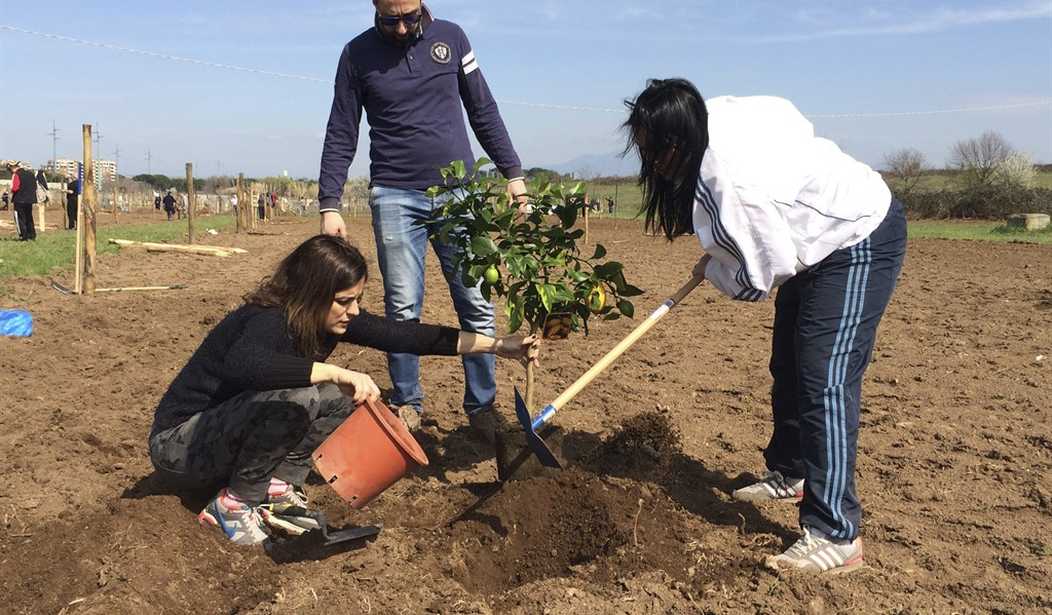
If we, as a nation are to survive this, we need to be as self-sufficient as possible. Instruct your gardener to dig up your lawns and plant potatoes. No gardener? Embrace gardening – its physical and psychological benefits are unmatched. As your physical and mental health is improved by gardening, so will your resilience grow. No lawn? Not a problem: potatoes can be grown in a plastic sack on a balcony. Exotic vegetables such as chillies, sweet peppers and aubergines make attractive house plants on a sunny windowsill and even thrive outside in a good summer. Herbs are one of the most expensive comestibles by weight, yet are easily grown in pots, inside or out. Survival needs to be psychological as well as physical and preserving the normal as far as possible will be essential. The smell and taste of fresh herbs will enliven even the dullest pumpkin stew. We will need to learn to love our pumpkins.
That's good advice. But our British cousins face problems we don't, or at least, we shouldn't.
Now gardening is great. Hereabouts, it comes with its own challenges, including a very short growing season that's made up for by long, long hours of daylight. But raising food crops is always a good idea, and wherever you live, there's almost certainly some food crop you can grow in your dooryard, or in a greenhouse. But here's what the Brits can't do: Protect their crops. We can do that, and to that end, I'll repeat a piece of advice that I've put out thousands of times for the last half-century or so; if you can own only one gun, make it a 12-gauge pump shotgun. Ammo is available everywhere, and with varying loads and at moderate ranges, you can deal with game ranging from rabbits to moose. Such a piece is more than capable of fending off goblins bent on raiding your garden. Like being prepared, having a gun is important; it's better to have a gun and not need it than to need a gun and not have one, and when you need a gun, nothing else will do.
Read More: Photographs and Memories: Stormy Weather
In Praise of Preppers (or, How I Wish I Was Better Prepared for This Snow and Ice Storm)
There are a few other things to keep in mind, too.
First, fire. Over most of North America, a good part of the year is pretty chilly for humans, who, despite our vaunted technology, are still, biologically speaking, creatures of warm, dry climates. So, a source of heat is important, not only for keeping warm but also for preparing food, sanitizing drinking water, making tools, and a host of other purposes.
While maintaining a fire is easier than starting one, there are more than a few easy ways to get a handy blaze going. The Old Man, at some point in the mid-Seventies, picked up a secret weapon when it came to fire-starting, due to the advent of the cheap butane lighter. Even though he was a lifelong non-smoker, he always carried one somewhere around his person for use in the event he needed to set something on fire.
Second, water. We're fortunate enough to have a well, but we do need to get a hand pump added to the setup in the event of a prolonged power outage (and a generator for the freezer, too.)
You can live longer without food than without water. The ancient Romans knew clean water was important, and it’s no less so today, not only for drinking but for a host of other purposes. There are a lot of neat little filters, some as small as drinking straws, that will allow the more-or-less safe drinking of water from almost any source. Water is used for cooking and washing as well as drinking, and while the neat little backpacker filters are handy for wandering afield, for longer terms a bulk solution is in order. Of these, there are two primary methods: Treatment and boiling.
Boiling is easy and self-explanatory, although even boiled water, if treated in no other way, has a shelf life. Treatment lasts longer, and can be done with a variety of substances, the easiest to obtain being plain old generic chlorine bleach. In my days in Uncle Sam’s colors, the Army had 400-gallon water trailers we called “water buffalos,” and those were often filled from sources like rivers and sanitized by dumping in one good old gallon jug of Clorox. I don’t remember anyone ever getting a bad case of the quickstep from water treated thusly. There are also iodine tablets and other treatments for canteen-sized containers, but for the big ones, a jug of bleach will do the trick.
Third and finally, regarding food, veggies are great, but protein is important, too. Humans are omnivores, and a diet with at least some animal protein is preferable, especially if you're looking at hard physical work to stay upright. Livestock is good if you have room. Chickens and ducks take up surprisingly little space and can provide eggs as well as meat. If you have more room, cattle and goats have been kept by humans for millennia. And there's always hunting. In this kind of situation, the first thing you should do is forget about looking up your state’s hunting and fishing regs, because those will rapidly go out the window.
Now, a caveat: Over the vast majority of the country, there won’t be enough game to sustain much of the population for more than a few weeks. After a year, a freshly dead squirrel would be a valuable commodity indeed – that’s why I mention farming before foraging. But in some places, there are more game animals than people, and plenty of fish to boot. One of the main reasons we live where we do in the Great Land is the abundance of good hunting and fishing. In those places, game and fish could at least supplement your diet.
Lay in a stock of tools, too:
- Tools. Woodworking tools in particular.
- Spare parts for guns and vehicles.
- Nails and wood screws.
- Knives and sharpening tools.
- A good axe and one or two good bowsaws.
- Rope. I like hemp rope because it doesn’t stretch, even when wet. I generally keep a hundred feet or so in the truck and a spool or two around the garage/workshop.
Other things may come to mind depending on individual circumstances. Bear in mind that a rural homestead in Arizona, or Mississippi, or (like us) rural Alaska will have different conditions, resources, and requirements. Plan accordingly.
I'm not too concerned about a sudden, dramatic societal collapse. But those kinds of things never happen until they do, and it's prudent to at least take a few steps. And if you find yourself in the middle of such a calamity, a little bit of preparation can go a long way. Plan. Stock up. Put away some seeds, buy some tools, and buy ammo. Times are tense. Plan accordingly. And remember, if things get as bad as they might, the people in those cities will be starving - and they'll come to the suburbs and the rural areas looking for food. We should plan for that, too.