






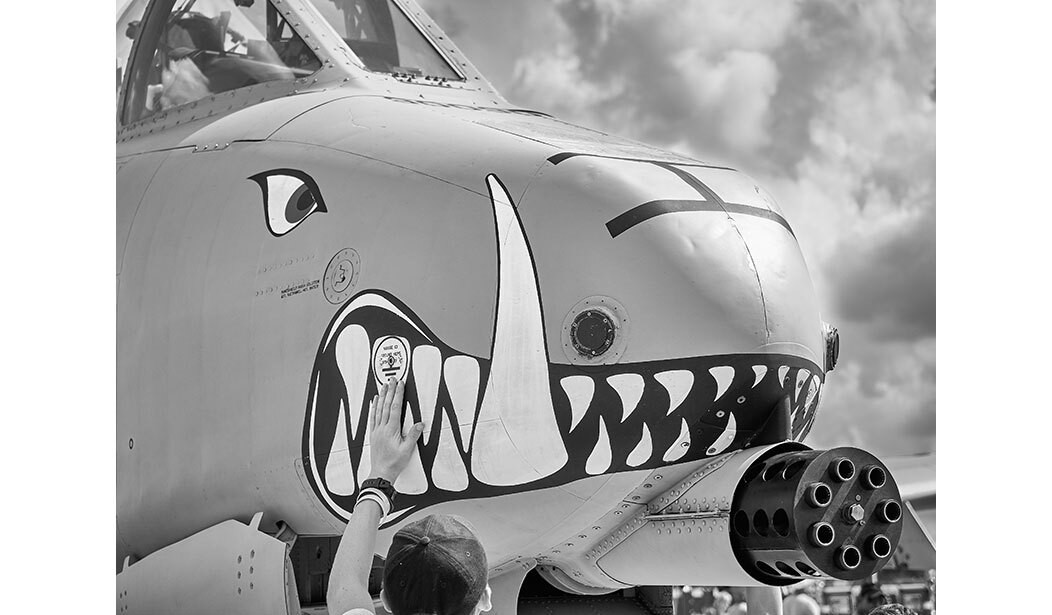
Every grunt's favorite Cold War leftover piece of close air support, it seems, is getting a few more years of active service. On Monday, the Secretary of the Air Force announced, with a nod to the Secretary of War, that the great A-10 Thunderbolt II, better known as the Warthog, will have its service life extended until at least 2030.
In consultation with @SecWar, we will EXTEND the A-10 “Warthog” platform to 2030. This preserves combat power as the Defense Industrial Base works to increase combat aircraft production.
— Office of the Secretary of the Air Force (@SecAFOfficial) April 20, 2026
Thank you to @POTUS for your unwavering support of our warfighters and quick, decisive… pic.twitter.com/zn1l3OshdY
The post states:
In consultation with @SecWar, we will EXTEND the A-10 “Warthog” platform to 2030. This preserves combat power as the Defense Industrial Base works to increase combat aircraft production. Thank you to @POTUS for your unwavering support of our warfighters and quick, decisive leadership as we equip our force. More to come.
The A-10 is operating with impunity in Iranian airspace right now, and the 'Hog drivers have had great success in hunting down and disassembling the Islamic Revolutionary Guard Corps' annoying little speedboats.
Read More: BRRRRT in the Strait: A-10s Target IRGC Speedboats Amid Epic Fury Ops
2030, granted, isn't all that far away. And who knows what the geopolitical situation will be then? But in any war, there may well still be a use for a flying 30mm rotary cannon that keeps its pilot in a titanium bathtub.
Only recently, in a move that had the USAF's elite combat search and rescue (CSAR) community concerned, the U.S. Air Force was still planning the A-10's phase-out.
As the Air Force accelerates plans to retire the A-10 Thunderbolt II by fiscal year 2029, the service faces a growing set of unanswered questions about what replaces it in combat search and rescue, one of the military’s most specialized mission sets.
More than an analysis of replacement aircraft and their capabilities, the transition raises concerns about the pilots in the cockpit, who for nearly five decades have received specialized training in the combat search-and -rescue mission and built trust within the CSAR community. With congressional oversight and legislation underscoring concerns about CSAR operational readiness, and on the heels of a CSAR mission over Iran that brought two F-15E airmen home, the stakes of those unanswered questions have taken on a new sense of urgency.
It seems the F-35 may be taking on the A-10's role in CSAR, but that apparently hasn't been completely worked out yet, and the extension of the A-10s lifespan is short; very short indeed. We have B-52s being flown by the grandchildren of the original pilots, so why not keep the A-10 around another decade or two, to do what it does so well — serve as a flying tank?
I question whether the F-35 has the endurance and ability to fly low-and-slow while maneuvering effectively, as the A-10 does. But there is another alternative in the works; it may not be as tough as the A-10, but it may serve very well in the CSAR role, as well as finding and un-aliving individual bad guys.
Read More: The Skyraider II: That Time the USA Turned a Cropduster Into an Attack Plane
Like the A-10, the new Skyraider II would require complete air dominance and serious repression of an enemy's air-defense network. But if we had that, this is about as low and slow as you get.
Sometimes there's a place for low tech. In World War 2, the Soviet 588th Night Bomber Aviation Regiment, flying old Polikarpov Po-2 biplanes, caused the Wehrmacht a lot of headaches, to the point where the Germans dubbed them the Nachthexen — the Night Witches — because of the swishing sound the wind made in the wings of the old Po-2, and because the pilots were women. They flew at night, in the old biplanes that came to be called the Kukuruznik (wheat-cutter) with machine guns strapped to the wings, and grenades to toss out the window.
High tech is a great force multiplier, and we're awfully good at that. But the A-10 drivers in the Strait of Hormuz are proving that there's still a place for low tech, and what's more, low tech is cheaper. Missiles are expensive, but 30mm cannon shells are cheap.
We should keep the A-10 around for a few more years.
Editor's Note: Thanks to President Trump and Defense Secretary Pete Hegseth's leadership, the warrior ethos is coming back to America's military.
Help us report on Trump and Hegesth's successes as they make our military great again. Join RedState VIP and use promo code FIGHT to get 60% off your membership.



Join the Conversation
VIP members get the ability to comment on articles.