
Energy independence is a great thing if you can pull it off.
I'm old enough to remember the oil/gas shocks of the late 1970s, the embargoes wherein the OPEC nations tried to hold America hostage by bottlenecking our imported oil. I remember the gas lines, the sudden price shocks. There was no oil shortage, though, not as some claimed. No, this was pure political maneuvering by the OPEC nations.
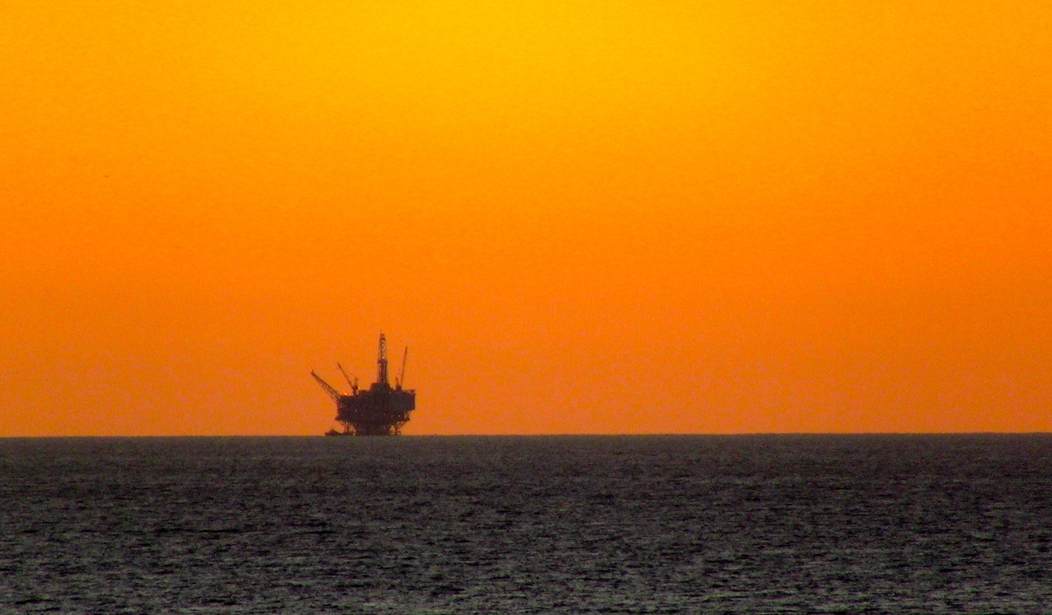
Nowadays, thanks mostly to President Trump and his energy priorities, the United States is not only energy independent but is again a net energy exporter. Now that has the climate scolds all in a tizzy - the "oil = bad" crowd most of all, whose thought processes never go past that elementary point. Europe, too, has been bitten by the Net Zero bug, and now with events in the Middle East, they are realizing they have painted themselves into a corner of energy dependency by shutting off much of their domestic oil and gas development - and how any shock to global markets, such as Iran threatening to close the Strait of Hormuz, can send their economies reeling.
Watts Up With That's columnist Vijay Jayaraj has some interesting points to make about just that.
You are watching, in real time, how a decade of climate-themed hostility to fossil fuels has hollowed out resilience. Governments told you that restraining domestic drilling and pipeline construction in the name of “net zero” would make the world safer. The Strait of Hormuz today tells a different story.
Western nations spent the last two decades systematically crippling their own energy independence. Driven by climate alarmism, European leaders deliberately dismantled their domestic production capabilities. Germany shuttered its nuclear plants and coal facilities under green mandates, forcing a desperate reliance on liquefied natural gas (LNG) from distant suppliers.
The U.K. abandoned abundant North Sea oil and gas reserves, leaving billions of barrels in the ground to satisfy the demands of environmental activists. In Canada, regulatory hurdles have stalled critical infrastructure, such as the Trans Mountain Pipeline expansion, which aimed to transport the ouput of Alberta’s vast oil sands to global markets. These decisions, rooted in a narrative that paints hydrocarbons as villains, have eroded self-sufficiency.
Want to know what will make the world safer? The final removal of the barbaric 7th-century lunatics who currently run Iran. Note that the nations of Europe have elected to opt out of making that happen. That's fine; as President Trump recently pointed out, we don't need them.
Read More: Latest News Shows Why Strait of Hormuz Move by Iran Continues to Unravel
Facts are stubborn things. Leaving oil in the ground does no one any good, and Europe is now learning this the hard way. It's not all a matter of energy policy, either; petroleum and its by-products are the underpinnings of every economy in every country in the modern world. Clothing, plastics, industrial chemicals, pharmaceutical precursors, and much more - and the nations of Europe have elected to rely on foreign sources, many of which aren't particularly friendly.
Asia may have it even worse:
Southeast and Northeast Asia sit at the epicenter of this shock. Nearly half of all crude destined for Asia flows through Hormuz. South Korea, Japan, Taiwan and others have built world‑leading manufacturing economies on the assumption that Gulf oil and gas will remain both available and affordable.
South Korea’s industrial heartlands – Gyeonggi‑do’s factories, Ulsan’s refineries and shipyards – run on imported coal, oil and LNG. In 2024, fossil fuels provided 79% of the primary energy consumed. Japan’s refineries too feed a dense ecosystem of automobile, electronics and chemical plants that cannot substitute the intermittent energy of wind and sunshine for steady combustion.
The financial reckoning for this green delusion is brutal and immediate. On the morning of March 4, South Korea’s market cratered 12% and triggered a circuit breaker, plunging off a cliff in a matter of minutes. South Korean shares plummeted over 10%, erasing $430 billion in value and hitting a 17-year market low amid the escalating Middle East conflict.
China may have it worst of all, as they are currently buying between 80 and 90 percent of Iran's exported oil - claims vary, but they are generally in that range. And there's no guarantee that a post-theocracy Iran will still want to give China preferential treatment.
We're lucky, of course, in the United States to have vast stocks of recoverable petroleum and natural gas, from Alaska's North Slope to Texas's Permian Basin. Not every country in the world has such stocks, and they must get their petroleum where they can find it - or make do with intermittent, unreliable sources like wind and solar power. But the nations of Europe, as well as South Korea and Japan, have bought into the Net Zero nonsense to one degree or another, and now they are feeling the pinch, and it's rather ironic that the pinch is due to Iran's once more having their mouths write checks their butts can't cash.
It's illustrative nonetheless. Facts remain stubborn things. Fact is, the global economy depends on oil, and plenty of it. If the Hormuz oil shock has any lessons for these nations, it's this: They had better start developing any domestic resources they have. If they don't have enough, then they had best send someone to talk to the nation that is becoming more and more dominant in the global energy market - the United States of America.