
Some time ago, I stumbled across what I realized to be a fundamental law of the universe, which I have dubbed Clark's Law of Social Issues Degradation: "Every social movement will continue until it reaches absurdity." Examples abound; the civil rights movement, in the Jim Crow era, legitimately contended against unfair and unacceptable discrimination, and those issues - legal, systemic racial discrimination - have been resolved. Now, though, self-appointed "civil rights leaders" are agitating for "reparations," that is, payments from people who were never involved in legal discrimination to people who never suffered from it.
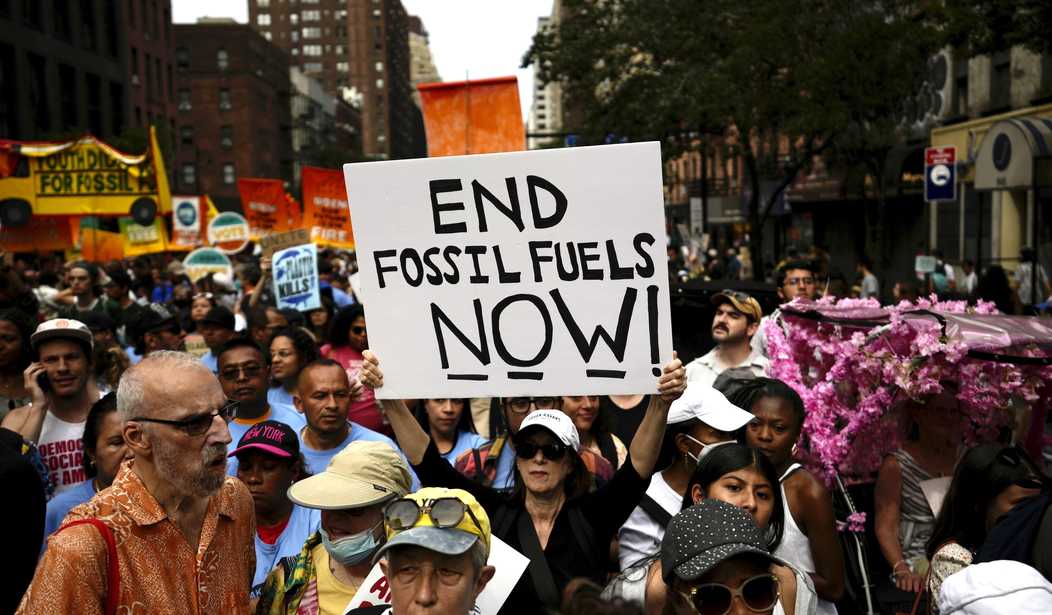
The same applies to the environmental movement and its offshoot, the climate change panic-mongers. As recently as the '60s and '70s, pollution was a serious issue. I remember it. But those issues are largely resolved. Here in the USA in particular, our air and water are cleaner than they have been since the start of the Industrial Revolution. That camel has been swallowed, and now the climate scolds are straining at gnats to find more things to complain about, and as it becomes more and more apparent that they are full of horse squeeze, their arguments are becoming more and more incoherent.
The Empowerment Alliance's Gary Abernathy has some examples from a recent Washington Post piece on the climate.
Just days before President Trump announced that the EPA would no longer be guided on climate change by the so-called “endangerment finding,” the Washington Post’s newsroom decided to take another bite at the old “Earth is getting hotter” apple.
Contrary to their intent, the resulting story, headlined, “Scientists thought they understood global warming. Then the past three years happened,” made the Trump administration’s decision seem entirely logical.
The story, published Feb. 11, is a lesson in the perils of an entity supposedly focused on journalism conducting its own analysis in the field of climate science, and then producing a story that could not be more confusing if it was intentionally trying to supplant Abbott and Costello’s “Who’s On First?” as the most hilarious comedic routine ever founded on the concept of confusion.
Three years out of the 4.55 billion-year history of the Earth. That's what they are basing their climate panic-mongering on. Or are they?
Here's the onion:
Please read the following section closely – more than once if you have to – and then let’s review.
About two decades ago, according to the Post, “Countries also began shifting from coal and oil to wind and solar power. As a result, global sulfur dioxide emissions have fallen about 40 percent since the mid-2000s; China’s emissions have fallen even more. That effect has been compounded in recent years by a new international regulation that slashed sulfur emissions from ships by about 85 percent. That explains part of why warming has kicked up a bit.”
Wait, coal, oil and sulfur emissions helped keep the Earth cooler? And cutting down on those emissions have made the Earth warmer? Here’s the Post’s explanation: “For decades, a portion of the warming unleashed by greenhouse gas emissions was ‘masked’ by sulfate aerosols. These tiny particles cause heart and lung disease when people inhale polluted air, but they also deflect the sun’s rays.” So, pick your poison.
So, let me see if I understand that: Pollution was... good? Because it kept the global mean temperatures in check? The hottest summer that we have record of, by the way, was the summer of 1936. That's right; 90 years ago. My father was 12 that summer, and he used to tell me how he and his brother walked several miles to the Wapsipinicon River to swim, because it was the only way to beat the heat in those days.
Let's think about this for a moment. What, exactly, is the intended message here? Should we return to putting out sulfur dioxide to contain this supposed warming trend - a trend that has been going on with some dips and spikes since the end of the last major glaciation? A warming trend that is actually greening the planet, by the way?
Read More: Climate Change: Is CO2 Changing the Sahara Desert to a Sahara Savannah?
The Hidden Cost of Renewable Power: Toxic 'Green' Waste to Hit 1 Million Tons
But wait! There's more! Now we're learning that this greening, most especially the increase in crop yields, is causing inflation.
In The New York Times (NYT) article “Is Climate Change Making Inflation Worse?,” writer Lydia DePillis suggests that extreme weather linked to global warming is quietly raising the price of everyday goods like food, electricity, and insurance. The framing is, at best, misleading and, at worst, flat-out false. Inflation is a monetary phenomenon driven by fiscal policy, central banking decisions, supply-chain disruptions, and energy policy choices — there is no evidence climate change has altered in a way that impacts any of those factors. The NYT erroneously substitutes weather anecdotes and speculative projections for demonstrated economic causation. However, since instances of extreme weather haven’t become more frequent or severe in recent decades, climate change can’t be causing “inflationary” impacts.
This is the very picture of a social issue approaching the point of absurdity. That's starting to reflect in the attitudes of, at least, the American public. In the 2024 elections, climate change wasn't a major issue driving most folks to the polls. The economy - it's always the economy - and other issues like illegal immigration, the border, the military, and inflation were much bigger issues for most of the electorate. And, let's be honest, a big part of the reason for that is that we have been subjected to several decades of hysterical doom-criers complaining that the planet is about to burn up because we won't surrender our modern energy-hungry lifestyles, and the predictions of those doom-criers just keep not happening.
Clark's Law of Social Issues Degradation has once more been validated.