
The Middle East has been much on the minds of the civilized world in recent years, in no small part due to the consistent unrest and constant brush wars (and sometimes major wars) that are fought in that part of the world. It's an interesting historical phenomenon because the Fertile Crescent, most of which lies in what is now Iraq and Kuwait, is generally thought to be the location of the beginnings of agriculture, the first towns and cities, and the first organized governments.
Civilization, in other words, may well have started in the Middle East, but it sure didn't stick in large parts of that area. Now, today, one of the major Middle Eastern powers, the troublesome Iran, is being disassembled by American and Israeli explosives.
But war is nothing new to this part of the world. The history of humanity is the history of conflict, and the Middle East has been home to a lot of those conflicts. One very early one started with two Persian princes contending over one throne, and ended up being a great tale of courage, determination, and endurance. That event was described by the Greek scholar and soldier Xenophon in his book Anabasis, and is often described as the March of the Ten Thousand.
Read More: The BUFF in Iran: What the Deployment of America's Oldest Bomber Means
SecWar Pete Hegseth Updates on 'Operation Epic Fury': Not 'Mission Accomplished' - a 'Reality Check'
The whole mess started, as is so often the case, with a family squabble in Persia. The king Artaxerxes II was on the throne of Persia (he actually held the title, "King of Kings of the Achaemenid Empire - a bit high-falutin', maybe), having taken the throne on the death of his father, Darius II. But Artaxerxes had a contestant, his younger brother, Cyrus the Younger. Young Cyrus had assembled an army, which included 10,000 Greek mercenaries. These Greek mercenaries marched across much of what is now Turkey and Iraq - then Ionia, Asia Minor, Babylon, and Mesopotamia - and took part in one major battle, the Battle of Cunaxa.
At Cunaxa, the Greeks kicked some and took some. After routing attacks by Artaxerxes's forces at least twice, after the battle ended, the Greeks reportedly only had one soldier wounded. But their allies hadn't been so lucky, and Cyrus the Younger was dead.
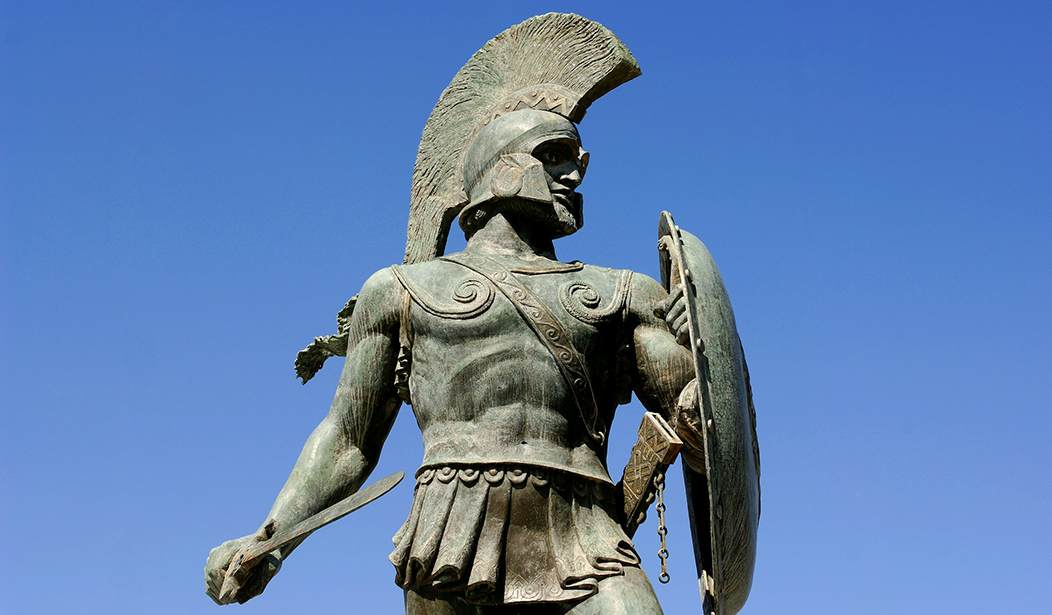
This put the Greek mercenaries in an uncomfortable position. They were much of a year's march from home. They had no food. Their employer was dead. The Persian king had made a demand of them: Lay down your weapons and surrender. The Greeks' reply was on the order of "in your dreams." They elected new officers, including the aforementioned Xenophon, and formed up behind their shield wall to march to the sea.
They started out. At the outset of their epic march, they had to contend with harassing Persian cavalry. Xenophon ordered a charge, scattering the Persian archers and light horsemen. A Persian commander called Tissaphernes assembled a great force to pursue the Ten Thousand, and trapped them against the Zab River. But the Greeks turned and walked right through the Persians, who, very likely, after seeing just how badass the Greeks were, refused to pursue them any further.
On the march, Xenophon not only fed 10,000 men in hostile country, but prevented the pursuers from doing likewise by adopting an early version of a scorched-earth policy: If they couldn't eat it or carry it away, they burned it. Historian Theodore Dodge wrote of that practice:
On this retreat also was first shown the necessary, if cruel, means of arresting a pursuing enemy by the systematic devastation of the country traversed and the destruction of its villages to deprive him of food and shelter. And Xenophon is moreover the first who established in the rear of the phalanx a reserve from which he could at will feed weak parts of his line. This was a superb first conception.
The Greeks fought their way across what is now Iraq and Turkey, taking on all comers. One troublesome lot was a tribe called the Carduchians, who chucked rocks and arrows at the Greeks until the Ten Thousand arrived at where a considerable Carduchian force awaited them. Xenophon ordered 8,000 men to attack the Carduchian's main force head-on, while leading the remaining 2,000 through a hidden pass in the mountains to attack the Carduchian host from the flank, routing them.
Eventually, the Greeks came to what is now the Black Sea. They greeted the event with shouts of "Thalassa! Thalassa!" (The sea! The sea!)
After one last battle with the Colchians, who were allies of Artaxerxes III, the Greeks finally headed home, some by ship, some on foot.
It's quite a tale, and I'm mildly disappointed no one has chosen to commemorate this on film or in a television mini-series, along the lines of Bruno Heller's Rome. I've only provided a thumbnail here, but there are many translations of Anabasis around, including ebook versions, if you'd care to read the whole story.
The history of the Middle East is a long one, marked with conflict. It's an interesting history. The Western Civilization we enjoy today didn't come out of that part of the world, instead originating in Greece and Rome, but the Middle East is still a significant place in human history - and we are still writing that history, today, even now. Stay tuned, because right now, in the skies over Iran, another chapter is unfolding.