
Things are tense in the Middle East, but that's hardly anything new. Things have always been tense in the Middle East, and likely always will be. The problem is that the various nations and satrapies of the Middle East have long sought to export these tensions, at least since Leonidas of Sparta and his 300 held off the Persian king Xerxes at Thermopylae.
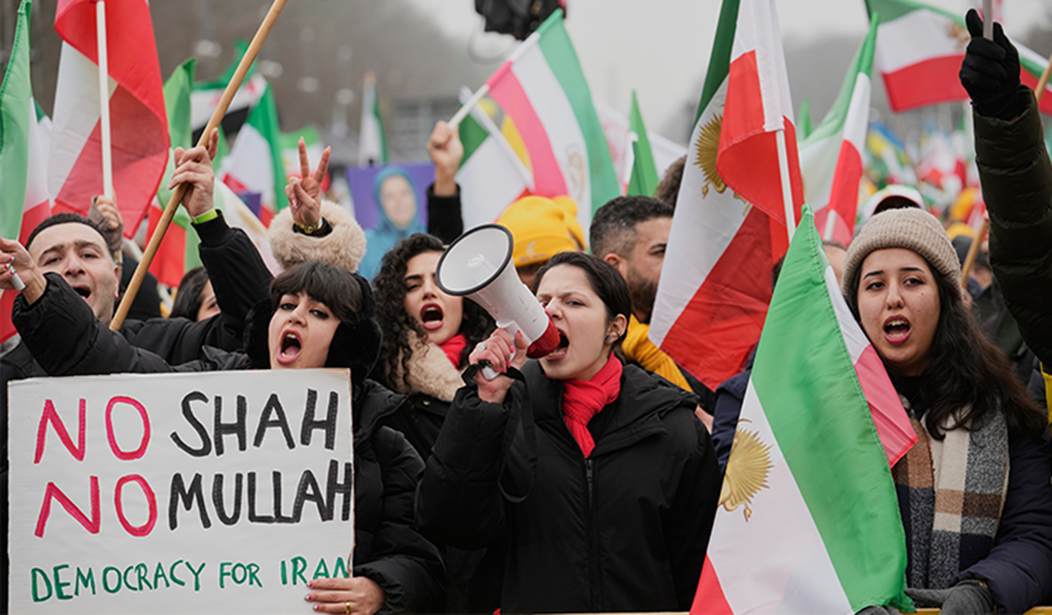
And, yes, today, the nation that now encompasses part of what was then Persia is still a primary trouble-maker in the region today: Iran. Governed by vicious, Bronze-Age theocrats, Iran is the number one global state sponsor of Islamic terrorism. The mullahs who run Iran have nuclear weapons ambitions, and if they manage to obtain one, unlike most, more civilized nations, they are likely to use it. That can't be allowed. But the people of Iran have had enough and then some; despite losses in the thousands from regime reprisals, the regular folk of Iran are still in the streets, demanding changes.
Which brings us to the United States, the Trump administration, and the possibility of war. How likely is an American attack on Iran? How likely is war? There areseveral things to consider.
First: President Trump and Secretary of War Pete Hegseth seem to be moving a lot of pieces into place in the region. There are two - not one, but two - aircraft carrier strike groups in the region, either of which alone is more than a match for Iran's outdated air force, which consists mostly of hangar queens. One of the carriers is the USS Gerald R Ford, the most advanced carrier in the American fleet, carrying over 75 aircraft - fighters, strike craft, and reconnaissance aircraft. The United States also has air assets on land scattered through the region. If President Trump chooses to hit Iran from the skies, he can do so, decisively and overwhelmingly. But wars aren't decided solely by air power.
Second: The Iranian people have had enough. Thousands have been killed, and still protests rage. The son of the former Shah, Reza Pahlavi, has announced his intent to return to a post-theocratic Iran and provide what assistance he can in setting up an interim government. Iran shouldn't return to the days of a monarchy, but a key figure like Pahlavi could be a rallying point around which people could gather, and Pahlavi has enough experience living in the Western world to help in setting up some kind of representative government. It's unlikely in the extreme that a new Iran will simply translate the United States Constitution into Farsi and adopt it as their governing document, but some sort of secular constitutional democracy, probably a parliamentary system, could well be put in place, if the protestors succeed in throwing the mullahs out - and if the protestors can operate under a steel umbrella of American air power, their task becomes orders of magnitude easier.
Third: If the United States does provide this steel umbrella, that's all it should be - no American boots on the ground in Iran. President Trump has already sent overwhelming assets, including the matchless F-22 Raptors, to the region. We can hit the regime hard from the air, targeting government buildings, military installations, missile sites, airfields, and the like. But the Iranian people have to take their own country back. That is, from the forces sent to the region, what President Trump is apparently considering.
Fourth: The mullahs and the regime they oversee are growing desperate. They have been talking about making a deal, about getting American and European sanctions lifted. There's just one problem: They are liars.
Read More: New: Nuclear Deal With Iran Reported As 'Difficult to Impossible' by U.S. Negotiators
Iran's current rulers cannot be trusted. If they offer to give up their nuclear program, they will simply move it. If they offer to stop funding terror groups, they will just fund those groups through another avenue. They cannot be trusted to keep any deal they make, and making any such deal is, honestly, a waste of time and effort. The Trump administration may well only be engaging in these talks so that, when the bombs start dropping, the administration can say to its detractors, "Hey, we tried talking to them."
Finally, there are indications that Iran may be losing influence in the region; if the Trump-led, freshly-minted Board of Peace lives up to hopes, the issue in Gaza may be decided, and Hamas may be defanged. That deprives Iran of a key proxy, and if this happens, groups like Hezbollah and the Islamic State may be sweating a little, too; and Iran can't afford to fund and equip them forever. An attack on Iran, in fact, may cut off all of that support.
Read More: Trump Hosts Inaugural 'Board of Peace' Meeting, Announces $10 Billion U.S. Contribution
So, is the United States going to war with Iran?
If I had to guess, I'd put the probability at 50-50. If it happens, it will be a demonstration of American air power. But it should only be undertaken on one condition, with one goal: The removal of the Iranian theocracy, and the establishment of some kind of secular democracy in what was once Persia - in fact, it wouldn't be the worst idea for the people of that troubled country to cut the ties of the past and take the name of Persia once again.
Taking out the mullahs, taking out Iran's theocracy, would be an earth-shaking change in the Middle East. The primary state sponsor of Islamic terror will be gone. A peaceful nation, set up not by outside influences but by the people of that nation, would be in place, as an example to the other troubled countries in the region. That is almost certainly what President Trump has in mind - and in the next few months, we'll know for sure if that's what he intends.