
There's been a lot of talk, given the rise of artificial intelligence and robotics, about human careers and retirement. Will all this change? Will work become optional? Will robots take our jobs?
We should remember that through the vast majority of human history, people worked until they couldn't, until death or decrepitude claimed them. There are remains of humans from tens of thousands of years ago, showing signs of severe arthritis, of disease, of toothless gums, but what that tells us is that someone cared for these elderly people, even back then. Not a retirement, then, so much as easing them through those last months or years. Other than that, there were no "golden years." People worked. Retirement is a fairly new innovation.
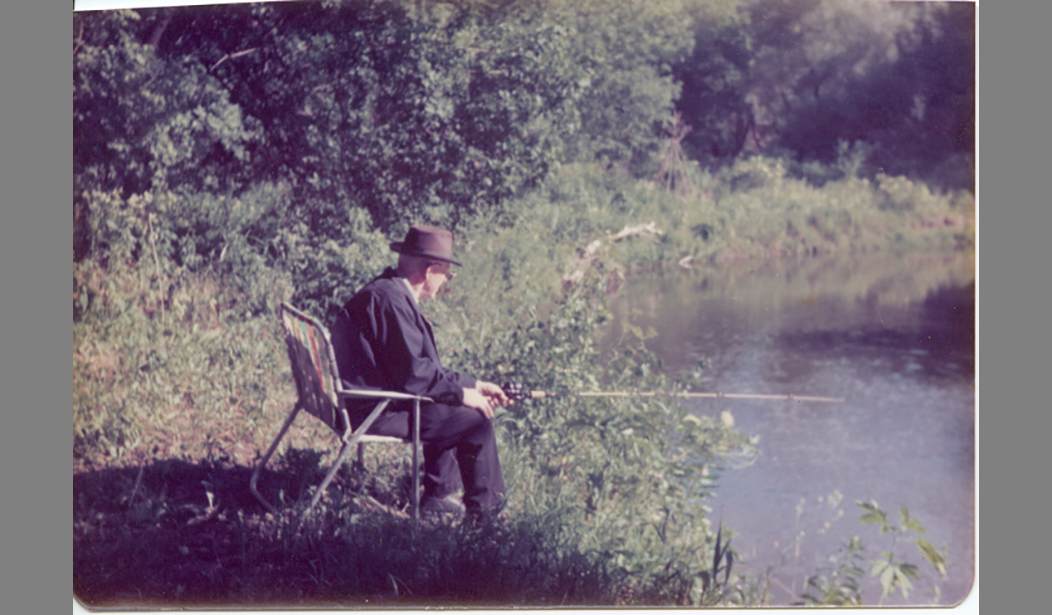
My Dad was one of the lucky ones, on the crest of that wave. He worked for John Deere for 30 years, and was bought out on an early retirement deal; he lived to 94, and ended up drawing his defined-benefits pension and enjoying Deere's generous health benefits for six years longer than he actually worked for them. Few people today are so lucky.
Now, big tech, with artificial intelligence (AI) and robotics, may be making retirement easier - or not. There are arguments both ways. A recent RealClearMarkets piece by John Tamney makes some interesting points.
Elon Musk predicts that with the proliferation of AI, including his Optimus robots, the people of tomorrow will not have to work if they choose not to. Thanks to the automation of so much of what was once human effort, market necessities and luxuries will be incredibly cheap. By extension, people won’t necessarily have to work nor will they need to worry as much about saving for retirement.
There’s no arguing with Musk about what he predicts. While the future is certainly opaque, if it’s true that AI and robots represent work, then by extension it will be true that production of goods and services will skyrocket alongside plummeting costs for those same services. And with a growing number of working hands being those of robots and the machines that they produce and think with, work conducted by humans will increasingly be a choice as opposed to mandatory.
Of course, there's always the possibility that for some, it may not be a choice - they may not be able to find work even if they want it. Two of our four daughters are freelance graphics designers, and both are already seeing AI-generated images and video replacing their work. I still hold that AI can't create, can't make something truly new, but it can remash a lot of old stuff to come up with something good enough to justify not paying a human to do the work.
Which leads me to this:
Where there’s possible disagreement with Musk is in the prediction that the people of the future won’t work. The speculation here is quite the opposite.
Precisely because it will no longer be a necessity, people will work more than ever. Which shouldn’t surprise anyone. To see why, stop and contemplate what happy workers tell those who are unhappy: do for work what you would happily do for fun.
Color me skeptical.
Maybe it's just me, but it sure seems like sloth, not industry, is the big coming thing right now. Personally, I find nothing so contemptible as a person with no purpose, and while I haven't conducted a scientific study on the matter, it sure seems like a lot of people are happy being without purpose. And this matter, with AI and robotics taking over more and more, would be bad. I am not optimistic enough to think that a majority, or even a strong plurality, of people would find some joyous new work to employ them.
I'm also a little skeptical that work will ever become unnecessary. Oh, the face of work will change. The AI will need to have code tweaked, and for those not suited for that work, any robotics will also require maintenance.
Read More: Robot Revolution Sparks New Crime Surge Alert
AI's Nuclear Nightmare: Machines Now Poised to Spark Global War?
What we want to watch is incentives. Bringing about a future where work is an option, not a requirement, is a recipe for disaster. A society that does not require work is a society that will grow weak, and ripe for conquest - or extinction. The trouble is that this toothpaste isn't going back in the tube. AI and robotics are coming; they will be more and more prevalent. Many jobs are secure, from opinion journalists to our neighborhood guy who does our plowing in winter and general handyman stuff in summer. But the times, they are a' changing.
Retirement isn't something that should be handed out freely. It should be something we earn. They aren't "golden years" otherwise. They are just... more years. Work should not be altogether a choice. The kind of work one does, yes; the necessity of working, no. Retirement, too, should be a choice; otherwise, it's just unemployment.
Here, though, I'm indeed one of the fortunate ones. What I do for a living (this) doesn't seem like work to me. The old saying applies, do what you love, and you'll never work a day in your life. Also, AI can't really replace opinion journalism; AI doesn't have opinions and, barring some huge breakthrough, never will. It can rehash and approximate, but that's all.
AI and robotics are going to change the world in ways we can't yet predict. They aren't going away. But we had better hope that good old human ambition and enterprise don't go away, either.