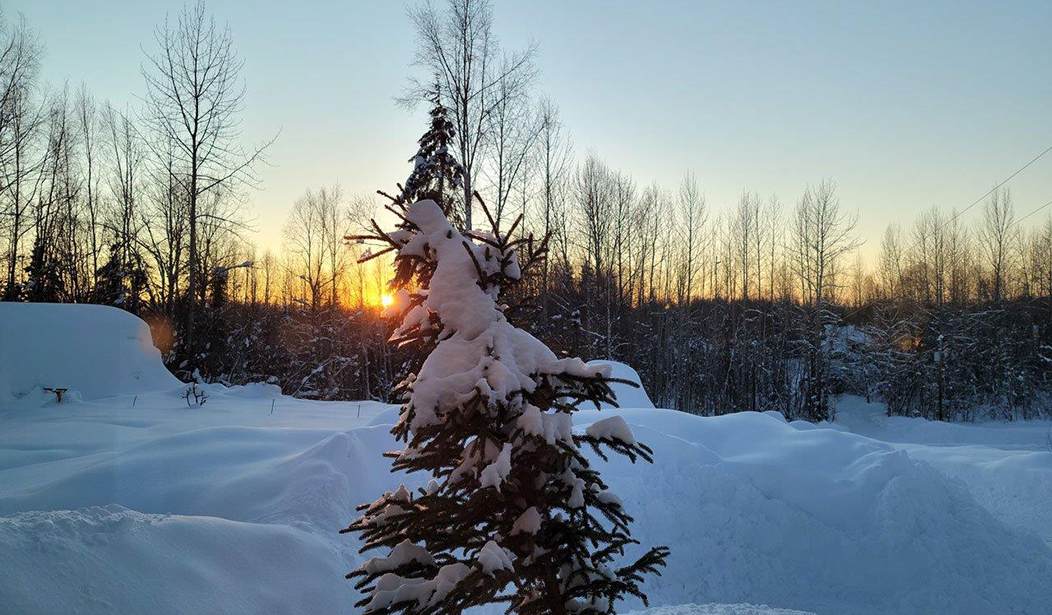

Today, Sunday, December 21, is the 2025 winter solstice. It's technically the first day of winter, although in northern climes (like mine) winter still has a lot to throw at us. But today is the day we start moving back towards spring.
I'm reminded, today, of the Jethro Tull song, Ring Out, Solstice Bells.
Now is the solstice of the year
Winter is the glad song that you hear
Seven maids move in seven time
Have the lads up ready in a line
I've always wondered why the calendar year isn't aligned with the natural year. It would make a great deal of sense for the calendar year to start on either a solstice or an equinox; a date from nature, a point in time that is universal, and not one dependent on any culture or mathematical system. Our 24-hour day, for example, is an ancient remnant of the ancient Babylonians and Egyptians, who used a base 12/base 60 numerical system, the vestiges of which still haunt our clocks and calendars today.
But for the oddity of our calendar year, we have to look back to Rome, and to Julius Caesar. Before Caesar reformed the Roman calendar, the Roman calendar began in March, or Martius, as they called it, aligning more or less with the spring equinox. That made sense; it was the start of the agricultural season, and the time when snows melted and made military campaigns possible. But around 150 BC, the Romans fiddled with the calendar, making it start on the now-universal January 1st, as that was the date that new consuls took office.
Caesar fiddled with it further, giving us the Julian calendar in 45 BC. Caesar's reforms used the occasional leap year to handle the fact that Earth's orbit doesn't precisely match a certain number of rotations. In 1582, Pope Gregory caused the calendar to be fiddled with further, retaining the January 1st start date and refining the leap day system to prevent the calendar from drifting relative to solstices and equinoxes. That's the calendar we are still using today, and it still retains January 1st, 10 days after the winter solstice, as the start of the new year.
Thus, politics, not nature, took over the calendar. That's how it was, and that's how it is.
Calendars notwithstanding, history and even the present day are replete with solstice celebrations. The ancient Romans, who saddled us with this whole January 1st business, celebrated Saturnalia on the winter solstice. In northern Europe, the Scandinavians, the Teutons, and the Celts celebrated Yule on the solstice. Thousands of years earlier, in Britain, pre-Celtic people built Stonehenge and other solar calendars to inform them of the solstice. Further east, China has the Dongzhi Festival, celebrating the harvest and the move back towards spring. In Japan, there is the festival of Toji, wherein people celebrate health and renewal.
Most people don't really need an excuse to celebrate; throughout history, one constant seems to be that folks like a good shindig. The winter solstice seems as good a reason as any.
Of course, the planet doesn't attune itself to human concerns. This winter solstice remains what it was since long, long before humans were present. This solstice is the point in the planet's orbit where the northern orbital pole reaches its maximum tilt away from the sun. That spreads the sun's radiation out, as it hits the surface at a much lower angle than in summer, and that's why winters are cold. In the latitudes of the far north, that results in some really short days; north of the Arctic Circle, there is an interval where the sun never rises above the horizon.
Read More: Photographs and Memories: Colder Weather
The Long Dark - What Happens to People Without Sunlight?
Here in our Susitna Valley digs, this 2025 winter solstice morning, the sun rose at 10:20 AM and sets at 3:35 PM. That's a short day.
We still have a lot of winter ahead of us. That interval between the solstice and the first melting of spring also has a lot of tradition around it. Historically, it's been a time for storytelling, which I appreciate, being above all things a storyteller myself. It has been a time for teaching, for repairing tack and other farming equipment for spring. Here in our Alaska home, well, my work schedule isn't dependent on the seasons, but sometimes I do envy the bears, who sleep away the short days and long, cold nights.
On the solstice morn, though, the alarm went off - you can't depend on an Alaskan sunrise to wake you early this time of year - and I attended my morning necessity, bundled up in insulated clothing, heavy clothing wearing traditional outdoor labels like Carhartt and Duluth Trading, and went out in the -18 cold. As I always do, I looked up.
Then I went around, turned off all the yard lights, and looked up again. I think I spent ten minutes in that cold, looking at the ice-chip stars, and watching the auroras whip and flicker overhead. Winter has much to recommend it, but it's as well it doesn't last forever; and today, we start our journey back to the sun, to the bright green leaves and radiant flowers of summer, of new moose calves, of the return of the summer birds, of the songs of the thrushes high in the trees and the coarse cawing of the baby ravens begging food from their parents.
It's winter. And spring will be here before we know it.
This is perfectly appropriate.