
We humans, we aren't really wired for winter in the northern (or southern, I suppose) latitudes. Biologically, we're mostly creatures of the tropics. Even the Inuit and other Arctic peoples, while being somewhat adapted, still require fire and furs to survive. That's fine; our brains, our technology, starting with fire, have made us what we are, and have enabled us to live in every environment the planet has to offer, except the open ocean - we can travel on the ocean, but with a few extreme outliers, we don't live on it.
I have a treasured memory from my Allamakee County, Iowa, youth, of a January morning when I woke up to learn from the radio that the schools were closed. They weren't closed because of snow; they were closed because the mercury had plunged to 24 below zero, and none of the school buses would start. But those of us in rural households were better prepared; our trucks had engine block heaters and had been plugged in all night. So, what to do? Why, go try to shoot some pheasants, of course. My buddy Jon had standing permission to hunt a large farm over Cresco way, so into the insulated coveralls, Sorel boots, winter parkas, gloves, and scarves, and off we went.
This was an adventure. We walked the cut corn, and we walked the woods along a creek bottom, but the local pheasant population must have been warming their toes in a local chicken coop, because we didn't see any. When we got back to the truck and looked in the left-hand side mirror, there was frost on my eyebrows.
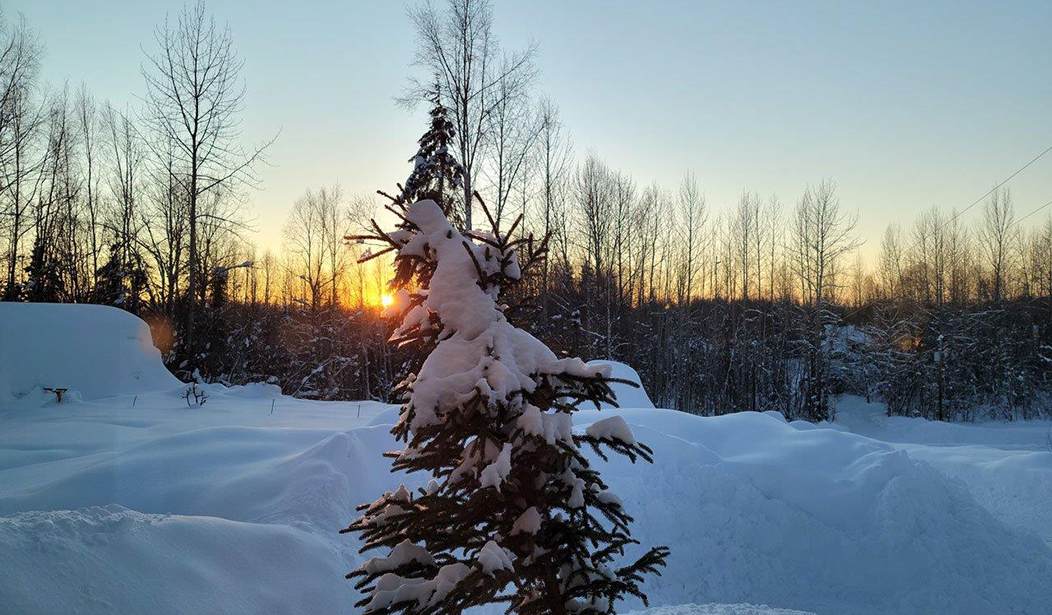
It's not just the cold that affects people. Winter days are short, and at the latitude I live at now, they're really short. This Thursday morning, it's still 10 days until the winter solstice. The sun came up today at 10:10 AM and will set at 3:36 PM. The sun, this time of year, barely rises above the horizon, describing only a low arc across the southern sky.
This can cause some people serious issues. Seasonal Affective Disorder (SAD) can be a cause of depression, sometimes serious. The National Institute of Mental Health says about SAD:
SAD is a type of depression characterized by a recurrent seasonal pattern, with symptoms lasting about 4−5 months out of the year. The signs and symptoms of SAD include those associated with depression as well as disorder-specific symptoms that differ for winter-pattern versus summer-pattern SAD.
But there are compensations.
Read More: Photographs and Memories: Shadows of Autumn
Photographs and Memories: The First White Whispers of Winter
What's interesting is how obvious it is to see how the local creatures here in the Susitna Valley are better suited for the winters than we are. The big animals do all right. Bears, of course, sleep the winter away. The moose are splendidly equipped with long, long legs to navigate deep snow, although it does slow them down. The wolves run over the top of the snow, and, through the course of the winter, are a major source of mortality for yearling moose, as many as half of which don't survive their first winter.
Some change color. The snowshoe hares turn white, as does our little local mustelid, a least weasel we call Herman the Ermine. But what amazes me is the chickadees. These tiny birds are among my favorites. I know I'm anthropomorphizing them somewhat, but they seem to always be so indefatigably cheerful. They hit our feeders all day, carrying many of the sunflower seeds away to stash them. They are the last to leave the feeders in the evening, and the first to show up in the mornings, and I have always wondered how they survive our 20-hour, bone-chilling nights, being just little one-ounce bundles of fluff. But they do it, probably in a thick clump of black spruce branches, feathers puffed out against the cold.
Winters leave us with memories to be compared and laughed over. Rural people, suburban folks, and city dwellers alike do this, and when Alaskans start talking about winters past, the words seem to grow wings. My wife and I have many such stories; the Mother's Day, 2015 blizzard in the Denver area, the "Friday blizzards" of 2004, when the city was slammed three Fridays in a row - the Friday before Christmas, Christmas Eve, and New Year's Eve. I remember a year in my Iowa youth when the snow piled up so deep that local towns had to load it in trucks and take it out to the county parks to dump it, and how those piles of snow didn't melt away until June.
I remember one night at my childhood home on Bear Creek, in Allamakee County, when at about 9:00 PM the mercury stood at -15, and my Dad had gone out to bring in firewood. He came back in and told me to get on my coat and boots. I didn't ask why; he wasn't a man to make such requests capriciously. We went outside, into a deeply cold, still night, with the ice-chip stars shining overhead amongst the great, glowing arc of the Milky Way. Dad pointed at the hill across the creek and said, "Listen."
A few moments later, I heard it - and then, again: The deep, single hoot of a long-eared owl, a winter visitor to our woods.
We enjoy the winter up here in the Great Land. Partly because we enjoy having the stories of Alaskan winters to tell people from Outside. Partly because we enjoy feeling proof against it, with our insulated clothing, our woodpiles and stoves, our full heating-oil tanks. But we also enjoy the winter because it's beautiful, with the snow staying a perfect, clean white until it melts in the spring - and we enjoy it because of the sense of wonder it brings.
Now, if you'll excuse me, I have to go get some firewood in. It's warmer today - only five below zero - so not an unpleasant task.
This seems appropriate.