
I get it; people love cats. Well, a lot of people love cats. I'm fond of cats, with my favorite kind of cat being "somebody else's." Three of our four kids have cats (the fourth being the owner of two huge, rollicking Labrador Retrievers), and I'll play with their fuzzy, friendly kitties while I'm visiting. I do harbor some ideas about the appropriate living quarters for cats, that being not a house but a barn. As evidence, note that all one must do is build a barn, put livestock in it, be it pigs, horses, cattle, whatever, and the barn will begin to spontaneously generate cats.
This is a fundamental law of nature, henceforth to be known as Clark's Law of Barns and Cat-Genesis.
But a little perspective is in order. Cats aren't people. They aren't as important as people, and the death of a cat may be sad, but it's not the same as the death of a human. Which brings us to San Francisco, and a cat named Kit Kat.
San Francisco is an admittedly quirky city, but an emotional debate there over the tragic death of a cat is strangely emblematic about the way too many Americans react to current events. Something bad happens and then throngs of people mourn, get angry and then demand that government “do something” — even if the something they call for will only make the problem worse.
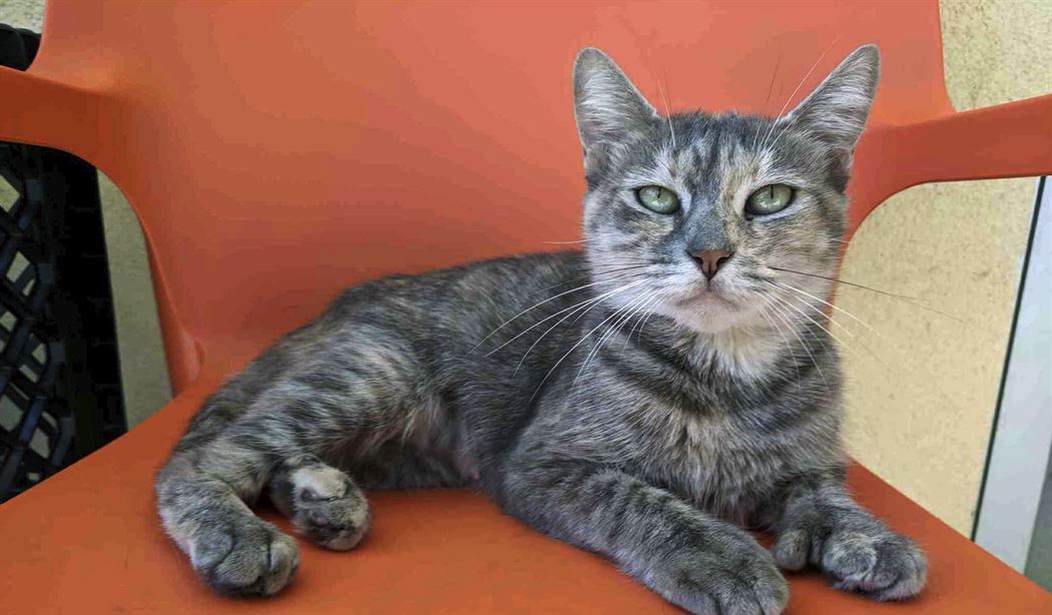
For those who missed the internationally publicized brouhaha, a tabby named Kit Kat had lived in the city’s Mission, where he sauntered into bodegas and bars. Dubbed the Mayor of 16th Street, Kit Kat was by all accounts a charming character. Then on October 27, the unthinkable happened: a Waymo self-driving taxi ran him over. Kit Kat’s fans have erected memorials and took to social media to mourn.
To call San Francisco "quirky" is a rather gross understatement, but the reaction to Kit Kat's death wasn't quirky; it was well to the left of bizarre. And, let's be candid about one thing: People who know cats and roads know that allowing a cat, even a street-wise cat like Kit Kat seems to have been, to roam freely is just asking for this inevitable end. Cats roaming free are going to come to a bad end sooner or later. That's what happened here - and of course, San Francisco liberals wasted no time in shouting for a new law, not to control free-roaming cats, but rather, the self-driving cars.
Oh, and what about the approximately 43,000 people that die every year in traffic incidents? We might note that in San Francisco, where Kit Kat roamed, 43 people died last year in traffic incidents - and none were killed by a Waymo.
There’s nothing wrong with mourning the death of a neighborhood cat. You’ll have trouble finding someone who likes cats more than I do. I’ve got housecats, but also keep a food dish out front to lure neighborhood strays. One of my wife’s favorite memories from Istanbul: Friendly cats that wander around restaurants and stores. The city even erected a statue memorializing one.
So my problem isn’t with the upset, but with the proposed solutions. As The New York Times reported, “Jackie Fielder, a progressive San Francisco supervisor who represents the Mission District, has been among the most vocal critics. She introduced a city resolution after Kit Kat’s death that calls for the state Legislature to let voters decide if driverless cars can operate where they live.”
Of course, Kit Kat isn't an outlier; as many as 5.4 million cats are killed every year by cars and trucks, and few if any get memorials. It's not just vehicles, either; people who live in the country, or as the left would say, in "the environment," all too often are treated to the sight of a vehicle stopping along the highway, ejecting a cat or dog, and driving away. Sometimes those animals find a new home. Sometimes they don't. Cats, in particular, go feral very quickly. It happens here, and it's sad, because those cats seldom make it through an Alaska winter. If an owl, a wolf, or a lynx doesn't get them, they freeze, or starve, or both.
But this proposed resolution is a massive overreaction. For one thing, any such law, which even in the far-left Bay area seems unlikely to pass, would create an instant patchwork of regulations and ordinances that would make it utterly impossible for any of these driverless taxis to operate. The area would instead be back to human-driven rides like Uber and Lyft, except California is making it difficult, even impossible, for those to operate anywhere in the once-Golden State.
Jackie Fielder clearly didn't think this through. But then, that's another thing liberals and "progressives" are notorious for.
Read More: Woman Delivers While Riding in Self-Driving Robotaxi in San Francisco
Just Another Day in LA: Viral Video Shows Woman Discovering Creepy Surprise in Trunk of Her Waymo
Look, I get it. I live not far from an unincorporated town that famously had a cat as their unofficial mayor. People like cats. That's fine.
But cats aren't people, and it says something about the people of San Francisco and, likely, other places, that they can get so spun up over the death of a cat - however sad - while not blinking an eye at the deaths of thousands of people. A single death may be a tragedy, while a thousand are a statistic, but this is taking disproportionate response to a ridiculous extreme. It's sad that Kit Kat is gone. This moggie was clearly loved by the people of the neighborhood. But it's a cat, not a person, and if anyone had done the responsible thing and taken Kit Kat in and provided a stable, safe home, then that kitty would still be ingesting cat food and purring happily today.