






Flying into the enemy’s capital, pulling the president and his old lady out of the rack, bagging and cuffing them, and whisking them away without loss and leaving dead Cubans stacked up like cordwood is something that would fit into a Jason Statham film, until the studio said, “Wait a minute, no one is going to believe this crap.” But that is precisely what happened in Venezuela early Saturday morning when all the strategic dominoes in the Western hemisphere dropped; see Venezuela Promises to Be a Geopolitical Game Changer If Trump Can Convert a Triumph Into Victory – RedState.
The official sequence of events looks something like this, but I’m sure it will be modified in the days and weeks to come.
- CIA had assets inside Venezuela since August, including a source in Maduro’s inner circle. This is not particularly secret. The CIA and one of the SEAL Teams have been operating in Venezuela since the first drug boat was sunk. The involvement of SEAL teams was revealed in the brouhaha over multiple missiles being fired at a boat; see Washington Post Accuses Pete Hegseth of 'Illegal Order' to Kill Drug Runners, but Is It Real? – RedState. Trump, himself, let it be known that the CIA was operating in August; see President Trump Unleashes the CIA on Venezuela and Signals Ground Operations Are Very Likely – RedState.
- Trump delayed action to exhaust diplomacy. I posted on Maduro’s last pathetic attempt to weasel out of his situation the day before the strike; see Maduro Says He's Ready to Play 'Let's Make a Deal' – RedState.
- A weather window opened Friday night.
- Congress was kept in the dark until the last moment.
Rubio: You can't congressionally notify something like this for two reasons. Number one, it will leak. It's as simple as that…. A number of media outlets had gotten leaks that this was coming pic.twitter.com/wO2S7UuUdp
— Acyn (@Acyn) January 4, 2026
You can't congressionally notify something like this for two reasons. Number one, it will leak. It's as simple as that.
And number two, it's an exigent circumstance. It's an emergent thing. You don't even know if you're going to be able to do it. You can't -- we can't notify them we're going to do it on a Tuesday or on a Wednesday, because at some points, we didn't know if we were going to be able to carry this out. We didn't know if all of the things that had to line up were going to line up at the same time in the right conditions.
You know, it had to be at the right place at the right time with the right weather, and all things like that. So those are very difficult to notify, but the number one reason is operational security. We would have put people --
STEPHANOPOULOS: As you know --
RUBIO: Carry this on -- in harm's way, and frankly a number of media outlets had gotten leaks that this was coming and held it for that very reason, and we thank them for doing that, or lives could have been lost.
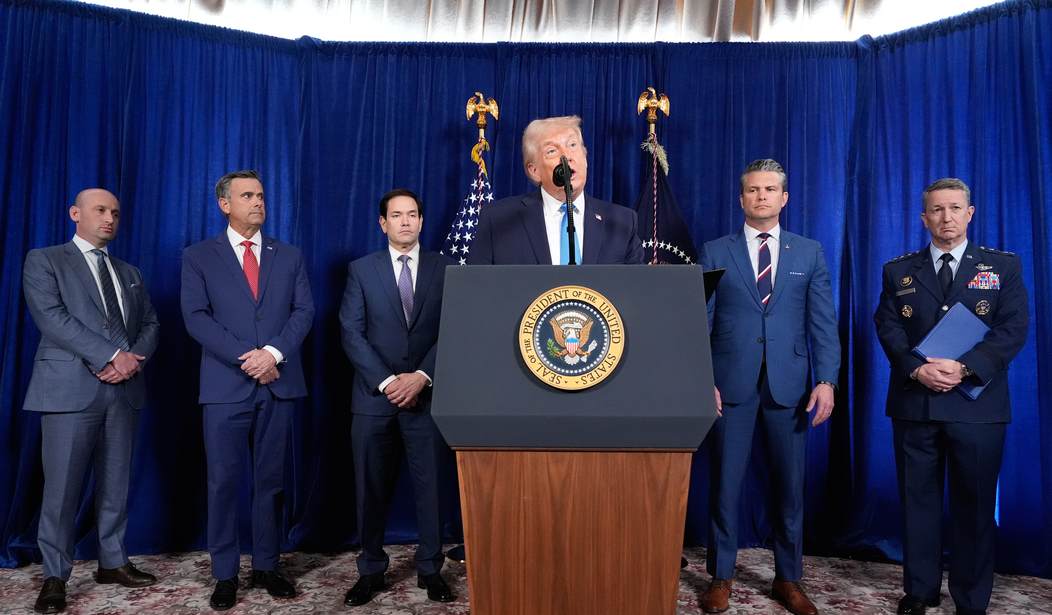
- At 10:46 p.m. Eastern Time, Trump gave the "execute" order. Secretary of State Marco Rubio, Secretary of War Pete Hegseth, CIA Director John Ratcliffe, and Homeland Security Advisor Stephen Miller were with Trump when he gave the order.
- By 1 a.m., U.S. aircraft conducted precision strikes on Venezuelan air defenses, clearing a path for the extraction team. 150–200 aircraft launched from 20 locations.
- Around 1:01 a.m. ET, helicopters carrying Delta Force troops arrived at Maduro’s compound.
- The force came under fire, which was not a great evolutionary strategy. One helicopter was hit but remained flyable. An undisclosed number of Delta troopers were injured. Thirty-two Cuban bodyguards were killed.
- Around 3:29 a.m., Maduro and his wife were aboard the USS Iwo Jima, en route to the U.S.
I’d like to look at this from two aspects: tactical and political.
Tactically, this was a tour de force. The closest historical analog, in my opinion, is Colonel Otto Skorzeny’s raid on Gran Sasso in Italy to rescue an imprisoned Benito Mussolini. I’m open to correction on this, but I think this is the third mission U.S. forces have attempted with this mission profile: a hard target deep inside enemy lines. The first was the raid on the North Vietnamese prisoner of war camp at Son Tay, also known as Operation Ivory Coast, on November 21, 1970. Often called a “failed” raid, anytime you land near the enemy’s capital and get out again without casualties, it is a success. The fact that U.S. POWs had been moved gave a bad rap to a masterful piece of planning and execution. The second example is the ill-fated Operation Eagle Claw, also known as “Desert One,” when the attempt to free U.S. hostages in Iran went sideways. Out of the ashes of Desert One, though, came Colonel Charlie Beckwith’s brainchild, 1st Special Forces Operational Detachment-Delta, or Delta Force.
I don’t include the Bin Laden killing for three reasons. First and foremost, the mission there was not to get the target out alive. That gives you a lot more operational flexibility. Secondly, where Son Tay and Desert One and Caracas were all deep inside hostile territory, Pakistan was notionally an ally. If things went bad, there would have been a lot of embarrassment, but I don’t think we would’ve seen SEALs fighting Pakistani troops. Third, I’m convinced Pakistan was complicit in the operation. When a helicopter crashes and a gunfight breaks out in the ritzy suburbs of a city containing a country’s equivalent of West Point along with an infantry division headquarters, and police, fire trucks, and ambulances don’t rush to the scene, as a good friend of mine says, “Down at the FBI office, that is what they call a clue.” This is not to take away from the accomplishment. But if the Bin Laden and Maduro raids were Olympic events, they don’t have the same degree of difficulty.
If something went wrong in Caracas, from enemy action to gremlins, on ingress or egress, there was no reaction force that could have saved the situation. It would have been Black Hawk Down all over again.
The message this sends is that if the U.S. wants you, then you’d better move every couple of hours to a randomly chosen location and keep away from cellphones.
I also want to give a shout-out to the guy who came up with the operational concept. Imagine the scene. An exhausted planning staff is trying to come up with what happens when Venezuela finally tells President Trump to FOAD. The operations center maps show over-the-beach landings by U.S. Marines, an airdrop by the whole 82d Airborne, a U.S. Air Force Desert-Storm-esque bombing campaign, because each service wants to get a piece of the action (if you doubt that, look at the invasion of Grenada). An Iron Major sees the operation getting bigger and bigger. With each addition of forces, the operation threatens to collapse under its own weight. This, by the way, is how a staff decides not to do something that the boss wants to do but the staff thinks is dumb or unpleasant or just too much work. You just turn the Good Idea Fairy loose. You start adding lots of really good stuff and organizations to the operation, and you make it so complex and unwieldy that it can’t happen, but every element has a staff study showing why it is vital. Unable to cut any of the really great ideas, the commander eventually kills the operation.
Finally, exasperated, an Iron Major (if you know, you know) stands up and addresses the three-star operations director. “Sir, hear me out,” he says in a voice abraded by a week of Red Bull, coffee, and two hours of sleep. “Why don’t we s***-can all this stuff? We just send in the Delta boys, grab Maduro’s ass, and tell the rest of the government to get in line or we’re coming for them next.” Silence falls over the room. The monitor with the PowerPoint presentation goes dark. The three-star and his deputy exchange glances. And the rest is history.
Frankly, I am in utter awe that a U.S. military mangled by 12 years under Obama and Biden was able to plan and accomplish the mission. It is a credit to the professionalism of the training cadres and the officers and noncommissioned officers in elite units that they were able to avoid the anti-military nuttiness of those years and pass on skill and professionalism.
If this were a military tour de force, the political aspects were at least as impressive.
The risks were enormous. If the operation went pear-shaped, Trump would find himself a lame duck, probably facing a third impeachment. There would be no way to recover for the 2026 mid-term elections. Ordering a "go" to the assault without notifying Congress showed two things. First, Trump was serious about it succeeding; the safe way out would have been to brief Congress, let the story leak, and cancel the operation because of the compromise. Second, he was willing to risk his presidency to impose his will on Venezuela and, by extension, a lot of other places. Quite honestly, we haven’t had a president this willing to bet big on one roll of the dice since Jimmy Carter gave the order for Desert One. I’m sure there were vigorous discussions from the time the operational concept perked up from USSOUTHCOM and the naysayers took their shots at the plan. But, in the end, Trump bought into the plan and showed the virtue of Stonewall Jackson’s dictum, “Never take counsel of your fears.” More importantly, Trump had the guts to pull the trigger. No one will ever know how many great operations died because a gutless president was afraid of what might happen; this shows what is possible when the man at the top has the courage of his convictions.
I’m sure that over the next weeks, the postmodernists will attempt to deconstruct the operation and make it out to be blind luck or fake. Delta had barely landed when open-source intelligence, also known as OSINT, accounts on X were claiming that it was all fake and a) Maduro agreed to the theater as a way of leaving Venezuela or b) CIA cash had suborned his security force, and the pyrotechnics were just a ruse to cover the betrayal. Don’t believe it. This was a master class in tactical operations, strategic vision, and political guts. Trump laid down a marker that this is OUR hemisphere and the "Donroe" Doctrine rules.
RedState is your leading source for news and views on administration, politics, culture, and conservatism. If you appreciate our reporting and commentary, please consider becoming a member and supporting our efforts. Use promo code FIGHT to get 60% off your membership.
Join the Conversation
VIP members get the ability to comment on articles.