






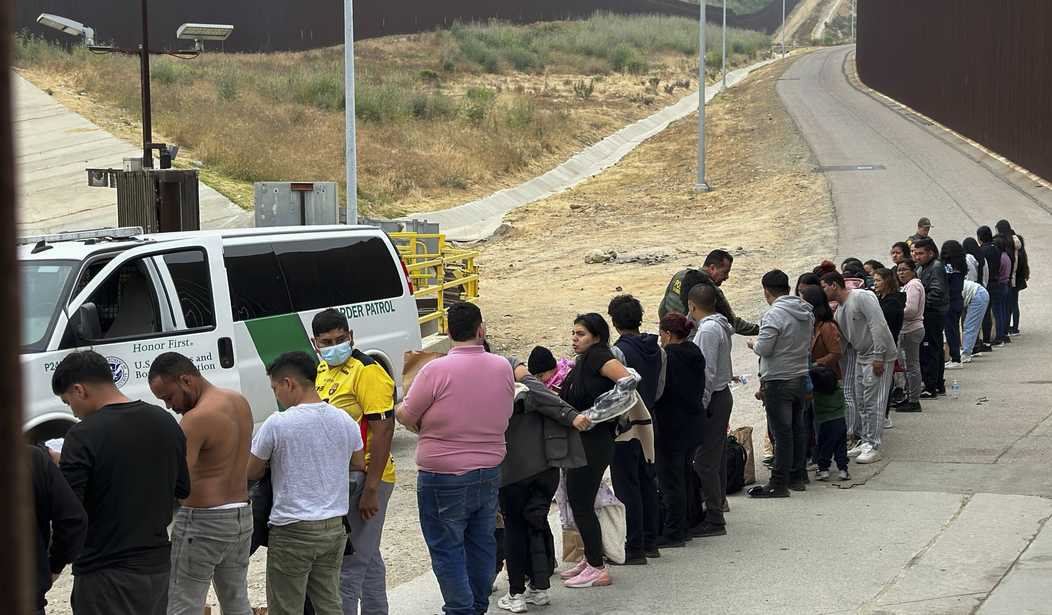
On Tuesday, the 8th Circuit Court of Appeals issued a ruling that dramatically expands the federal government’s authority to detain illegal immigrants without bond, holding that even those arrested inside the United States — far from any port of entry — can be subject to mandatory detention.
🚨 BREAKING: The 8th Circuit Court of Appeals has OVERTURNED an activist judge’s ruling that PREVENTED ICE from holding illegals without bond during deportation proceedings
— Nick Sortor (@nicksortor) March 25, 2026
This is a HUGE win for ICE and deportations 🔥
SEND THEM ALL BACK! pic.twitter.com/ldL9UPJycI
In Herrera Avila v. Bondi, the court adopted a broad interpretation of federal immigration law that effectively erases the long-assumed distinction between illegal immigrants stopped at the border and those living in the interior.
Joaquin Herrera Avila entered the United States illegally in 2006 and again in 2016. He was arrested during a 2025 traffic stop and placed in removal proceedings, where the Department of Homeland Security (DHS) detained him without bond. After an immigration judge denied his request for a bond hearing, Avila filed a habeas petition seeking release or a hearing under § 1226(a) of the Immigration and Nationality Act (INA). The district court granted Avila's requested relief, concluding that § 1225(b)(2)(A)’s mandatory detention provision did not apply because Avila was not actively “seeking admission” and because applying it to interior arrests would conflict with § 1226(c). The district court ordered the government to release him or provide a bond hearing, after which Avila was released on bond, and the government appealed.
RELATED: No, Acting ICE Director Todd Lyons Isn't Going to Be Held in Contempt
The 8th Circuit reversed the district court's decision, holding that any noncitizen present in the United States without having been lawfully admitted is subject to mandatory detention without bond under 8 U.S.C. § 1225(b)(2)(A).
The decision closely examines the statutory language and ultimately hinges on whether an “applicant for admission” is also an alien who is “seeking admission.” As the court explains:
If the phrases are equivalent, then, generally, any “alien present in the United States who has not been admitted” “shall be detained.” 2 Id. § 1225(a)(1), (b)(2)(A). On the other hand, if the phrases are not equivalent, then an alien is only subject to detention under§ 1225(b)(2)(A) if he or she is present in the country without being admitted and also engages in a separate act of “seeking admission,” whatever that may be.
Ultimately, the court reaches the same conclusion as the 5th Circuit recently reached in Buenrostro-Mendez v. Bondi, which adopted the same broad interpretation of the statutory provisions, rejecting the distinction between illegal immigrants stopped at the border and those arrested in the interior. Under this emerging framework, what matters is not where an illegal immigrant is encountered, but whether they were ever lawfully admitted at all, and this is a shift that dramatically expands the reach of mandatory detention nationwide.
In contrast, the 7th Circuit recently signaled some skepticism of this reading in the case of Castañon-Nava v. U.S. Department of Homeland Security, though it did not squarely address the issue in its holding.
Either way, it's a safe bet this issue will land before the Supreme Court sooner rather than later. In the meantime, this is a significant ruling on the immigration front and a win for the administration's enforcement efforts.
Editor's Note: This article was updated post-publication for clarity.
Editor’s Note: Do you enjoy RedState’s conservative reporting that takes on the radical left and woke media? Support our work so that we can continue to bring you the truth.
Join RedState VIP and use the promo code FIGHT to get 60% off your VIP membership!



Join the Conversation
VIP members get the ability to comment on articles.