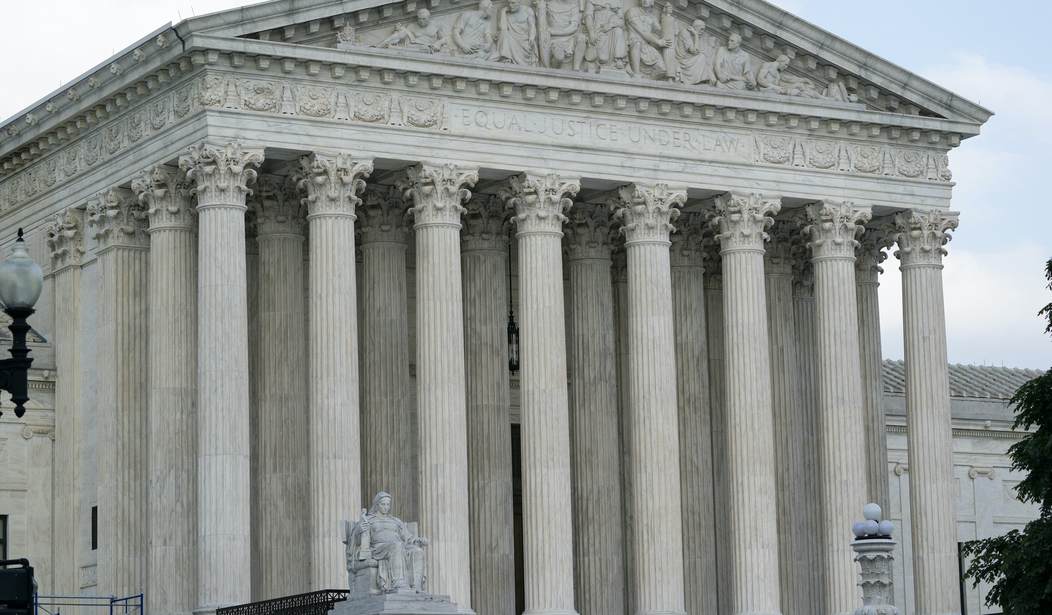

We've hit a bit of a lull in Supreme Court activity as the Court isn't set to hear oral argument again until the week of February 23rd, and it hasn't yet announced any additional opinion days between now and then.
There were, however, eight opinions delivered by the Court in January. We covered the first four in last week's Skinny on SCOTUS installment.
Now, we'll tackle the remaining four, which include three unanimous decisions and one per curiam decision that was 8-1, with Justice Ketanji Brown Jackson indicating she would have declined to grant certiorari in the case. All four involve procedural rulings and, again, are a bit in the weeds, but here's the skinny on them:
January 20, 2026 Decisions
Coney Island Auto Parts Unlimited. Inc. v. Burton
Date: January 20, 2026
Author: Alito
Split: 9-0
Dissent: N/A
Appeal From: 6th Circuit
The question in this case is whether Federal Rule of Civil Procedure 60(c)(1)’s requirement that parties make Rule 60(b) motions within a “reasonable time” applies to a motion seeking relief from an allegedly void judgment under Rule 60(b)(4). Vista-Pro Automotive, LLC, entered bankruptcy in 2014 and initiated adversarial proceedings against Coney Island Auto Parts Unlimited, Inc., to collect $50,000 in allegedly unpaid invoices. Vista-Pro attempted to serve process on Coney Island by mail but purportedly failed to comply with Federal Rule of Bankruptcy Procedure 7004(b)(3)’s mail-service requirements. Coney Island did not file an answer, and the Bankruptcy Court entered a default judgment. Over the next six years, Vista-Pro’s bankruptcy trustee attempted to enforce the judgment. These efforts bore fruit in 2021 when a marshal seized funds from Coney Island’s bank account in satisfaction of the judgment. Coney Island filed a motion to vacate the judgment under Federal Rule of Civil Procedure 60, arguing that Vista-Pro’s failure to make proper service rendered the judgment void. The Bankruptcy Court denied relief, holding that Coney Island failed to abide by Rule 60’s requirement that parties make motions for relief within a “reasonable time.” The District Court and the Court of Appeals for the Sixth Circuit affirmed.
Whether Federal Rule of Civil Procedure 60(c)(1) imposes any time limit to set aside a void default judgment for lack of personal jurisdiction.
Holding: Affirmed.
Rule 60(c)(1)’s reasonable-time limit applies to a motion alleging that a judgment is void under Rule 60(b)(4).
Skinny: You snooze, you lose. (Meet those deadlines!)
Date: January 20, 2026
Author: Kavanaugh
Split: 9-0
Dissent: N/A
Appeal From: 8th Circuit
The Mandatory Victims Restitution Act of 1996 requires defendants convicted of certain federal crimes to pay monetary restitution to victims. Although petitioner Ellingburg committed his crime before the MVRA’s enactment, he was sentenced under the MVRA and ordered to pay $7,567.25 in restitution. Ellingburg raised an Ex Post Facto Clause challenge to his continued restitution obligation. The Eighth Circuit concluded that restitution under the MVRA is not criminal punishment subject to the Ex Post Facto Clause.
Whether criminal restitution under the Mandatory Victim Restitution Act (MVRA) is penal for purposes of the Ex Post Facto Clause.
Holding: Reversed and remanded.
Restitution under the MVRA is plainly criminal punishment for purposes of the Ex Post Facto Clause.
Skinny: If you can't spare a dime, you shouldn't do the crime, but you can't be hit with a retroactive fine.
Date: January 20, 2026
Author: Barrett
Split: 9-0
Dissent: N/A
Appeal From: 3rd Circuit
Delaware law provides that a plaintiff may not sue for medical malpractice unless a medical professional attests to the suit’s merit in an “affidavit of merit” that “accompanie[s]” the plaintiff’s complaint. Del.Code, Tit. 18, §6853(a)(1). Petitioner Harold Berk sued Dr. Wilson Choy and Beebe Medical Center in federal court for medical malpractice under Delaware law, but failed to provide the affidavit required by §6853. Berk argued that §6853 is not enforceable in federal court because it is displaced by the Federal Rules of Civil Procedure. The District Court dismissed Berk’s lawsuit for failure to comply with Delaware’s affidavit law. The Third Circuit affirmed.
Whether a state law providing that a complaint must be dismissed unless it is accompanied by an expert affidavit may be applied in federal court.
Holding: Reversed and remanded.
Delaware’s affidavit law does not apply in federal court.
Skinny: Valid Federal Rules of Civil Procedure trump state court rules in federal court.
January 26, 2026 Decision
Date: January 26, 2026
Author: Per Curiam
Split: 8-1
Dissent: Jackson
Appeal From: 4th Circuit
Under the Antiterrorism and Effective Death Penalty Actof 1996 (AEDPA), strict standards govern the grant of federal habeas relief to prisoners convicted in state court. Faithful application of those standards sometimes puts federal district courts and courts of appeals in the disagreeable position of having to deny relief in cases they would have analyzed differently if they had been in the shoes of the relevant state court. But federal courts are dutybound to comply with AEDPA, and we have granted summary relief when the lower courts have departed from the role AEDPA assigns. See, e.g., Clark v. Sweeney, 607 U. S. ___ (2025) (per curiam); Dunn v. Reeves, 594 U. S. 731 (2021) (per curiam); Mays v. Hines, 592 U. S. 385 (2021) (per curiam); Virginia v. LeBlanc, 582 U. S. 91 (2017) (per curiam); White v. Wheeler, 577 U. S. 73 (2015) (per curiam).
This is such a case. Respondent Charles Brandon Martin was convicted in a Maryland court for the attempted murder of one of his girlfriends, Jodi Torok. The evidence against him was strong, his conviction was affirmed on appeal, and an appellate court held in a state postconviction proceeding that the State’s failure to disclose certain impeachment evidence that was favorable under Brady v. Maryland, 373 U. S. 83 (1963), did not warrant a new trial because there was no “reasonable probability that the result of [the] trial would have been different” had the evidence been turned over. App. to Pet. for Cert. 115a (App.); see Kyles v. Whitley, 514 U. S. 419, 434 (1995) (the“touchstone of materiality is a ‘reasonable probability’ of a different result”). Because that decision neither was “contrary to” nor “involved an unreasonable application” of “clearly established Federal law,” AEDPA required the denial of Martin’s federal habeas petition. 28 U. S. C. §2254(d)(1). Yet the Court of Appeals for the Fourth Circuit affirmed the award of a new trial based on reasoning that departed from what AEDPA prescribes. We therefore grant the State’s petition for a writ of certiorari and reverse.
Did the Fourth Circuit violate AEDPA’s deferential standard by overturning a state-court decision based on the supposed lack of “nuance” and “exhaustiveness” in the court’s written opinion, rather than the reasonableness of its legal conclusion?
Holding: Reversed and remanded.
That holding [the 4th Circuit's] was a basic misapplication of AEDPA, which bars federal courts from imposing opinion-writing standards on state courts and demands that the relevant state-court decision be given the “benefit of the doubt.” Woodford, 537 U. S., at 24. The majority’s “readiness to attribute error” to the state appellate court despite that court’s correct citation and synthesis of our precedent was both “inconsistent with the presumption that state courts know and follow the law” and “incompatible with §2254(d)’s ‘highly deferential standard for evaluating state-court rulings.’” Ibid. (quoting Lindh v. Murphy, 521 U. S. 320, 333, n. 7 (1997)).
Skinny: Federal courts don't get to second-guess state courts just because their decisions might not be quite so fancy.
You can check out prior installments of The Skinny on SCOTUS series here.