








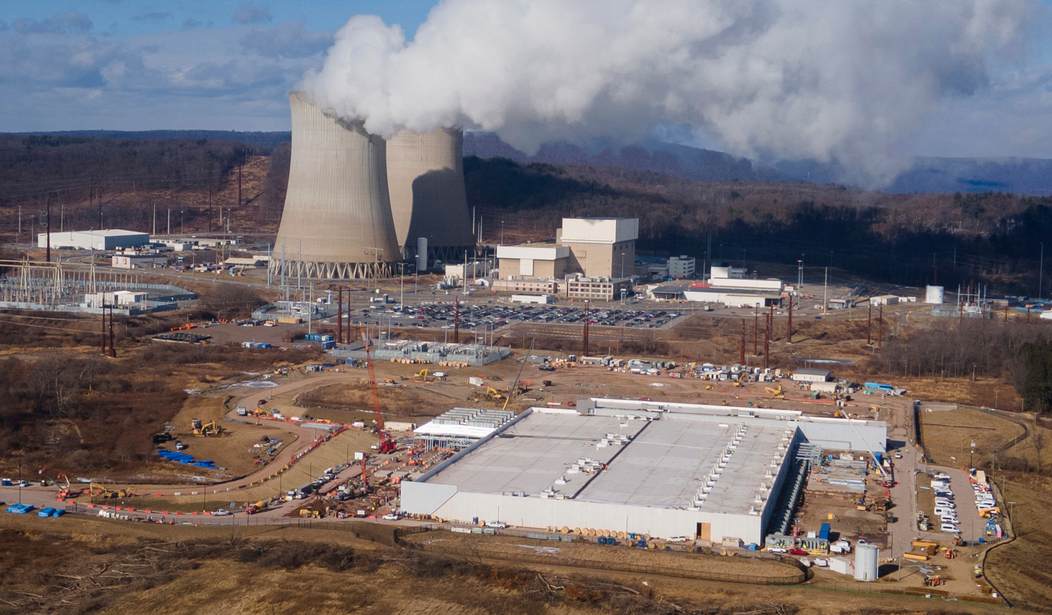
The growing use of artificial intelligence (AI) is upon us. And as technology companies try to meet the skyrocketing demand for AI-specialized computing capacity, they are dotting the country with data centers – to the dismay of some, but the delight of others. As is all too often the case, many of these companies are coming to states and cities and receiving taxpayer-supported subsidies or tax exemptions.
For example, a recent headline detailed a billion-dollar tax break for Amazon in Montgomery County, Missouri. I question the decision to hand out incentives when it seems like data center developers have money to burn and are desperate to find any suitable and available locations.
Recent actions of data center developers suggest that it is not the cost of building and operating those facilities that is the barrier – but rather, energy availability and getting their center online smoothly and quickly (speed-to-operation).
So much so that the major technology companies (Amazon, Google, Meta, Microsoft, etc.) are meeting with President Trump to sign a pledge that they will supply and pay for their own power for artificial intelligence data centers.
Why would they ever agree to this? Why would big tech not fight this tooth and nail? Because their constraint is not cash, but rather, energy availability and speed-to-operation. For these firms, time is money. Delays in permitting, interconnection, or generation cost can be extremely costly, higher than the value of a local tax incentive.
At the Show-Me Institute, we’ve written dozens of posts displaying the negative effects of economic development subsidies and tax breaks. All of those arguments apply to data centers as well. Local subsidies diminish many of the positive effects that could come from a new data center development – increased property tax revenue to fill in the gaps for local services or be used to lower the overall tax rate of the community.
ALSO SEE: Navarro Signals Trump May Force Big Tech to Pay Full AI Energy Costs
Why Are Climate Scolds Against Nuclear Power?
With all of this in mind, rather than just doing what most other states do – hand out checks or tax exemptions – Missouri should work on policies that actually deliver what these companies need most: (a) reliable energy generation, (b) regulatory certainty, and (c) speed-to-operation.
For local communities, this means it should not offer taxpayer dollars. Even with big tech agreeing to pay for its own power, many municipalities will still try to lure projects with incentives. Missouri communities should not do this.
Instead, local communities should foster a stable, predictable permitting environment and a suitable location to build. That would help address the greater desire for certainty and speed-to-operation.
And for the state at large, we should think even bigger. We need energy abundance and regulatory reform. Policies like Consumer Regulated Electricity (CRE) could help propel Missouri toward becoming a true hub for data center development — without using unnecessary subsidies. There is already federal momentum for this policy with U.S. Senator Cotton’s DATA Act of 2026.
CRE would allow private electricity providers to serve large, energy-intensive customers independent of the existing, permission-heavy grid structure by allowing them to build their own power plants. Rather than spreading these costs around on everyone, CRE would create a “parallel path to energy abundance” — one financed by the large, sophisticated customers who demand the power. There is a need for power, and this would open the door for the private market to help.
CRE would give these data centers a private partner to meet their own energy needs, with less red tape, more certainty, more control, and more freedom to innovate. That is attractive.
In summary, we should not be handing out subsidies to data center developers. Missouri should focus on what the data center sector really needs. Efficient regulatory and permitting policies (like CRE), a predictable and stable environment to construct, and abundant energy would be far better suited for attracting and improving data center development than taxpayer dollars.
Avery Frank is a senior policy analyst at the Show-Me Institute, which promotes market solutions for Missouri public policy.
Editor’s Note: Do you enjoy RedState’s conservative reporting that takes on the radical left and woke media? Support our work so that we can continue to bring you the truth.
Join RedState VIP and use the promo code FIGHT to get 60% off your VIP membership!



Join the Conversation
VIP members get the ability to comment on articles.