
A newly disclosed letter from the Department of Homeland Security is raising fresh questions about a little-examined part of the 2020 election: how sensitive state motor-vehicle information was used by private organizations to identify Americans who were eligible but not registered to vote.
The allegation is striking: Before the 2020 election, sensitive motor-vehicle information supplied by states to ERIC was shared with another private organization involved in voter-registration outreach.
And DHS isn't sure that the sharing was legal.
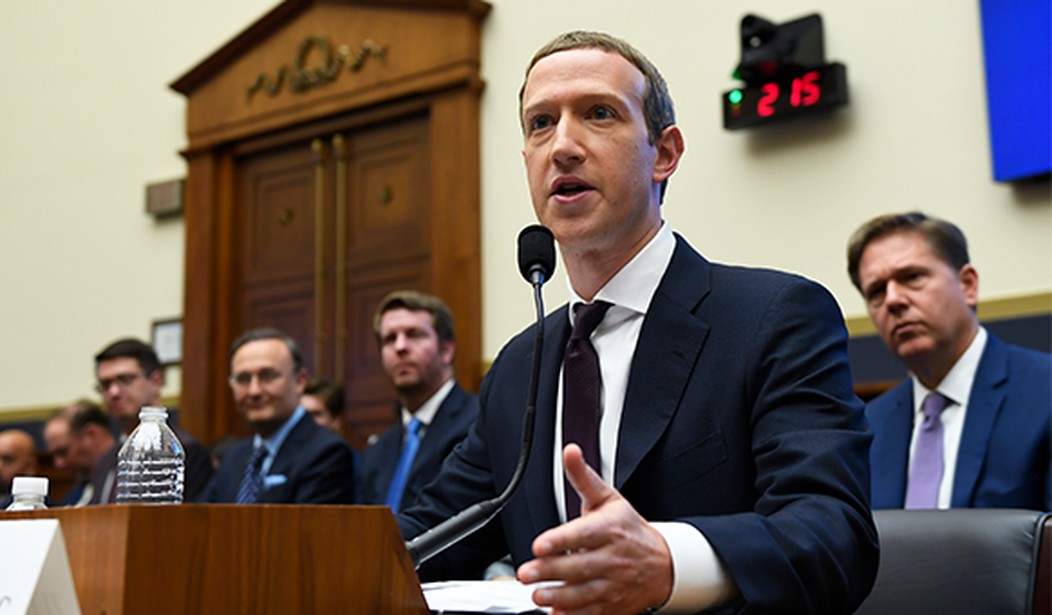
The issue involves the Electronic Registration Information Center, better known as ERIC, and the Center for Election Innovation and Research, or CEIR — one of the nonprofit organizations that received tens of millions of dollars from Mark Zuckerberg and Priscilla Chan's election-related philanthropy in 2020.
So states were sharing personal data with Mark Zuckerberg's $400 million operation to identify unregistered voters ahead of 2020 election in apparent violation of federal law. More interesting findings in latest disclosures by DHS... pic.twitter.com/ZzFpCuDrer
— Julie Kelly 🇺🇸 (@julie_kelly2) September 4, 2026
According to a September 2 letter from DHS Secretary Markwayne Mullin to Attorney General Todd Blanche, DHS believes the arrangement warrants Justice Department scrutiny.
“Prior to the 2020 election, ERIC shared that sensitive, protected motor-vehicle data with at least one other private organization. The Center for Election Innovation and Research (CEIR) received over $70 million from the Chan Zuckerberg 501(c)(3) organization, which was used to provide grants to state election officials who agreed to turn over sensitive private data to CEIR. This sharing and resharing of Motor Vehicle Agency data among NGOs may not qualify as a permissible use of motor-vehicle data identified in the DPPA. This category of data regarding potential voters is incredibly valuable to political parties and campaigns.
A primary function of ERIC appears to be identifying individuals who are potentially eligible to vote but who are currently unregistered. All eligible but unregistered (EBU) individuals identified in the state motor vehicle database are contacted and encouraged to register. The list of EBUs is created by comparing information from the statewide voter registration database to the list of all individuals in the state motor vehicle database.
According to publicly available reporting, in 2020, Pennsylvania’s $13 million grant agreement from CEIR included the following terms: “Grantee agrees to cooperate with CEIR, including providing data, as CEIR reasonably requests.” The data requested included state motor vehicle data, originally shared with ERIC, to be used by CEIR to create the EBU lists for outreach. ERIC acknowledged that the EBU list is created using data that is protected by the DPPA.
The ERIC model contract requires states to share “all licensing or identification records from motor vehicle departments” at least every 60 days. Despite the fact taht the MVA data will be used to identify EBUs, the model contract prohibits states from sharing data related to citizenship. The ERIC model contract provides that “[u]nder no circumstances shall the Member transmit an individual’s record where the record contains documentation or other information indicating that the individual is a non-citizen of the United States.”
States participating in ERIC regularly supplied voter-registration information along with licensing and identification records from their motor-vehicle departments. ERIC used those databases for several purposes, including finding duplicate or outdated registrations and identifying deceased voters.
But it also used the information to generate what are called Eligible But Unregistered, or EBU, lists.
Those lists identify people with motor-vehicle records who don't appear in the state's voter-registration database. ERIC's own current explanation confirms that the EBU report is generated by comparing voter-registration records against motor-vehicle data.
ERIC's own statistics show that in 2020, 29 states and the District of Columbia identified more than 17 million potentially eligible but unregistered people through the system. Those individuals could then be contacted with information about registering to vote.
And ERIC's 2020 federal tax filing is unusually straightforward about the mission: the organization said it identified potentially eligible but unregistered residents before the general election, after which member states mailed those people instructions explaining how to register.
The new DHS letter focuses on what happened when another private organization entered that pipeline.
Mullin specifically cites Pennsylvania, which received a roughly $13 million CEIR grant in 2020. According to the letter, the grant agreement required Pennsylvania to “cooperate with CEIR, including providing data, as CEIR reasonably requests.”
DHS says the requested information included motor-vehicle data that had originally been supplied to ERIC and that CEIR used it in connection with producing EBU lists for voter outreach.
But DHS raises another issue that makes the architecture of the system worth examining.
According to the letter, ERIC's model agreement required participating states to supply “all licensing or identification records from motor vehicle departments” at least every 60 days. At the same time, states were instructed not to transmit records containing documentation showing that an individual was a noncitizen.
That created an obvious challenge when using motor-vehicle databases to identify supposedly eligible unregistered voters: possessing a driver's license does not necessarily establish U.S. citizenship.
And there is a bigger political context. Zuckerberg and Chan contributed roughly $400 million to election-related nonprofits during the 2020 cycle, primarily CEIR and the Center for Tech and Civic Life (CTLC). The money became one of the most contentious aspects of private election administration that year, with critics arguing that private philanthropy had acquired an inappropriate role in public election operations.
There is also another connection worth noting. David Becker helped create ERIC before later founding CEIR. The arrangement therefore involved two separate nonprofits with a connection at their founding and leadership level.
The DHS disclosure adds a new wrinkle to that controversy. It’s not simply about who paid for ballot drop boxes, protective equipment, election workers or voter education.
DHS is asking whether sensitive government-held motor-vehicle information moved through a network of states and private nonprofits — and whether the legal justification for doing so violated federal privacy law.
This all comes down to another aspect of election integrity: What voting data do activist groups have access to and what are they doing with it?
The Department of Justice should take a hard look at these voting groups. And the U.S. government should take action to ensure we don’t get a repeat of the 2020 election again.