
America has witnessed a seemingly endless stream of protests, demonstrations, and even riots for the last twenty years.
The radical left instantly mobilizes after every exploitable tragedy with mass-printed signs, tailor-made T-shirts, and choreographed singing so well-produced it would make a Broadway production jealous.
But now an influential congressman is asking the question: What if a lot of the left’s activism was being financed by foreign governments?
Republican House Ways and Means Committee Chairman Jason Smith (MO-08) is sounding the alarm that our “non-governmental organizations” may act as conduits for socially destructive foreign influence campaigns.
"It should alarm every single American that these tax-exempt entities have been able to be abused to allow foreign intervention," Smith recently warned.
Smith is addressing Americans’ rising concern about so-called NGOs. Ever since DOGE exposed seedy USAID funding going to “non-profit” organizations and the high-profile case of the Southern Poverty Law Center allegedly being caught staging “hate crimes” like the Charlottesville riots, Americans have been wondering how deep it all goes.
His committee has spent years following the money through America's sprawling tax-exempt sector, and what investigators say they have uncovered looks less like traditional charity and more like a financial labyrinth: foreign nationals, wealthy political benefactors, shell companies, donor-advised funds, fiscal sponsors and American nonprofits sitting at the other end.
The problem is that foreign money disappears into a system that makes it extremely difficult for Americans to determine where the money originated — and then resurfaces in organizations engaged in political activism, propaganda, protests, or other efforts to influence American public life.
Smith puts it bluntly.
"Foreign donations have no place in American politics, particularly when the sole goal is to manipulate our public discourse, promote propaganda, and support violence," he said in July.
The biggest flashing red light in Smith's investigation is a name most Americans have probably never heard: Neville Roy Singham.
Singham is an American-born technology mogul who founded ThoughtWorks and became extraordinarily wealthy when the company was sold in 2017. He subsequently moved to Shanghai.
He has since become the central figure in a sprawling congressional investigation into foreign influence in American nonprofits.
According to Smith's committee, public reporting has traced hundreds of millions of dollars connected to Singham through shell companies and donor-advised funds before the money reached nonprofit organizations operating in the United States. The committee says Singham has close ties to the Chinese Communist Party and operates from Shanghai, where he has shared office space with a Chinese media company whose stated mission includes "telling China's story well."
That seems to have been enough to get Washington's attention. Now comes the more challenging part for tough-talking Republicans: action.
Three organizations have become particular targets of the Ways and Means investigation: The People's Forum, BreakThrough News, and Tricontinental: Institute for Social Research.
The People's Forum alone received more than $20 million from Singham and his wife between 2017 and 2022, according to public reporting cited by Smith's committee. The money allegedly traveled through shell companies and donor-advised funds that made its ultimate source more difficult to discern.
Smith's committee wanted the books. The radical organizations stymied the investigation.
After months of requests for financial documents, Ways and Means escalated matters in July and issued subpoenas to all three organizations.
"That ends now," Smith said.
The subpoenas demand records identifying foreign-linked funding, fiscal sponsorship arrangements, communications with Singham and foreign principals, contracts involving foreign nationals or entities, and information about donations of more than $5,000 arriving directly or indirectly through foreign entities, shell companies or donor-advised funds.
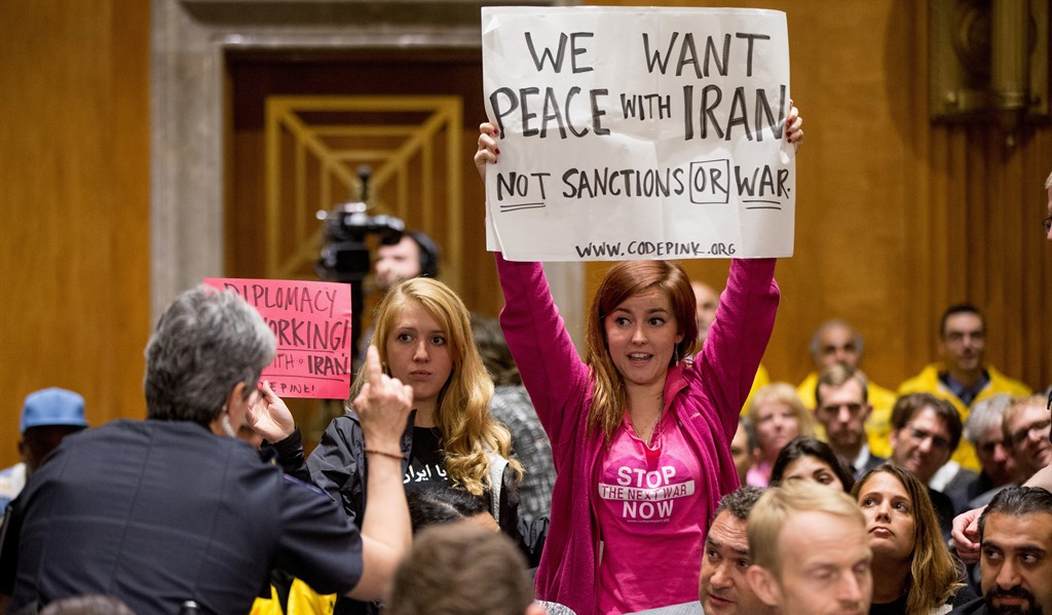
The Singham network contains a more high-profile group that became famous for its protests during the Iraq War: CODEPINK.
CODEPINK has faced scrutiny over its relationship with Singham. One of the anti-war group's co-founders, Jodie Evans, married Singham in 2017.
Reporting has documented financial support from Singham-linked sources as CODEPINK simultaneously became increasingly friendly toward Beijing and launched its "China Is Not Our Enemy" campaign.
CODEPINK has rejected allegations that it takes direction from Beijing and says its positions are independently determined.
But from an oversight perspective, the broader question remains: How much foreign-linked money is flowing into politically active American nonprofits, and can anybody outside these organizations actually trace it?
For decades, America's nonprofit universe has benefited from an opaque labyrinth consisting of lax regulations and bureaucratic haze. The records technically existed in various government filings, grant databases, tax forms, and corporate documents, but connecting them could require enormous amounts of time and specialized knowledge.
That's changing fast. Independent researcher Jennica Pounds, better known online as DataRepublican, has developed public tools designed to map connections among nonprofits, government grants, officers and funding streams.
Instead of looking at a nonprofit's tax return in isolation, these tools allow researchers to start following relationships: Who funds whom? Which organizations share officers? Which entities receive grants and then pass money onward? Where do seemingly unrelated organizations intersect?
It's essentially financial network analysis for the NGO world. And Pounds has been digging into Singham.
In July, she published an investigation examining the 2017 acquisition of Singham's ThoughtWorks by the London-based private-equity firm Apax Partners. Her research then follows a fascinating corporate trail to Bonterra, whose portfolio includes NGP VAN — the voter-data and campaign technology platform deeply embedded in Democratic politics.
Pounds also examined foreign sovereign investment in Apax and raised questions about potential influence vectors surrounding American political infrastructure.
Americans for Public Trust launched another remarkable tool in July: FollowForeignMoney.org. The database does exactly what the name suggests.
At last count, it had identified nearly $5.3 billion in foreign money flowing into American nonprofits, with more than 11,000 individual records publicly searchable.
When the database launched, reporting put the tally at more than $5 billion across 523 organizations and more than 12,000 contribution records.
Smith himself immediately seized upon the database, saying it confirmed what his committee had been finding through its own investigation: Foreign money can travel through shell funds and intermediaries before entering America's political and public-policy ecosystem.
China isn't the only concern. Smith has also highlighted Swiss billionaire Hansjörg Wyss, who the committee says has given more than $280 million to a major radical nonprofit hub that, in turn, supports other organizations involved in liberal campaigns and political causes.
Smith wants Congress to close the loopholes to get the foreign influence out of the non-profit sector. His committee advanced three bills in July aimed squarely at the problem.
The Foreign Funding Transparency Act would require tax-exempt organizations to report aggregate foreign contributions to the IRS, with separate reporting for money originating from countries of concern such as China, Russia, Iran and North Korea.
The Stopping Foreign Influence in Elections Act targets tax-exempt organizations that accept foreign money while participating financially in American politics.
And the Fiscal Sponsorship Transparency Act is aimed at the layers of intermediary organizations that can make it difficult to determine who ultimately financed a project.
The measures cleared the Ways and Means Committee in July.
"It should alarm every single American that these tax-exempt entities have been able to be abused to allow foreign intervention."
The legislation is a step in the right direction. But the most effective way to end the foreign influence would be to shut down the NGO sector completely.
Americans, obviously, aren’t ready for that conversation.