






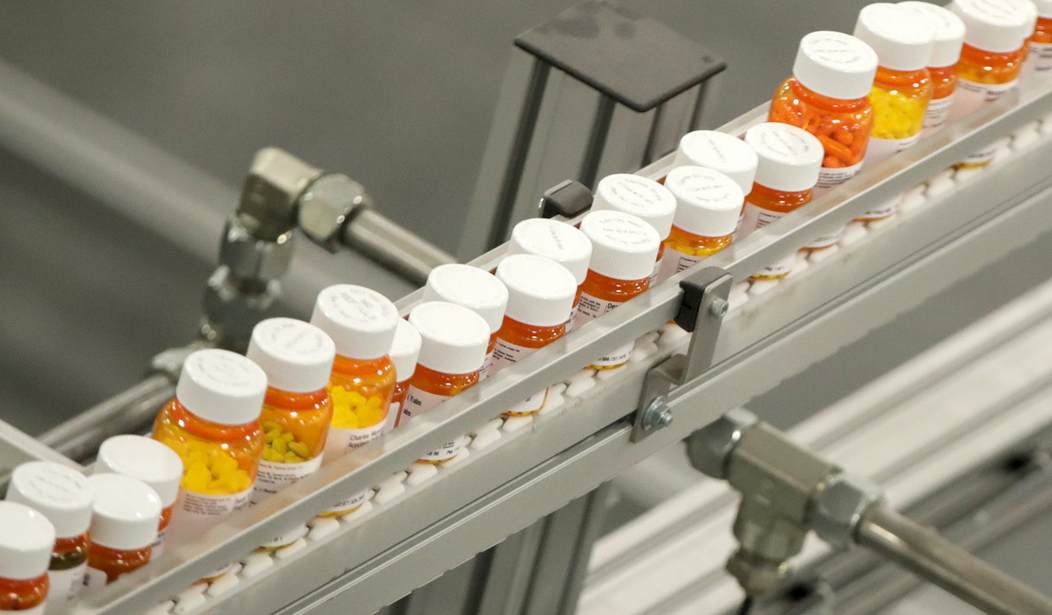
Eli Lilly has started cutting off drug discounts to hospitals serving rural, low-income, and working-class patients, and there is a serious argument that what the company is doing is against the law.
The American Hospital Association says it is, and two other major hospital advocacy groups say so as well. At least one federal court has previously agreed that Lilly crossed a legal line doing something similar. And yet the federal agency with the authority to stop it has so far done nothing.
This is a fight conservatives should be watching closely, because the people getting squeezed are the exact communities that sent Donald Trump back to the White House.
What Is the 340B Program?
The 340B Drug Pricing Program has been federal law since 1992, passed with broad bipartisan support. It requires pharmaceutical manufacturers participating in Medicaid to sell outpatient drugs at steep discounts to hospitals and health clinics that care for large numbers of uninsured and low-income patients. The discounts do not cost taxpayers a dime. Drug companies get access to Medicare and Medicaid as customers; in exchange, safety-net hospitals get affordable drugs for their most vulnerable patients.
The hospitals eligible for 340B include critical access hospitals, rural referral centers, sole community hospitals, children’s hospitals, and disproportionate share hospitals serving low-income and indigent populations. In practical terms, that means the hospitals in rural red states, small towns, and working-class communities that would be among the first to close without the financial cushion 340B provides. According to the AHA, 340B hospitals provided nearly $100 billion in community benefits in 2022 alone, a 47 percent increase from 2019.
What Lilly Is Doing, and Why It May Be Illegal
On February 1, 2026, Eli Lilly implemented a new policy requiring every hospital and health clinic purchasing its drugs through the 340B program to submit detailed claims-level data for every drug dispensed through their in-house pharmacies. Comply with the paperwork mandate, or lose access to the discounts.
The problem is that the 340B statute does not give Lilly that authority.
The law is straightforward on this point. Under 42 U.S.C. § 256b(a)(1), drug manufacturers are required to “offer each covered entity covered outpatient drugs for purchase at or below the applicable ceiling price if such drug is made available to any other purchaser at any price.” The AHA argues, with backing from federal case law, that Lilly’s demands are so burdensome they effectively push the real-world cost of those drugs above the statutory ceiling — which is exactly what the law prohibits.
The AHA is not alone. The Association of American Medical Colleges called the policy a violation of the 340B statute. A group representing rural and community hospitals, RWC-340B, sent a letter to Lilly’s CEO in February describing the mandate as “an unprecedented and unequivocal violation of federal law.” Maureen Testoni, president and CEO of 340B Health, which represents more than 1,600 participating hospitals, said Lilly’s actions are “an unprecedented attempt to rewrite the 340B rules without congressional approval.”
This is not the first time Lilly has been on the wrong side of this legal question. In a prior case involving Lilly’s restrictions on 340B discounts for drugs dispensed through community pharmacies, a federal court agreed that Lilly violated the statute, holding that the law “does not permit drug manufacturers, such as Lilly, to impose unilateral extra-statutory restrictions on its offer to sell 340B drugs to covered entities.” The court vacated HRSA’s enforcement order on separate procedural grounds, but the core legal finding against Lilly stood. Lilly did not stop. It spent the next several years litigating, lobbying, and looking for the next angle to claw back those discounts. The February 2026 claims-data mandate is the next angle.
Lilly’s stated justification is preventing “duplicate discounts,” where a single drug purchase might receive overlapping reductions from multiple federal programs. That is a legitimate concern in principle. But Lilly has made only vague, conclusory assertions about the scale of the problem. The AHA reviewed the company’s own program integrity data and found no evidence supporting Lilly’s claims of “countless” violations. Meanwhile, Lilly quietly briefed the press on its enforcement plans before notifying the affected hospitals, which tells you something about the company’s actual priorities.
The Burden Falls on the Hospitals Least Able to Carry It
Even accepting Lilly’s argument on the merits, the implementation falls hardest on the hospitals with the fewest resources.
Complying with Lilly’s mandate requires hospitals to submit claims data for every in-house pharmacy dispensation within 45 days of the dispensing date. For large urban hospital systems with dedicated compliance staff and administrative infrastructure, that is manageable. For a small rural critical access hospital running on razor-thin margins with a handful of staff already pulling double duty, it is a different story entirely.
About 30 percent of hospitals eligible for 340B pricing on Lilly drugs had not complied by Lilly’s June 8 deadline, according to Lilly’s own figures. On June 18, Lilly followed through and cut off 340B pricing for those noncompliant hospitals. Their patients are now buying Lilly drugs at wholesale prices, or close to it, for some of the most expensive medications on the market.
Lilly’s portfolio running through 340B includes Verzenio, used to treat advanced and metastatic breast cancer, which lists at more than $17,300 for a 28-day supply without insurance or a discount. Taltz, a biologic prescribed for plaque psoriasis and other inflammatory conditions, costs around $7,261 per injection. Mounjaro and Zepbound, the company’s tirzepatide products for diabetes and weight loss, list at roughly $1,080 to $1,112 per month. These are not medications patients can simply forgo.
“Congress should immediately use its oversight authority and demand HHS take a position on drug companies’ attempts to hijack the 340B program through burdensome claims-data demands," Rick Pollack, president and CEO of the AHA, said. "These manufacturer-imposed requirements would drain scarce resources from 340B hospitals and threaten patients’ access to lifesaving drugs.”
Where Is the Trump Administration on This?
The Health Resources and Services Administration, or HRSA, is the division of HHS responsible for overseeing the 340B program. HRSA has the authority to assess civil monetary penalties against manufacturers that overcharge 340B hospitals. It also has the authority to suspend a manufacturer’s pharmaceutical pricing agreement with the federal government, which would effectively end Lilly’s participation in Medicaid.
For months, HRSA sat on its hands. Lilly’s February mandate went into effect. Lilly’s June 8 deadline passed. Lilly cut off hospitals on June 18. As of this writing, HHS has taken no public position.
That silence is hard to square with this administration’s stated priorities. Trump has made lowering prescription drug prices a defining issue of his second term. The 340B program costs taxpayers nothing and keeps rural hospital doors open in the communities that voted for him by wide margins. Letting a pharmaceutical company unilaterally gut those protections (especially one that never responded to a good-faith compromise offer from the AHA) should not sit well with an administration that ran on standing up to corporate price-gouging.
To put the political picture in full context: Eli Lilly employees donated more than five times as much money to Kamala Harris as they did to Donald Trump in the 2024 election cycle. The company is headquartered in Indianapolis and has invested heavily in the kind of corporate-progressive positioning that tends to go hand in hand with exactly this sort of regulatory maneuvering.
Now, Testoni is raising a warning that should concern everyone watching the drug pricing fight: if Lilly gets away with this, other manufacturers will follow. Novo Nordisk is already implementing its own data-sharing requirements. Nine manufacturers now require similar compliance, according to the Association of American Medical Colleges. The precedent Lilly is setting, if HHS refuses to push back, is that pharmaceutical companies can rewrite the 340B rules on their own terms, one bureaucratic mandate at a time, without a vote of Congress.
What Happens Next
The AHA has asked Congress to step in and demand that HHS take a formal position. The AAMC has urged HRSA to put drug manufacturers on notice that their actions violate the statute. Multiple advocacy groups representing rural and safety-net hospitals are pressing for enforcement action.
What none of them can do is force HHS to move. That is ultimately a political decision, and right now the administration is silent.
This is not a complicated situation. A pharmaceutical company is withholding legally required discounts from hospitals serving rural and low-income Americans, in apparent violation of federal law, while the agency responsible for enforcement watches. The administration that promised to get tough on drug companies has a clear opportunity to prove it meant what it said.
The 340B program was built by Congress to protect patients who cannot protect themselves. It costs taxpayers nothing. What it requires is that drug manufacturers live up to the agreements they made when they chose to participate in Medicaid. Eli Lilly, for now, is refusing to do that.
HHS should stop waiting and act.
Join the Conversation
VIP members get the ability to comment on articles.