






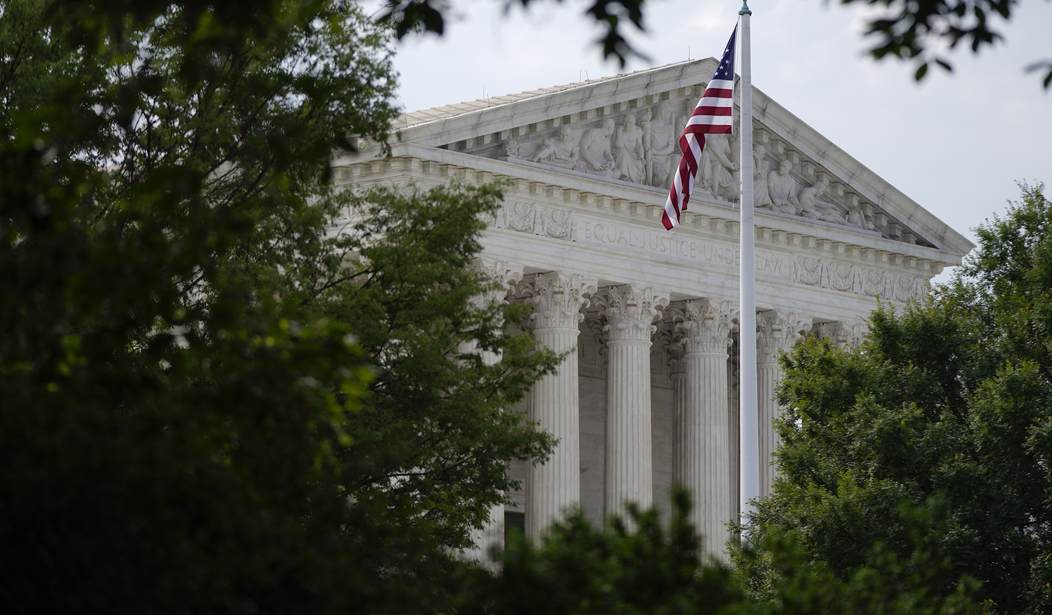
The U.S. Supreme Court on Wednesday struck down Louisiana's congressional map in Louisiana v. Callais, finding that the state's second majority-Black district violated the Equal Protection Clause.
In the 6-3 decision, Justice Samuel Alito wrote the majority opinion, joined by Chief Justice John Roberts and Justices Clarence Thomas, Neil Gorsuch, Brett Kavanaugh, and Amy Coney Barrett. The court held that the Voting Rights Act did not require Louisiana to draw a second majority-minority district. Without that requirement, the state had no compelling reason to use race in drawing its lines.
SB8, enacted in 2024, created a District 6 stretching roughly 250 miles from Shreveport through Alexandria and Lafayette to Baton Rouge. Louisiana drew the district after a federal judge in Robinson v. Ardoin found the previous map likely violated Section 2.
RELATED: Could a SCOTUS Decision in 'Louisiana v. Callais' End Democrat Redistricting Scams Once and for All?
The Voting Rights Act Probably Won't Be 'Gutted,' but the Supreme Court Appears Set to Restrain It
No compelling interest justified that race-conscious decision, Alito wrote, because Section 2 had not actually required Louisiana to create a second majority-Black district in the first place. The Robinson plaintiffs, he wrote, had failed at every step of the updated test. Their illustrative maps would have placed Rep. Julia Letlow in a district with more than twice as many registered Democrats as Republicans, effectively ending her career in Congress.
Their racial polarization analysis did not control for partisan preference. And their totality-of-circumstances showing leaned heavily on the "sordid history" of pre-Voting Rights Act discrimination rather than current conditions. Alito wrote that the Voting Rights Act "is not designed to punish for the past" but "works to ensure a better future," quoting the Court's 2013 ruling in Shelby County v. Holder.
Justice Elena Kagan dissented, joined by Justices Sonia Sotomayor and Ketanji Brown Jackson. She wrote that the decision guts Section 2 by reviving the intent standard Congress rejected in 1982.
Editor’s Note: Do you enjoy RedState’s conservative reporting that takes on the radical left and woke media? Support our work so that we can continue to bring you the truth.
Join RedState VIP and use the promo code FIGHT to get 60% off your VIP membership!

Join the Conversation
VIP members get the ability to comment on articles.