








New York Gov. Kathy Hochul (D) and Kentucky Gov. Andy Beshear (D) have pushed back against the expansion of AI data centers in their respective states. But with the increasing backlash from communities and individuals toward new data center construction and expansion, even governors that have embraced the AI revolution, like Pennsylvania's Josh Shapiro (D), are now moderating and talking about scaling back.
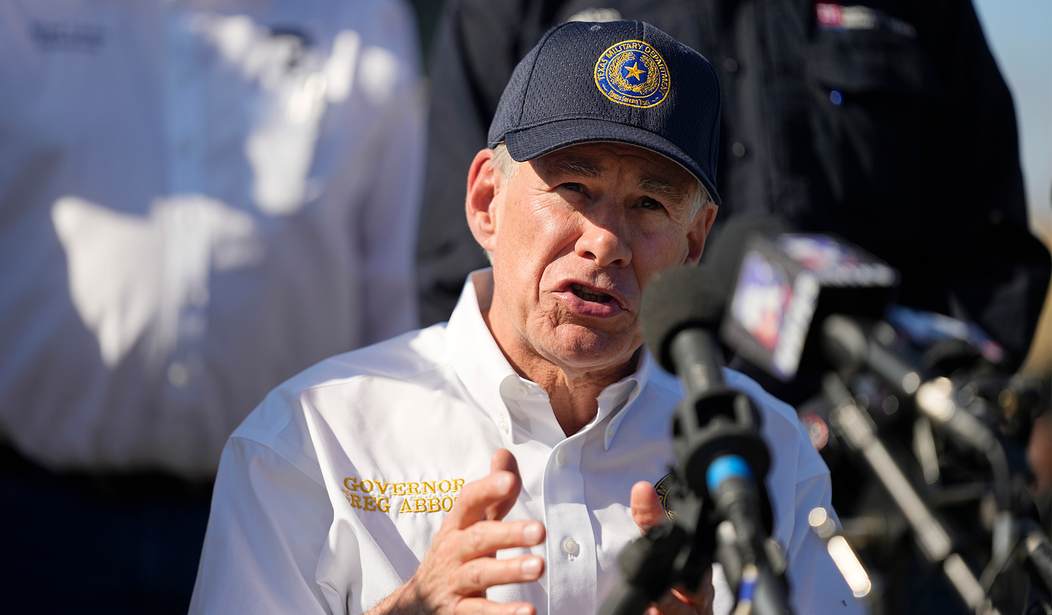
Texas Gov. Greg Abbott (R) is one governor whose state has embraced the data center expansion. In November 2025, Abbott declared that Texas is the "epicenter of AI development" in his announcement of Google building three data center campuses to the tune of $40 million dollars.
Fast forward to August of 2026, and Abbott acknowledges that much of the community resistance to the construction of new and existing data centers is the fault of the AI companies.
Texas Gov. Greg Abbott delivered one of the starkest warnings yet from a Republican to the AI industry, saying data center companies "dug their own grave" and deserve the backlash they're facing after failing to win community support.
[...]
In June, however, Abbott directed state regulators to make data centers pay the full cost of the electrical infrastructure they require and called for phasing out tax incentives.
Earlier this month, he ordered regulators to audit data centers seeking to connect to Texas' power grid before allowing the projects to move forward.
[...]
Abbott told telling ABC's Jonathan Karl on "This Week" that the backlash stems partly from the sheer speed of the buildout, and partly from developers moving into communities without first gaining support.
"Gaining the support of people in local communities is essential," Abbott said.
"They basically dug their own grave for the problem that's been caused for them," he continued. "And that's why they got the backlash they deserve."
Abbott is not wrong. According to a report from Data Center Watch, 64 billion in data center projects have been blocked or delayed in Arizona, Utah, Missouri, Oregon, and California, to name a few. Even formerly friendly Virginia is pushing back. Community opposition surrounds the lack of information provided and the lack of accountability taken towards the citizens who will be most affected.
Water and power concerns loom large. Many of the newer development concepts, like entrepreneur Kevin O'Leary's 9 megawatt Stratos Project in Utah, will have their own self-sustaining water and power systems. However, this did not prevent the backlash by environmentalists and local activists to shut the Stratos Project down, and Utah state lawmakers ultimately backpedaled from their original approval and requested O'Leary cut the project's 400,000-acre footprint down to 10,000, about 75 percent.
O'Leary admitted that he failed in his job to sell the community on the benefits of the data center while being transparent about the drawbacks present in such a project, as well as citizens' legitimate concerns.
Kevin O'Leary says he could have done a better job selling his plan for a hyperscale data center to the people of Utah.
In an interview with MS NOW, released on Thursday, the "Shark Tank" investor talked about how he and his team did not properly communicate plans for the Stratos data center project in Box Elder County with residents, and "really screwed this up."
"I have no interest in causing an environmental disaster on my legacy," he said. "That's never going to happen. There's zero probability that's going to happen."
O'Leary added that he and his team were planning to be more transparent, sharing plans for a one-gigawatt facility and what the heat, noise, and water impact of this facility would look like. Critics can extrapolate the impact of his fully built data center from those plans, he said.
While in the Deep South, the Alabama governorship may be decided over this AI data center battle. Democrat candidate for governor and former U.S. Sen. Doug Jones has come down on the side of a year-long moratorium on any new data center development, while Republican candidate and current Sen. Tommy Tuberville (R-AL) is gung-ho for its expansion within the state.
U.S. Sen. Tommy Tuberville (R-AL) is reaffirming his support for data centers in Alabama, saying the facilities will bring revenue to schools, law enforcement and other public services.
Tuberville, who is running for governor, made the remarks Monday at the Alabama Sheriff’s Association annual summer conference in Opelika.
“I think there are 27 states that said we aren’t going to build data centers — we’re not going to do that,” Tuberville said. “It makes too much noise. It’s going to ruin the climate — bull crap. They are listening to all this nonsense they see on social media that’s coming from China because China does not want us to grow.”
Tuberville went on to say the state of Alabama will grow.
“We’re going to do data centers. It will help you tremendously,” Tuberville said. “The tax money that comes from those things is unbelievable for schools, for law enforcement, for anything that’s done.”
Tuberville's bull in a China shop approach to the incorporation of data centers, despite citizens' reservations, is not sitting well with Alabama voters. You have people in the small town of Westover, AL, where the local officials have been smart in opening each phase of the project to community discussion. However, in the tiny town of Wilsonville, AL, they want no part of it and are vociferously protesting.
After seeing residents of nearby Bessemer, Alabama, get blindsided by a proposal for a massive data center, with little public disclosure and public officials silenced by non-disclosure agreements, Wilsonville residents sprang into action when word got out that a developer was looking to build a similar data center in their town.
More than 100 Wilsonville residents packed the town hall for Monday night’s City Council meeting to voice their objections to the proposed “hyperscale” data center in the small, riverside community of fewer than 2,000 residents about 25 miles southeast of Birmingham.
The 3 million square-foot data center project wasn’t on the agenda for Monday’s council meeting, but people showed up anyway, 50 of them carrying red signs that read “No Wilsonville Data Center.” There weren’t enough signs, or chairs, for everyone as the overflow crowd spilled out into the hallway.
While Tuberville has doubled down and continues to bigfoot his way to ushering in further data center expansion in the state, Sen. Katie Britt (R-AL) is proposing a middle ground.
The Alabama senator emphasized in an interview with Alabama Daily News that her philosophy regarding the massive facilities that guzzle up electricity and water to power online consumption involves a balancing act.
[...]
“We’ve all got to be invested in how we beat China because that has real implications on national security and our way of life and the American dream,” Britt told ADN in an exclusive interview. “But I absolutely think that those decisions need to be made on a local level.”
And Britt added that when communities have all the information on proposed centers and choose not to move forward, they “shouldn’t be forced” by companies to proceed.
Tuberville and other politicians and leaders pushing for this expansion need to become more adept at two things: transparency and persuasion.
“For some communities, this may be the right investment,” the Alabama Republican told ADN. “Looking at what that tax revenue may do for schools and the area, but I think you have to be smart about how you frame that up and the conversations that you have on the front end, which is why the more information that we can get to those people working to make those decisions in local communities, the better.”
President Donald Trump is pushing for more expansion of AI data centers nationwide. He might want to consider making Britt his "Data Center Czar" in order to get the messaging from AI companies and their investors, as well as elected officials, in line. Part of this messaging needs to express that AI data centers should be an opportunity for greater community growth and investment, not a hostile takeover.
With the midterms looming, this critical issue to voters appears to be ramping up, rather than winding down, and politicians who are on the ballot are taking note.
Editor’s Note: The 2026 Midterms will determine the fate of President Trump’s America First agenda. Republicans must maintain control of both chambers of Congress.
Help RedState continue to report on the Democrats’ radicalism and inform voters as our nation faces a crossroads. Join RedState VIP and use promo code FIGHT to receive 60% off your membership.



Join the Conversation
VIP members get the ability to comment on articles.