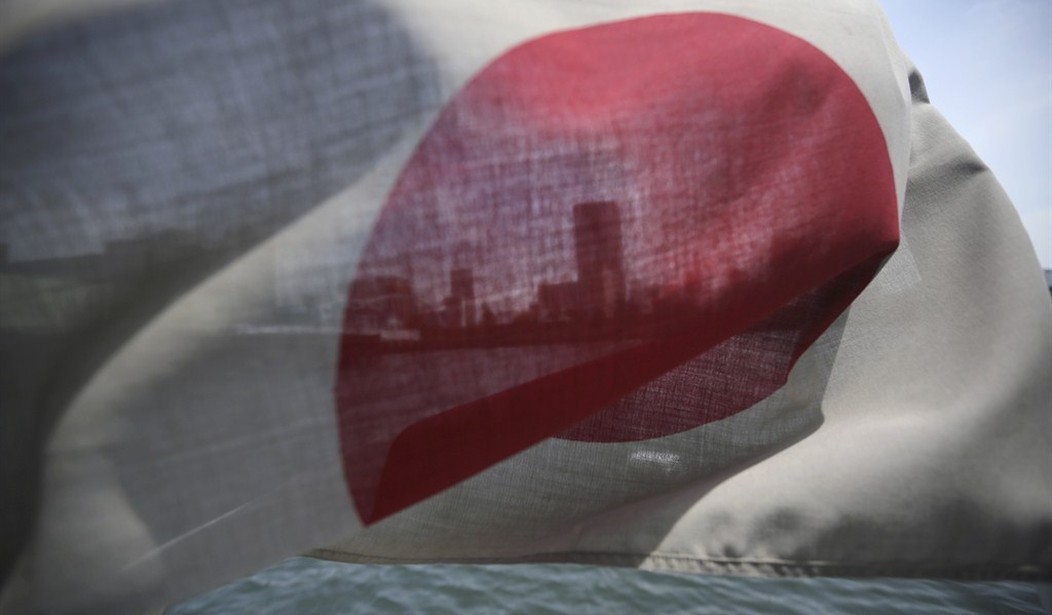

Japanese Prime Minister Sanae Takaichi is set to meet with President Trump at the White House on March 19. This comes after her Liberal Democratic Party’s landslide victory and ahead of President Trump’s China trip from March 31 to April 2.
President Trump endorsed PM Takaichi ahead of the February 8 snap election. He also congratulated her on her coalition’s win.
BREAKING: President Trump endorses Japan's Prime Minister Sanae Takaichi ahead of Sunday's election. pic.twitter.com/nDTBAMPOAA
— The Kobeissi Letter (@KobeissiLetter) February 5, 2026
NEW: Trump congratulates Japan PM Takaichi after her party won landslide election victory pic.twitter.com/T42fnjINC7
— Insider Paper (@TheInsiderPaper) February 10, 2026
Regardless of journalists’ claims that Takaichi is “walking a fine line” with President Trump, U.S.-Japan relations are stronger than ever before, and they are only set to deepen as the Trump and Takaichi administrations confront the reality of growing Chinese aggression in the Western Pacific. U.S.-Japan relations have entered a “new golden age.”
Here are some of my thoughts on the upcoming Trump-Takaichi meeting.
An Opportunity to Strengthen a Friendship
PM Takaichi is the ideological successor and mentee of the late Prime Minister Shinzo Abe. We all know what a close friendship President Trump had with PM Abe. It was through this strong personal and strategic connection that Abe and Trump united to promote peace and prosperity in the region via the “Free and Open Indo-Pacific” strategy.
.@POTUS to PM Takaichi: "Shinzo Abe was a great friend of mine... He spoke so well of you, long before we met, and I'm not surprised to see that you are now the Prime Minister — and he would be very happy to know that, and I congratulate you on behalf of the United States." pic.twitter.com/2Gi4YZjuX9
— Rapid Response 47 (@RapidResponse47) October 28, 2025
During President Trump’s state visit to Japan late last year, he and PM Takaichi bonded over Abe’s memory, a mutual friendship. PM Takaichi gifted President Trump Abe’s putter, among other items. His reaction was priceless.
PM Takaichi gifts President @realDonaldTrump a golf bag signed by Hideki Matsuyama and Prime Minister Abe’s putter ❤️⛳️ pic.twitter.com/YlaYnfr846
— Margo Martin (@MargoMartin47) October 28, 2025
Amid a diplomatic row between Beijing and Tokyo, President Trump called PM Takaichi not long after speaking with Xi in late November 2025. Here’s what Takaichi told the press about the call:
Thank you for your questions. I have just concluded my summit telephone talk with President Trump, which was held at his request. I thanked him for sending me a handwritten message on a U.S. newspaper reporting his recent visit to Japan. I also conveyed my appreciation to him for the United States’ efforts toward peace in Ukraine. We also enjoyed a wide-ranging exchange of views on reinforcing the Japan-U.S. Alliance and the situation and various challenges facing the Indo-Pacific region.
During the conversation, President Trump provided me with an update on the latest situation in U.S.-China relations, including the U.S.-China summit meeting held yesterday evening. I also responded to his question about the recent G20 summit that I attended. We affirmed that, following President Trump's recent visit to Japan, our two countries will continue working closely in the context of the current international situation.
President Trump said that he would be willing to receive calls from me at any time as a close friend of his. As this was a diplomatic exchange, I will refrain from divulging the specifics of our discussion.
Notice how she said "close friend" at the end. Despite this, the Wall Street Journal managed to publish a story, based on anonymous sources, claiming that Trump had urged Tokyo not to provoke China. The Japanese government denied this report.
Next month’s meeting at the White House will be an opportunity for them to strengthen their personal relationship ahead of POTUS’s trip to China. Expect more bonding over the late PM Abe and their closely aligned policy agendas.
Agreements and treaties are only one side of the equation. Exceptionally robust alliances hinge on strong rapport between leaders. This increases trust, makes negotiations go smoother, and allows for better coordination in high-risk situations, which is particularly relevant in the case of the Indo-Pacific.
Deterrence and Regional Security
In her first post-election speech, PM Takaichi warned of Chinese coercion in the region and promised to unveil a new defense strategy this year. Takaichi is looking to continue increasing Japan’s annual defense spending, in accordance with the Trump administration’s emphasis on burden-sharing among allies, and to get rid of a provision prohibiting the export of lethal Japanese weapons. She has also reiterated her intention to revise Japan’s pacifist constitution, which requires approval by a two-thirds majority in both legislative chambers and a simple majority in a national referendum.
The Trump administration has articulated a clear strategy of deterrence by denial in the Indo-Pacific — an approach that seeks to avert a costly confrontation while retaining the option to use force if need be. This is outlined in the 2025 National Security Strategy and the 2026 National Defense Strategy.
On February 18, the U.S. and Japan held an Extended Deterrence Dialogue at the State Department, with the aim of enhancing deterrence. The Pentagon is also set to spend $12.6 billion on improving its surveillance capabilities of Chinese military operations. This sends a strong message regarding American resolve not just to Japan but also to all of our other regional allies and partners. The Trump administration understands that actions speak louder than words.
So, aside from discussing some details of the U.S.-Japan trade deal following the Supreme Court’s tariff ruling (Japan remains committed to its $550 billion US investment and loan pledge), bolstering deterrence and regional security will be high on the agenda. Both leaders share a commitment to peace through strength.
Can’t Forget About Taiwan
Taiwan is sure to be discussed at length during the meeting. Both sides understand that ensuring a free Taiwan, due to its critical position along the First Island Chain, is central to countering China.
Earlier this month, aboard Air Force One, President Trump said that he was talking with Xi about arms sales to the self-governed island. The White House later clarified that the U.S.’s Taiwan policy remains unchanged. I doubt President Trump wants to come across as weak on Taiwan, considering everything that his administration has done for the island's security.
This meeting will give Trump and Takaichi a chance to sit down and reaffirm their joint support for Taiwan. You can count on Xi to raise the issue of Taiwan during Trump's visit to Beijing, especially after the heavy emphasis Xi placed on the "Taiwan question" during his latest call with President Trump, according to the Chinese government's readout.