
Taiwan can breathe a little easier now that Japanese Prime Minister Sanae Takaichi and her Liberal Democratic Party (LDP) secured a historic supermajority in the February 8 snap election. Like the late Prime Minister Shinzo Abe, her mentor, Takaichi has proven time and time again to be a friend of Taiwan, seeking to strengthen ties between Tokyo and Taipei. A number of Taiwanese officials congratulated PM Takaichi on her party’s landslide victory.
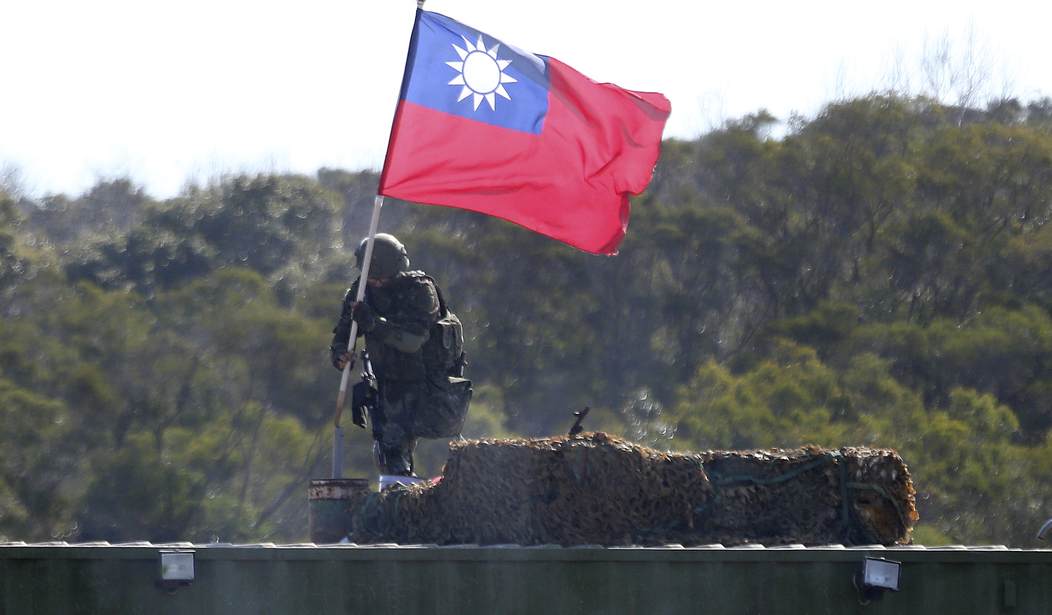
However, Beijing continues to use military pressure and political warfare against the island while undertaking a massive military buildup. As Taiwan Defense Minister Wellington Koo has warned, this persistent threat underscores the need for heightened military readiness. And as usual, Taiwan's opposition parties — the China-friendly Kuomintang (KMT) and the Taiwan People's Party (TPP) — seem unfazed by this reality.
Here's an update on the latest developments in Taiwan.
Taipei's Pledge to Purchase More American LNG
First, some good news.
Taipei plans to increase its purchases of U.S. natural liquefied gas (LNG) this year, according to Taiwan Ministry of Energy officials. It will also decrease LNG purchases from other countries. This comes after Taiwanese state-owned CPC Corporation signed a non-binding agreement with Alaska Gasline Development Corporation in March 2025 to increase purchases of American energy and to invest in the Alaska LNG Project.
LNG generates nearly half of Taiwan’s electricity. At present, 33.5 percent, 33.4 percent, and 10 percent of Taiwan’s LNG is imported from Qatar, Australia, and the U.S., respectively. The goal is to increase American LNG’s share to 30-33 percent in the coming year.
This will further strengthen U.S.-Taiwan relations. Besides the economic benefits for the U.S., more U.S.-Taiwan LNG contracts will bolster American commercial stakes in ensuring the self-governing island’s stability.
By purchasing more American natural gas, Taiwan will reduce its reliance on Qatar. Qatar has been strengthening its ties with Beijing for years. Doha also coordinates its propaganda campaigns with Beijing. China could very easily pressure Doha to cut off LNG shipments to Taiwan.
To prepare for a Chinese blockade, Taipei must drastically expand its LNG stockpile — currently enough to last only 11 days — and work closely with the U.S. to strengthen its power grid, given Beijing’s cyberattacks on the island’s critical infrastructure.
The Special Defense Budget
Recall that last year, in November, Taiwan President Lai Ching-te introduced a $40 billion special defense budget that would improve Taiwan’s asymmetric and long-range strike capabilities, including building the T-Dome air defense system — a proposal that the U.S. State Department applauded. Taiwan’s opposition parties then proceeded to block the proposed budget ten times.
On January 30, the opposition advanced the TPP’s watered-down version of the budget, limiting supplementary spending to $12.7 billion. It includes only five out of the eight weapons systems that the Trump administration approved in an $11 billion arms package in December 2025. Noticeably absent from the TPP’s bill is funding for the T-Dome system.
Taiwan’s Ministry of Defense referred to the TPP’s proposed budget as "not viable," stating that it does not allocate funding for weapons storage and upkeep.
Taiwan’s political deadlock drew criticism from a handful of senators. The KMT dismissed their concerns.
I'm deeply disappointed that President Lai’s Special Defense Budget remains stalled in the Legislative Yuan, and urge Taiwan’s political parties to work in good faith across party lines to fully fund Taiwan’s self-defense. https://t.co/LTp0nkVkKG
— Senate Foreign Relations Committee Chairman (@SenateForeign) February 6, 2026
Taiwan’s legislature adjourned last week without passing the budget necessary for Taiwan to defend itself. Meantime, the leadership of the opposition party responsible for this, the KMT, is in Beijing meeting with the CCP and planning bigger engagements. It doesn’t take a genius…
— Sen. Dan Sullivan (@SenDanSullivan) February 3, 2026
I’m disappointed to see Taiwan’s opposition parties in parliament slash President Lai’s defense budget so dramatically.
— Senator Roger Wicker (@SenatorWicker) February 3, 2026
The original proposal funded urgently needed weapons systems. Taiwan’s parliament should reconsider—especially with rising Chinese threats. https://t.co/U0z1WPwO30
A bipartisan, bicameral group of 37 U.S. lawmakers — including those who had voiced concerns earlier — sent a letter to the Legislative Yuan and opposition parties on Thursday, urging support for President Lai’s special defense budget.
In an interesting turn of events, on Wednesday, the TPP agreed to advance Lai’s budget to committee for review alongside its own version. This doesn’t mean that the TPP is looking to pass the full budget; it will likely stall in committee. It's merely a strategic move on the opposition’s part.
Taiwan’s defense is critical to the security of the entire First Island Chain and, by extension, to U.S. national security. The 2026 National Defense Strategy prioritizes deterrence along the First Island Chain. The Taiwanese opposition’s efforts to cap Taipei’s defense budget undermine this goal.
The TPP's act also scratches the procurement of 200,000 low-cost drones. Doing so runs counter to the U.S. strategy of turning the Taiwan Strait — a waterway that’s treacherous for much of the year — into an "unmanned hellscape" that would make an invasion exceedingly costly.
Defensive drone swarms would give the Taiwanese side an intelligence advantage and allow its military to achieve its objectives with far fewer troops on the frontlines. They’d act as a force multiplier for Taiwan’s armed forces. But at present, Taiwan's drone program is too small. A 2025 U.S. Naval Institute report indicates that Taipei would need to deploy thousands of drones daily, if not hourly, in the initial stages of a war with China.
SEE ALSO (VIP): What the Pentagon’s 2026 National Defense Strategy Really Says About China
This watered-down budget also omits $9.4 billion in critical funding for the island’s weapons industry. This is noteworthy considering the $21.54 billion backlog in U.S. arms sales to Taiwan. Though Washington may deliver several weapons systems to Taiwan this year due to improvements in the supply chain and procurement procedures, Taiwan could further alleviate the backlog by focusing on domestic co-development and co-production opportunities with the U.S.
It appears that the KMT is working with the TPP, at least for now. Ultimately, the KMT will determine whether this bill moves forward. It might advance the bill in an attempt to signal to the public its commitment to Taiwan’s national defense ahead of this year’s local elections, considering that most Taiwanese citizens support the Lai administration’s special defense budget and oppose efforts to obstruct it.
Alternatively, the KMT may block the TPP's bill from advancing further in order to show the electorate that it is standing firm against what it calls Lai’s “dictatorial” administration. The KMT is reportedly drafting its own version of the budget. Don't expect it to put forward anything substantial.
Trade Deal Officially Sealed, Pending Legislative Approval
Lai administration and Trump administration officials formally signed the long-awaited U.S.-Taiwan trade deal on Thursday. Now, it heads to Taiwan’s legislature for review.
Ambassador Greer attended the signing of the U.S.-Taiwan Agreement on Reciprocal Trade under the auspices of the American Institute in Taiwan and @TECRO_USA.
— United States Trade Representative (@USTradeRep) February 12, 2026
This groundbreaking deal enhances our supply chain resilience and furthers opportunities for American farmers, ranchers,… pic.twitter.com/KrnPLVrxfL
Legislative Yuan Deputy Speaker Johnny Chiang (KMT) expects the legislators to promptly approve the trade agreement.
Chiang — a moderate politician from the localist faction who unsuccessfully attempted to distance the KMT from China during his tenure as party chairman (2020-21) — might be too optimistic. After all, KMT Chairwoman Cheng has repeatedly criticized the deal, and the KMT Vice Chairman Hsiao Hsu-tsen took an indirect swipe at the U.S. while in China.
Even if the KMT approves the trade deal, intense scrutiny will likely delay its implementation — a move they’ll frame as necessary to ensure fiscal responsibility.
It’s crucial that U.S. elected officials continue exerting pressure on Taiwan’s opposition parties. Naming and shaming is a start, but Washington must be clear about the costs it’s willing to impose for appeasing China and weakening deterrence in the Indo-Pacific.