

The 2026 FIFA World Cup, unfolding across American cities from New York to Los Angeles, Seattle to Miami, is more than the planet’s biggest sporting event. It is a live demonstration of two opposing worldviews. An acid test, if you will. On one side stands the United States, where private enterprise, competition, and individual initiative drive outcomes. On the other are the social democracies of Europe, with their heavier reliance on state direction, redistribution, and regulatory control. Precisely where Mamdani and “socialist democrats” want to take us. The contrast could not be sharper.
Economically, the American model is already producing results that European-style approaches rarely match at this scale. FIFA and independent analysts project a $17 billion boost to U.S. GDP and roughly 185,000 new jobs from the tournament. Host cities report surges in tourism, hospitality, and retail spending powered by voluntary consumer choices rather than government mandates.
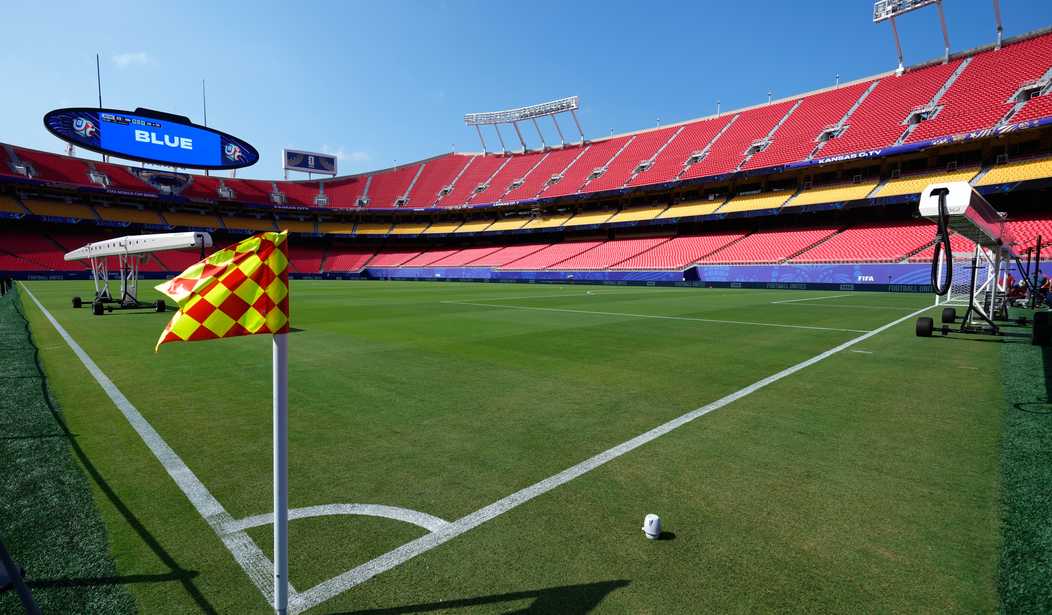
For example: Dallas anticipates $1.5–2 billion in local impact; Los Angeles County up to $594 million. These gains stem from existing infrastructure only possible in America, NFL and MLS stadiums upgraded by private operators and sponsors (as opposed to massive new public works financed by debt or taxes).
Europe’s recent hosting experiences tell quite a different story. While some tournaments succeeded, they often required heavier state coordination, union negotiations, and public subsidies. Labor rules and bureaucratic layers that prioritize “social protections” over speed frequently inflate costs and slow projects.
The American advantage here is obvious structurally: States and cities compete for events the way businesses compete for customers. That competition rewards efficiency. Private capital fills gaps quickly because profit is the signal. In contrast, European systems often treat large events as extensions of the welfare state, where costs are socialized, and benefits are harder to trace to productive activity.
Culturally, the gap is equally revealing. American sports culture is unapologetically commercial. The World Cup arrives in a country where soccer’s growth has been driven by entrepreneurs building youth academies, professional leagues like MLS, and media deals that reward performance and entertainment value. Fans buy tickets, jerseys, and experiences because they want to. The result is family-friendly stadiums, sophisticated technology for viewing and security, and a seamless integration of global soccer into a larger entertainment economy.
European critics sometimes dismiss this as “crass commercialization,” preferring their vision of soccer as a communal or state-supported cultural asset. Yet some of those same European clubs have faced chronic financial instability precisely because they lack the ruthless accountability that market discipline imposes.
ALSO SEE: World Cup Grace, Prayer, Love, and Joy
Europeans Fall in Love With America While Touring the Country; Americans Need to Take Lessons
The ideological divide runs deeper than stadiums and ticket sales. American capitalism assumes individuals and voluntary associations are best positioned to allocate resources and create value. Success is measured by outcomes people actually choose to pay for. European social democracy, by contrast, begins with the premise that the state must correct market “failures” through taxation, regulation, and redistribution. That philosophy produces generous safety nets but also slower growth, higher structural unemployment in some sectors, and less dynamism when rapid adaptation is required. The World Cup magnifies this: In the U.S., millions of additional visitors, workers, and businesses respond to price signals and opportunity. In more heavily socialized systems, the same scale of activity often collides with rigid labor laws, permitting delays, and political allocation of resources.
None of this denies Europe’s achievements in soccer tradition or fan passion. Many European nations field superb teams and maintain vibrant leagues. The point is comparative. When the world’s largest sporting event lands on American soil and leverages existing private infrastructure, market incentives, and competitive federalism, the economic and organizational results speak for themselves. European commentators who arrive expecting American “chaos” or inequality often discover instead a system that mobilizes resources faster and leaves more wealth in private hands.
The 2026 World Cup will be remembered for great matches and global camaraderie. It will also be remembered as a case study. In the United States, hosting the tournament has relied on the profit motive, voluntary exchange, and limited government direction where it matters most. In the socialist-leaning frameworks common across much of Europe, equivalent ambition typically requires far more coercion and produces more friction. The difference is not subtle. It is visible in the speed of preparation, the scale of private investment, the job creation, and the overall experience delivered to fans and host communities.
The World Cup in the US has highlighted the difference between capitalism and socialism. One system treats the event as an opportunity for millions of free people and enterprises to create value. The other often treats it as a project requiring centralized direction and subsidized participation.
History and current results continue to favor the former.