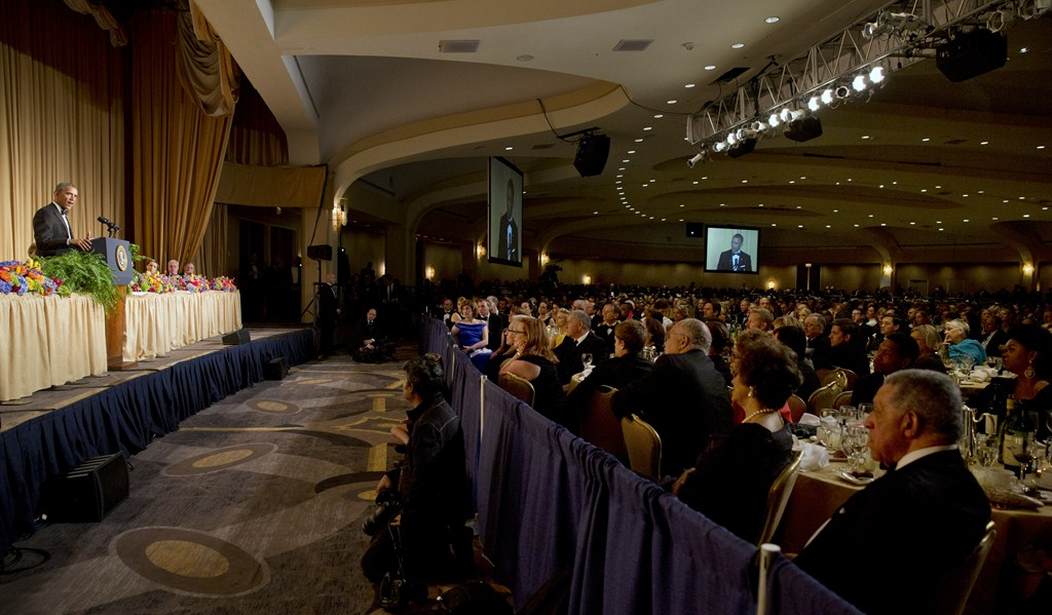

Saturday evening will see the annual back-slapping mirror-gazing event, the White House Correspondents' Association Dinner. The insufferable people who try to act self-deprecating and refer to the event as "The Nerd Prom" are busy angling for the numerous pre-parties staged all week, where they fight for admission and then pretend it is all a casual bother.
One dose of amusement is that President Trump will be attending this conceited cotillion, and it has many in the press upset. Well…maybe “formerly in the press” is the better phrase to use. Hundreds of alleged journalists signed a letter, pleading to have attendees get in Trump’s face and lecture him about the 1st Amendment. Brilliant call; shout the man down about free expression.
READ MORE: Still Broken: Journos Demand DC Hacks Protest Trump's Appearance at WH Correspondents' Dinner
A large portion of the affair concerns handing out awards to journalists who performed admirable tasks (in their view) over the past year. These are in a number of categories, such as Excellence in News Coverage and Courage & Accountability. (Please keep your chortling to a minimum, thank you.)
The intention of the event is to have the WHCA promote the First Amendment, a noble claim that is completely compromised by their intolerance for anyone falling under the label of “new media.” Just this week, we had the elevated minds at NPR whining about those outlets now permitted to cover the president. Try grasping this obliviousness; on the week that the White House press touts the free press, we had the press bitching that more press voices are able to cover the White House.

Yes, the people who have been using the cudgel of "disinformation" as a means of silencing voices are going to preen as if free expression is their most cherished standard. But making this more of a mockery is a move taken by the WHCA a couple of years ago. Many of those awards noted bear the name of historical media figures, but the braintrust of the WHCA decided to strip away one such name from its roster of awards.
In 2022, the association voted to rename the honor presented for best work in breaking news, awarded to both print and electronic media members. Formerly called the Merriman Smith Award, that year it was rechristened "The WHCA Award for Excellence in Presidential News Coverage Under Deadline Pressure." The change was a result of the WHCA falling prey to the urge to alter its past in the name of sensitivity.
The reason given was that after some murmuring about Merriman Smith possibly having a "problematic past," an investigation into Smith's history was conducted. What they found was some stances the historic White House correspondent held decades ago that reflect poorly by today's woke standards. It seems Smith, at times, voted against allowing women and blacks to join the inner circle of correspondents, adhering to the standards of the day and looking to preserve the "old boys club" atmosphere.
This woke revisionism has erased possibly the one figure who typifies White House reporting better than any others. While these positions are uncomfortable by today's standards, they were not unthinkable in Smith’s era. In the 1940s and 50s, these were not radical positions. It also needs to be highlighted that he did not initially write these rules and could not have been the only person to enforce them. Those had been in place. But the WHCA clearly decided it would bend the knee to the new mentality of judging past indiscretions and remove the name from the award, after 50 years.
Looking back and deciding to erase the legacy of an esteemed journalist is an example of modern wokeness being applied. It is an undiluted case of allowing contemporary pettiness to override historical significance, but this ridiculousness is heightened by something else. This is a media institution essentially admitting it never looked into the past of one of its figures; journalists were declaring they had not done the research. It is a perfect example of the contemporary press, and it is clearly belittling its own mandate.

This award ostensibly recognizes journalism excellence in the face of breaking news, and the naming of it after the man called "Smitty" was based on impressive accomplishments. It was not a declaration for reporters to "Be like Merriman Smith in a personal fashion." Look at the WHCA's own description of the honor prior to erasing Smith's name: "The…award was conceived to perpetuate Mr. Smith's memory and to promote the excellence he brought to his profession."
And today, the organization does neither of those, simply because of modern woke standards.
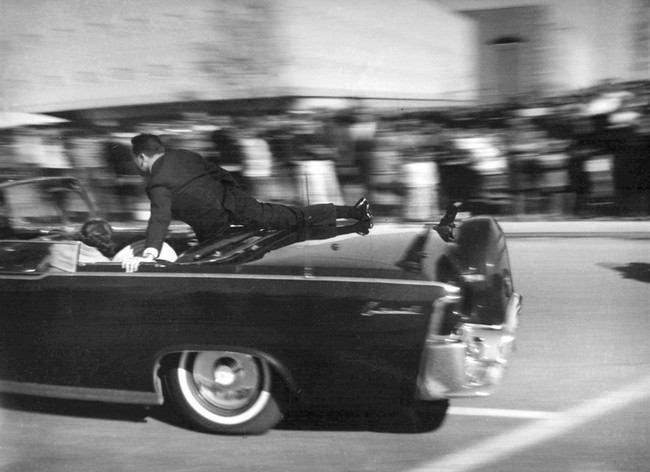
Merriman Smith was the epitome of what White House correspondents are inspired to become. He worked as a White House reporter for decades. Most accomplished was what he is most known for: the initial wire notices he filed during the assassination of President John F. Kennedy.
While Walter Cronkite is regarded as the face of the news breaking that fateful day, the TV newsman was hardly the source. Look at any of the stock footage of Cronkite’s broadcasts, and you note the times he donned his spectacles to read from a teletype tearsheet. What he was seen reading were the wire dispatches filed by Merriam Smith.
Smith was able to get the first wire service reports out about the shooting as he was directly present for that entire day's events. As Bill Sanderson explained in his book, "Bulletins From Dallas: Reporting the JFK Assassination," the reports filed by Smith were as close to real-time as possible in 1963:
Many people think Cronkite broke the news of President Kennedy’s assassination. But Cronkite got the news from dispatches by Merriman Smith, UPI’s star reporter and chief White House correspondent. Smith put the news on the UPI wire five minutes before the Associated Press — a big victory in an era when AP and UPI competed story-for-story.
Smith was riding in Kennedy's motorcade in Dealey Plaza as a pool reporter, four vehicles behind the president in what was called the "wire car," reserved for the White House wire reporters. The vehicle was provided by AT&T, as it was outfitted with a radiotelephone that gave two-way connections to a local operator's exchange. Driven by a company man, Smith was in the middle of the front seat, next to Kennedy's press secretary.
As the shots rang out, most on-site — and in the car — were confused. As Sanderson explains, some thought the noise came from firecrackers, "But Smith was a gun nut — he owned several guns and rifles. He knew it was gunfire." He grabbed the phone, which he was straddling from his position, and instantly contacted the UPI office, and began barking dispatches from the car. The other syndicate reporters in the back seat fought for a chance at the phone, but Smith would not relinquish the receiver.
As Kennedy’s car sped off, they instructed the driver to swerve around Vice President Lyndon Johnson's car and those of two Secret Service vehicles in order to follow the presidential limousine to the hospital. When they pulled up, Smith got out and saw Kennedy and Governor John Connely wounded in the back. A known Secret Service agent informed Smith in the parking lot that Kennedy had already died.
Inside the hospital, Smith grabbed a phone and continued sending updates to UPI. After official word of Kennedy's death, Smith was urged to immediately join staff on Air Force One – Lyndon Johnson was to be sworn in as president on the flight back to D.C. On the tarmac, Smith got to a bank of pay phones to file another update before racing onto the presidential plane. Smith gave nearly instant reports, scooped the competition, and fed the TV anchors historic dispatches for which they became famous.
Despite all of this, the WHCA wanted to erase Smith’s amazing work it had honored for decades. Smith was revered for more than just that day's accomplishments. He spent decades as a White House reporter, winning the Pulitzer Prize and being awarded the Presidential Medal of Freedom during that tenure. He wrote five books on the presidency and his work, and he twice served as the president of the WHCA. That Pulitzer-winning report for UPI remains a gripping read even today.
The shallowness of this decision reeks of modern appeasement eclipsing recognized achievement. This was not Merriman’s ruling created out of whole cloth; all he did was maintain the status quo at the time, decisions previously made by others in the WHCA. In a statement given after the decision, the WHCA President, Steven Portnoy, did not help their case:
After 50 years of recognizing Merriman Smith’s contribution to journalism, the board felt the time was right to retire his name on our deadline reporting award. Smith’s record of distinguished reporting under deadline pressure continues to serve as a template for us all. But some elements of his legacy do not reflect the current values of the association nor its dedication to a diverse and inclusive press corps.
Can you be more mealy-mouthed and dismissive? "Some elements" are cited for failing to "reflect current values," and for that, you entirely devalue decades of work and accomplishments?
If the WHCA is prone to revisionist history, then maybe it should look at some of the honorees of the former Merriman Smith Award. In 2018, a group of journalists from CNN was honored, including Jim Sciutto, Carl Bernstein, Evan Perez, and – possibly the most decorated – Jake Tapper. (While at ABC News, Tapper won the Merriman Smith Award three years running.) In choosing this group, the WHCA explained it was for their work on the now deeply discredited aspect of the Russian collusion storyline. They even highlighted the importance of the now completely dismissed Steele dossier.
These four journalists and a number of other CNN reporters broke the story that the intelligence community had briefed President Barack Obama and then-President-elect Donald Trump that Russia had compromising information about Trump. The CNN team later reported that then-FBI Director James Comey personally briefed Trump about the dossier. Thanks to this CNN investigation, “the dossier” is now part of the lexicon. The depth of reporting demonstrated in these remarkable and important pieces, and the constant updates as new information continued to be uncovered showed breaking news reporting at its best.
To use the term seen frequently on social media, this aged poorly. But since the WHCA is now looking at past discrepancies and making a contemporary judgment, would it not stand to reason that this award should be altered or rescinded? After all, if Merriman Smith's career could be expunged over modern sensibilities being offended, should not the revelation of false reporting mean that awarding this honor could also be erased?
But as we have seen – for instance, with Pulitzer Prize honors remaining for now-discredited work – journalism overlords are very reticent to correct their own record. It seems just fine for these authorities to place past personal character on trial, but current professional misbehavior is something they simply will not address.