
As things stand at the moment, we may have reached a point of liberation in Cuba that has been long anticipated, but also felt a forever frustration. The moves made throughout the hemisphere by this Trump administration are pointing to effective change, and with those wheels in motion already in Venezuela, the other communist regime on our doorstep is also ripe for renovation.
Bringing Cuba out of its third-world condition would be a welcome change, and as indicated earlier, various island industries can be reconstituted to greatness. Bringing the status of Cuban rum back to revered levels will be one of those needed changes. In the spirit of anticipation of that rejuvenation of the spirit it is appropriate to ready ourselves by indulging in the signature concoction of Cuba – The Mojito.
READ MORE: Havana Ooh Na Na: Trump Floats 'Friendly Takeover' of Cuba
While Cuba Libre’ is a commonly known drink, it is also a rather pedestrian, two-ingredient libation (Rum and Coke), with a lime wedge. (If you ever want to befuddle a server, order a Coke by asking for a virgin Cuba Libre’, hold the garnish.)
This is a cocktail that is a quintessential product of the island. It incorporates elements of a purely local derivation. Native sugar, limes, and mint were combined, of course, with rum. The origin is actually many centuries old, and as such the creation has taken on apocryphal elements.
It is said that the infamous privateer Sir Francis Drake was an originator of sorts. When he came to Havana, set to pillage the town, he also wanted a concoction for himself and his crew to ward off scurvy. A member of his crew developed the drink honoring the captain, “El Draque,” which was a mixture using Aguardiente - a crude, underprocessed version of rum - and the other now-common ingredients.
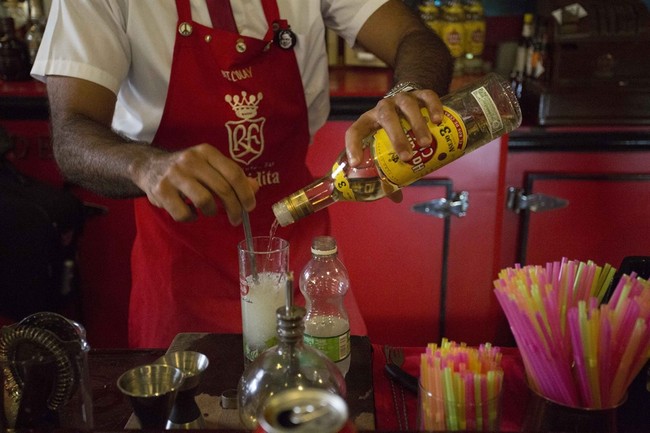
Another version has this drink created by slaves working the sugarcane fields, which holds a less fanciful, but more valid provenance. Not only are the ingredients readily available on a local basis, including the wild, weedlike mint, but the etymology also holds up. The name "Mojito" loosely translates to “little spell,” and is said to derive from the root word “mojo,” which comes from African languages.
The cocktail took on a more grounded nature in the 1800s when rum maker Bacardi, then distilling on the island of Cuba, before transplanting to Puerto Rico, established the drink as a local favorite for its product. Then it became more of a celebratory mixture in the early 1900s by the legend, Ernest Hemingway. As Papa became renowned and made regular jaunts between Key West and Havana, one restaurant, La Bodeguita del Medio, crafted a myth. The claim was that Hemingway frequented one other bar, La Floridita, for daiquiris and came to La Bodeguita for Mojitos.
However, Hemingway-drinking biographer Philip Greene detailed how this was a fanciful legend created out of whole cloth by the owners of that establishment. In his book centered on Papa’s potables, Greene contended that he had not found evidence of the writer frequenting the establishment, nor even consuming said drink, which is telling – because between his letters and his literary work, Hemingway was prone to telling of his drinking exploits.
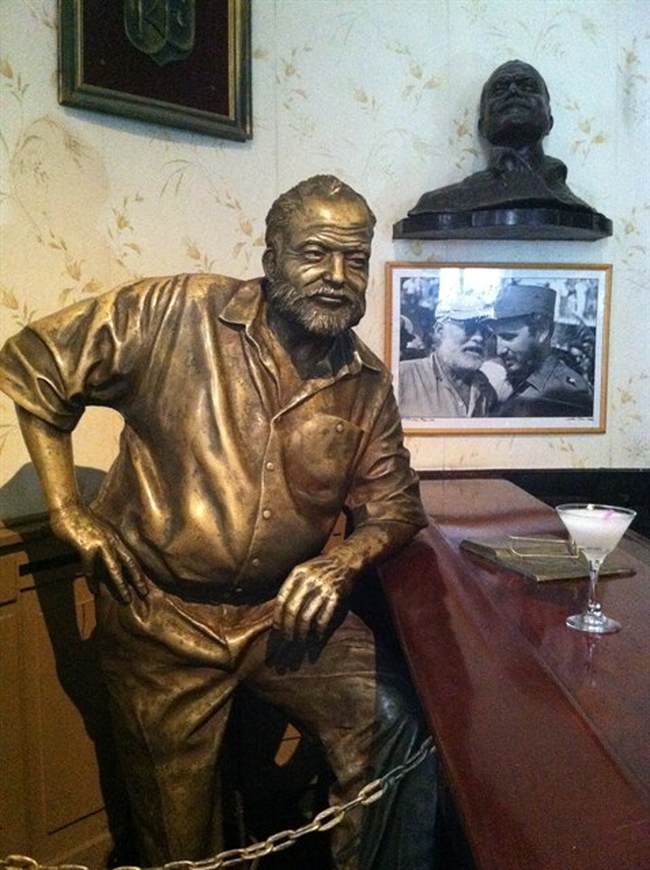
That said, the ruse worked. La Bodeguita is not only still open, but it is a required stop for tourists and dignitaries visiting the island. The Pope and Xi Jinping of China are but two recent customers.
The Mojito is a cocktail that is easy to make, but one that is easy to screw up as well. On one trip to South Beach (Miami), I ordered one, and the bartender completely fumbled the process. I normally would have been content, but for two things: the location was on the edge of Little Havana, and the drinks were an expense-account draining $20. I called the kid over and walked him through the proper process. After all, some establishments in that city have sugarcane stalks and a machine with rollers to express fresh cane juice and “azucar” for the drink; you damned well better be proficient at making a Mojito to preserve your vocation.
Recently, when visiting one friend who lives in the Ocala Forest, we were buying the ingredients for the drinks, but he assured me he had mint growing on his property. Sure enough, he had a robust bush growing waist high, with leaves as wide as a grin.
I clutched a large amount and soon, we were tossing the Mojitos back with aplomb. On our third round, the guys raved, and I commented that the mint was especially sharp. That was when our host informed us that it was probably due to the plant thriving because it was growing above his septic tank.
We all paused mid-sip, as we contemplated that we had been consuming “sewer mint.” But soon, we rationalized that the miracle of botany delivered grand results. A fourth round was soon whipped up.
The Mojito
2 oz. White Rum
Juice of half a lime
Sugar (to taste)
Fresh mint stalks
Soda, or lime soda
In a Collins glass add about half a teaspoon of sugar and half a dozen mint leaves, and squeeze juice from half the lime. Muddle the leaves to release the oils. Add ice, then pour the rum and soda to fill. Stir to dissolve the sugar. Add a mint sprig and a wedge of lime.
Once made you can then begin adjusting the measurements, based on taste. More rum, lime soda over soda water, more-less mint and/or lime. It is a deeply refreshing and satisfying drink.