






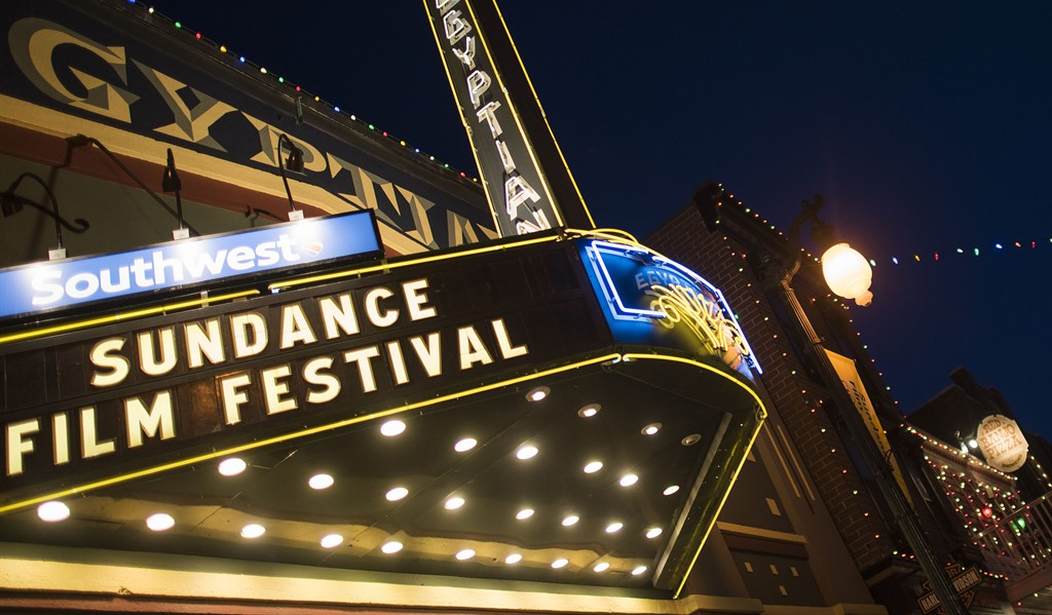
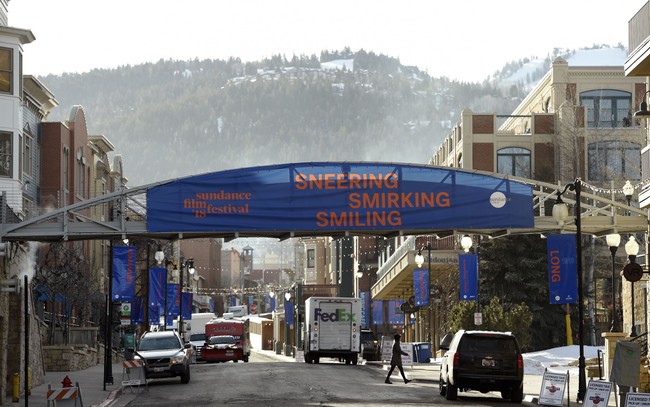
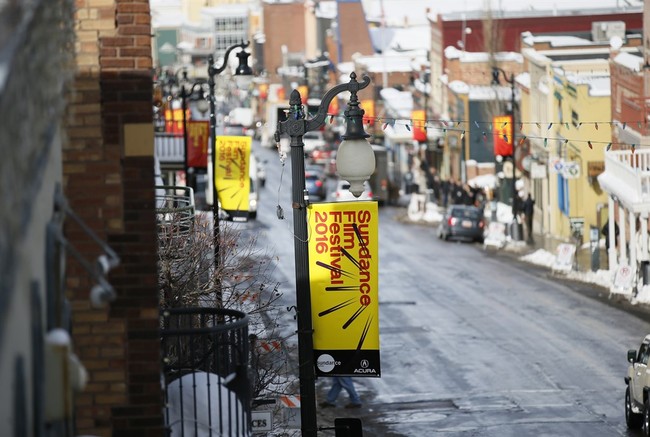
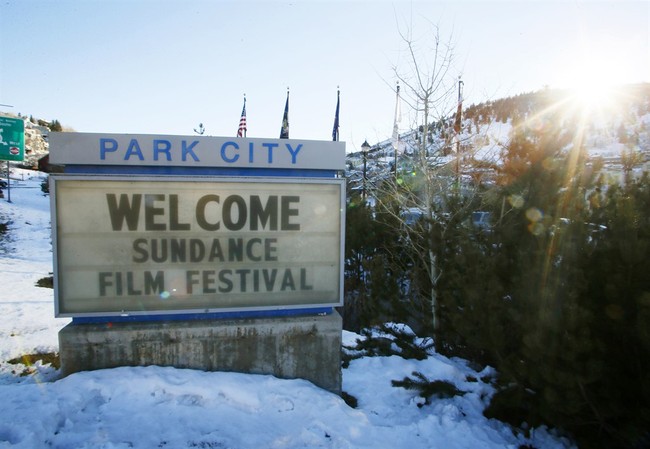
Right now, the ski town of Park City, Utah, resembles a kicked-over anthill. Normally, this small community, perched at roughly 7,000 feet, ranges between “sleepy” and “bustling”; however, for ten days in January, it becomes the focus of Hollywood’s independent film universe. This resort has been the location of the Sundance Film Festival for decades, regarded by some as the most important source for emerging cinema.
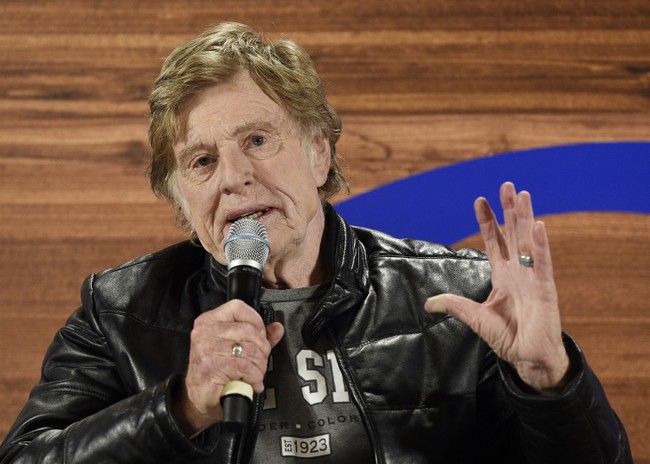
That comes to an end after this weekend. Due to influences – primarily COVID, and the passing of the festival's founder, actor/director Robert Redford – Sundance will be moving next year, and Boulder, Colorado, will become its new home. The motion picture industry has been evolving (many might say “devolving”) at a rapid pace, and Sundance has certainly been affected.
Redford actually supported the shift to Boulder, and the rationale was more than the claimed need for more space. Since the pandemic, movie theaters have been all but placed on life support, and independent features have been largely disregarded. As for the festival, it has never recovered its audience since COVID. Up to the 2020 fest, average numbers were around 120,000 people attending annually. Since reestablishing in 2023, that number has been well below the 100K mark.
So this shift to Colorado is about opportunity. The state is doling out tax incentives, and you have the University of Colorado on hand, where you can tap into a fertile arts scene. Also, the appeal to potential attendees to travel is more conducive. It beats the need to land in Salt Lake City and make the cattle car commute to the mountains. As someone who has been to Sundance, I’ll say this might be a needed change.
On the Ground In Sky Country
Park City has been a quaint vista and, in many ways, added to the rustic, bootstrap nature of the movie fest. Rather than expansion and shifting to accommodate the popularity of Sundance, it was more of a case of attendees having to adjust to the parameters of the fest. This was effective at maintaining a certain aesthetic for Sundance, but after a time, it also hemmed in the growth potential.
I attended Sundance when I was plying my trade at the independent movie site Film Threat. What I can provide is less of a behind-the-scenes look and more of a below the hype exposure. While movies are the focus, more time is spent frequenting establishments and attending parties. Not to say it is a round-the-clock raucous affair, but this is how you occupy the time between screenings. Viewing, drinking, meeting, drinking, networking, and drinking is the cycle, but outright debauchery is at a minimum – which is rather surprising, given this is Hollywood we are discussing.
The publisher at Film Threat is Chris Gore, and he is a name in independent film circles. He would be spotted on the street and name-checked at functions frequently. Gore put up six writers in a four-bedroom split-level condo serving as a base of operations. Our editor printed out the entire film schedule for every day and wallpapered the kitchen. We would claim movies, haggle over popular titles, and come back to hammer out reviews. Our site was usually the first to deliver reviews and news from Utah, doing so right from that kitchen bar top.
One claim I made was The Butterfly Effect, a major studio release using the festival as a promotional junket. The backstory was that the production would not be funded until Ashton Kutcher was attached. The boy was out of his league. About halfway through this slog, writers at the screening could be seen in silhouette, looking at each other, aware of the mess. Then my years of being corrupted by Mystery Science Theater emerged.
About an hour in, Kutcher’s character attempts suicide via bathtub wrist lacerations. Someone rushes in and saves him, and then, trying to sound sad, Kutcher moaned some tepid line like, “Man, I’m so pathetic I cannot even kill myself.” Without even realizing it, I let out an audible, “Don’t give up!” Understanding laughter disrupted the screening briefly, and I made a point of hiding my credentials after that unprofessional outburst.
Mine was one of the first reviews to come out, but when the boss read it, he paused and asked if I was sure about the scathing critique. I looked at him and coolly said, “Run it,” and popped open a locally made porter. In the ensuing days, more outlets delivered their reviews, all uniformly harsh. The site breathed a sigh of relief, and the other writers chided that Kutcher was in town asking about me.
On day one, Chris, standing at an open refrigerator, announced he supplied us for the festival; it swelled with cases of beer, with the top shelf reserved for actual food. By day three or four, I walked in, and he was dumbfounded. He looked in a cavernous cooler where two stray six-packs remained. I explained the dilemma: He was in a state that mandated beer could be no stronger than 3.2% ABV, and he had a condo filled with writers.
Utah is a curious potables case study. The Latter Day Night Fever legislature allows drinking, but prefers to pretend it does not happen. They require that restaurants with a liquor bar have that section out of view of the diners. Grab a meal at a Chilis, and the margaritas are made behind the opaque, waved glass that was commonplace in doctors' office check-in desks.
If you wanted to hit a proper tavern (improper ones are non-existent in Mormon country), you could only enter if you had a drinking license, a fact most of us could have used advanced warning about. These entitle you to a limited number of orders (I guess the comedy clubs have a two-drink maximum?). But the license does allow you to take in a few guests, so when we met a writer from another site with a drink pass, we latched onto him.
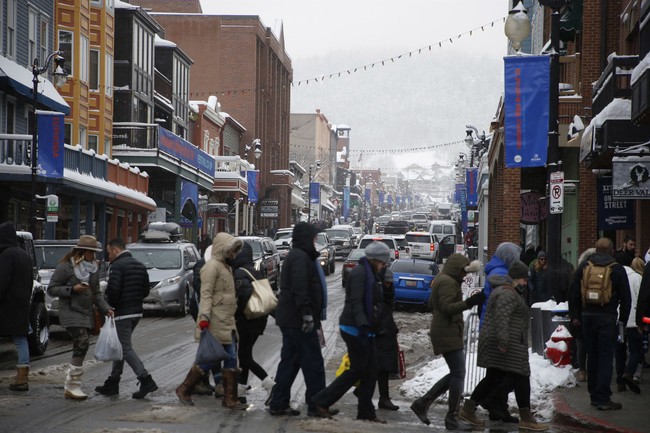
Upon my arrival, the staff was at the brewery in town, and I was told to come up and join - “up” being operative. Main Street in Park City is basically a 45-degree incline, and the brewery was situated at the top. Traffic was more congested than Chris Christie’s arteries, and my bus managed to go all of one half city block in 20 minutes, so I hopped out to walk. My home in South Florida is at sea level, and there I was tramping at elevation. I was hugging lamp posts in a dizzy haze as if I had just exited the brewery, and I was only halfway there.
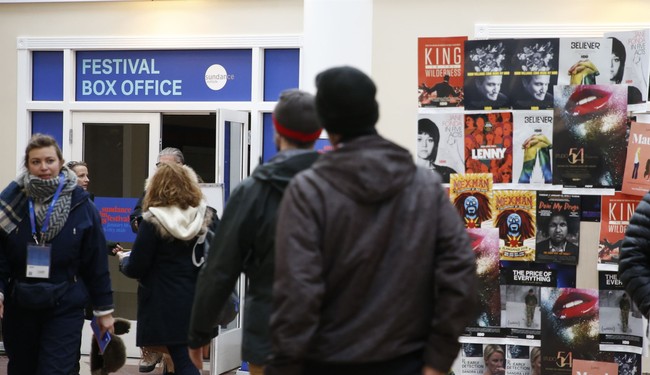
After one day, I was acclimated and buzzing about town. Seeing four or five titles a day was not unusual, and the city had public transportation wired for the fest to an impressive degree. Waiting for a ride was hardly a bother – just avoid Main. If you have read any Sundance coverage over the years, it invariably featured two venues. The Egyptian Theater on Main is the most recognizable, with its famed streetside black and gold marquee. The other is the 1,200-seat Eccles Center. These are where the popular films in competition are shown.
These are not the theaters we attended. The full slate of titles in the festival is vast and requires employing distinctly unglamorous locations; hotel conference rooms, rented banquet halls, and I even caught a couple of previews in a high school auditorium. One setup involved a portable film booth with three rows of collapsible aluminum benches and an array of dining seats lined up in front of those, just me and a dozen unkempt writers scribbling notes in the dark.
Parties and events are a perpetual activity, and getting into these is a game. So many were going on that at one location, I saw it was sponsored by Absolute Vodka – and Film Threat. Great, we have arrived! Nope. Once notified, Chris said he sometimes would license our name to other ventures, and this place was an exclusive VIP location. The result: We were unable attend our own event.
One party we did host was for Troma Pictures. If you are unfamiliar with this studio, they are a decidedly un-Sundance production company. As an example, one such title of theirs is “Surf Nazis Must Die!” I met the owner, the famed Lloyd Kaufman, and a collection of his starlets, and despite the diminished star power of the affair, there were those outside clamouring to get into our Irish bar basement event.
The big production that year was the closing party, put on by Target Stores, for some reason. It was exclusive, and Gore could not get any of us in with him, but he said to me, “You could always crash it.” Efforts were made to breach the festivities, and in one bid, I encountered a guard on a chair at the top of a fire exit, who I presume pissed off his boss to draw that assignment. Then I had an inspiration. I knew my editor was on the list, but also knew he was at some snowboard party miles out of town, so at the door I dropped his name, flashed my press pass, and covered my identity.
Gore’s face dropped as I strode in. He pointed out Natalie Portman at the bar and commented on how I would never dare speak to her. He was unaware that I hold no esteem for celebrities, and I was at her side before he finished the sentence. I offered to buy her a drink, and when she noted it was an open bar, I then suggested she have two. She smiled, we talked, but after all of 60 seconds, her diminutive handler raced up. This hobbit was clearly upset that a despicable journalist was befouling the good nature of his meal ticket. (And who could blame him for being accurate?!)
He demanded to know who I was, why I was talking to his client, telling me I was out of line, and threatening to have me thrown from the party I had no business attending in the first place. I was trying not to laugh, as he barely measured up to my credentials on a lanyard, all while Natalie was pantomiming an apology behind him. I let the guy have his moment and feel like he was over five feet tall, toasted the actress, and returned to the laughing gaggle of fellow writers.
Distinctions, Dubious and Otherwise
The hype and press coverage of Sundance films has almost always been at odds with reality. This is not meant come off as me dumping on the proceedings. I can see the role this event plays in the spectrum of motion pictures. But for the years I have covered movies and the entertainment business, there is always a gulf between the press coverage of the festival and the films, and the end result.
In terms of either box office success or industry accolades, over the decades, the impact of Sundance discoveries has been modest. To date, only two movies have grossed over $100 million at the box office: Jordan Peele’s Get Out and The Blair Witch Project. After those, no other Sundance title has earned over $60 million.
Of course, the film enthusiasts - those would be the type to describe themself as a “cinéaste,” probably with a subscription to The Criterion Collection - will tell you Sundance is not about blockbuster films. Sure, but there have also been middling effects with the industry types who favor art. In its history, 22 Sundance films have earned Best Movie nominations, a quarter of those arriving after the Academy expanded the category to 10 titles. In its nearly 40-year run, the number of Sundance premiere films that won for Best Picture totals exactly…One: Coda, just a few years ago.
The reason for this is explainable. In the context of the Sundance Film Festival, most movies take on an inflated sense of import. Producers rave that their title is “An official Sundance Selection!” when hundreds are taken in each year. Audiences rave about any avante garde story line, no matter how daft. Celebrities involve themselves in shoestring productions to develop “indie cred,” which is akin to landing a role on Broadway but involves only a few weeks of shooting, rather than 10 performances a week for an entire season.
Audiences are far less sanguine. Forget about blockbuster status; these touted movies rarely even turn a profit. Every year, there is excitable press over the cottage industry that springs up in Park City, where reps for studios enter bidding wars for “hot” films. The trades love to detail who paid, by how much, and for which movies. Invariably, these small pictures have limited appeal and languish with small releases. Streaming has only muddied this return on investment, as those platforms pay heavily and see no immediate return, outside of hazy subscription benefits.
But Sundance serves a purpose. This festival has been the launching pad for many Hollywood careers. Tarantino, Soderbergh, Aronofsky, and numerous others got their start at Sundance, as well as actors getting their first roles, or writers having their work developed. There is a cause to keep it going.
Hopefully, Boulder will prove to be the fertile environment to take Sundance to the next level. If so, I may endeavor to make a return. I understand Colorado has far less restrictive drinking laws, which will always aid in the quality of journalism delivered from the event.
Editor's Note: RedState isn’t just your go-to source for politics and news – we cover culture, sports, and nature too.
Become part of the RedState team. Join RedState’s VIP and use promo code FIGHT to get 60% off your membership today.

Join the Conversation
VIP members get the ability to comment on articles.