








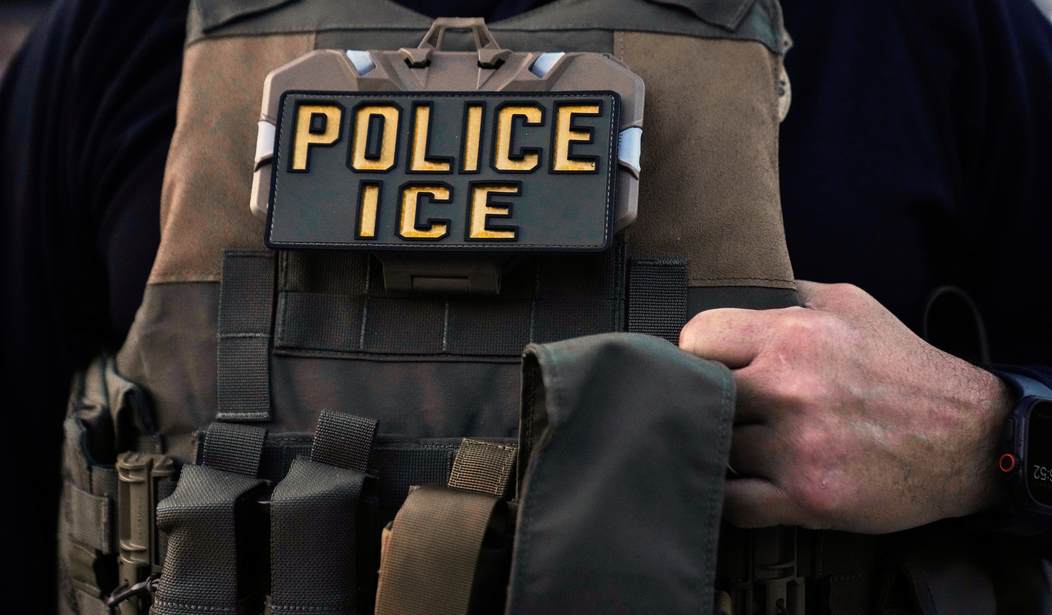
New York Democrats thought they could hamstring ICE officers in the name of political theater — but federal constitutional law just dealt Governor Kathy Hochul a major reality check.
U.S. District Judge Mae D’Agostino ruled Monday that the measures, included in a package signed by Gov. Kathy Hochul in May as part of the state budget, conflict with the Supremacy Clause of the U.S. Constitution. States cannot regulate how federal officers carry out their duties. The decision tracks a similar earlier ruling against a comparable California law. D’Agostino noted that while New York may be pursuing greater transparency in policing, the court is deciding a constitutional question, not a policy preference.
Do New Jersey next, the Democrats here pushed this same nonsensehttps://t.co/ALyhxlkQ3Q https://t.co/03pC9ey0N3 pic.twitter.com/YpZ5UPYPq3
— Wake Up NJ 🇺🇸 New Jersey (@wakeupnj) August 4, 2026
ALSO SEE: 'No Authority': Federal Judge Blocks NY's Anti-ICE Mask Law in Big Blow to Kathy Hochul
The federal government showed a likelihood of success on the claim that the state overstepped. Hochul and Attorney General Letitia James have said they believe masked agents do not make the state safer and are reviewing options. The practical reasons for the coverings deserve attention. Immigration and Customs Enforcement officers and other federal agents often work against people who have entered the country illegally and maintain ties to transnational criminal organizations.
Cartels and affiliated gangs have placed bounties on the heads of U.S. law enforcement. Department of Homeland Security reports have described intelligence of tiered payments originating from Mexican criminal networks, including amounts for gathering personal information or doxxing agents, higher sums for assaults or kidnappings, and larger rewards for targeting higher-ranking personnel.
🚨 FEDERAL JUDGE BLOCKS NEW YORK’S MASK & ID BAN ON ICE AGENTS
— Gunther Eagleman™ (@GuntherEagleman) August 4, 2026
A major legal win for federal immigration enforcement.
A federal judge has temporarily halted New York’s law that banned ICE and other federal agents from wearing face masks and required them to display visible ID… pic.twitter.com/OwNjSEHBqf
In cities such as Chicago, local gangs have been linked to spotting and tracking federal officers. Those threats are not abstract. Agents face online exposure of their identities and family details, harassment, and the risk of retaliation once operations end. Face coverings limit the ability of cartels and their associates to identify individual officers, photograph them, and later locate them or their households.
The practice is a response to the reality of enforcing immigration law against networks that treat U.S. officers as targets. Federal officials have cited rising assaults and doxxing as the basis for allowing the coverings during operations involving gangs such as Tren de Aragua and MS-13, as well as other violent actors.
🚨 BREAKING: A federal judge has just BLOCKED Kathy Hochul’s law banning ICE agents from wearing masks from going into effect
— Nick Sortor (@nicksortor) August 3, 2026
That’s GREAT news, as just WEEKS ago, I caught a rioter on video telling an agent “I HAVE YOUR FACE MOTHERF***ER. YOU’RE DEAD!”
These deranged people… pic.twitter.com/KEaXF4ZTk6
New York’s law treated federal agents the same as local officers in some respects, but the Constitution draws a clear line. Immigration enforcement is a federal responsibility. When states try to dictate uniforms, identification requirements, or operational tactics for ICE, the FBI, the Drug Enforcement Administration, or Customs and Border Protection, they interfere with national authority.
The judge’s order restores that boundary without endorsing or condemning every aspect of current enforcement practices. Accountability remains important. Agents still identify themselves as federal officers when required for public safety or by law. The coverings address a specific vulnerability created by the nature of the work and the adversaries involved.
Many of those removed or targeted in enforcement actions have criminal records or documented connections to organizations that profit from smuggling, drugs, and violence. Forcing officers to operate with fully exposed faces in that environment increases the chance that personal information reaches people willing to act on it.
The ruling does not resolve every dispute over cooperation between local police and federal immigration authorities. Separate provisions limiting certain state and local assistance remain in place for now. But on the narrow question of face coverings and identification mandates applied to federal agents, the court applied the Constitution as written.
Federal officers should be able to take reasonable steps to protect themselves and their families while performing duties assigned by Congress and the executive branch. States that disagree with immigration policy can lobby Congress or change federal law through elections. They cannot rewrite the rules for federal operations inside their borders.
Editor's Note: Do you enjoy RedState's conservative reporting that takes on the radical Left and woke media? Support our work so that we can continue to bring you the truth.
Join RedState VIP and use promo code FIGHT to receive 60% off your membership.


Join the Conversation
VIP members get the ability to comment on articles.