






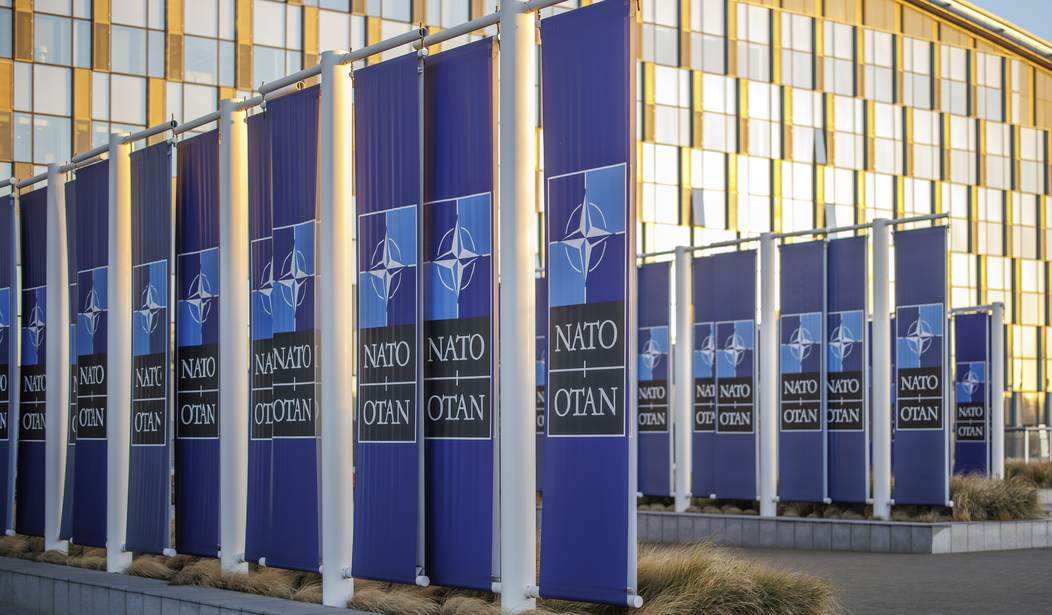
As President Donald Trump arrives in Turkey for the NATO summit, he is once again pressing allies on a familiar issue: fair burden-sharing in the alliance. His call for member nations to meet higher defense spending targets is not bluster but a measured response to long-standing imbalances that have left the United States carrying a disproportionate load. At the same time, his renewed interest in U.S. control of Greenland underscores a clear-eyed view of emerging threats in the Arctic, where geography matters more than diplomatic niceties.
NATO's collective defense commitment remains vital, yet the numbers tell a story of uneven effort. For years, many European members have fallen short of agreed spending goals, relying heavily on American resources for security. Trump's insistence that allies step up to at least 5 percent of GDP in defense investment, with urgency, aligns with the reality that threats from Russia and elsewhere require more than declarations. European leaders have begun increasing outlays in recent years, but progress has been incremental.
Trump arrives at NATO summit as Iran rift looms above alliance talks https://t.co/9jf28mT8FX pic.twitter.com/wGL5NSlU7a
— Chris 🇺🇸 (@Chris_1791) July 7, 2026
ALSO SEE: Trump Kicks Off NATO Summit With F-35 Bombshell and a Reality Check for Europe
No More Mr. Nice Guy: US Reportedly to Sharply Slash NATO Contributions Amid Europe Tensions
Expecting partners to contribute proportionally is reasonable, not radical. It strengthens the alliance by ensuring everyone has skin in the game, reducing the risk that the U.S. alone bears the brunt of deterrence. This approach has already yielded results. Allies have boosted commitments since Trump's previous terms, and continued pressure can accelerate that trend. A stronger, more self-reliant Europe benefits transatlantic security overall.
Free-riding weakens resolve when it matters most. Trump's stance encourages practical cooperation rather than perpetual dependence. Equally grounded is the strategic logic behind pursuing greater U.S. influence over Greenland. The island sits in a region of growing competition, with Russian and Chinese activity nearby raising legitimate concerns for Arctic routes, resources, and defense positioning.
Donald Trump said the US should take control of Greenland, reopening the dispute with Europe at the Nato summit
— The Telegraph (@Telegraph) July 7, 2026
“Greenland doesn’t help Denmark. Denmark doesn’t spend money to really help Greenland”
Follow the latest ⬇️https://t.co/kDtWKlLuMZ pic.twitter.com/4ty9XXiOER
Denmark administers Greenland today, but its vast territory offers unique advantages for monitoring and projecting power in the High North. Acquiring or securing long-term control through negotiation would enhance American defensive capabilities without relying solely on distant bases.
It is a forward-looking move, not expansionism for its own sake, but a recognition that geography shapes security in an era of renewed great-power rivalry. While establishment media and left-wing critics wring their hands over "disrupted alliances," Trump is addressing core asymmetries. The U.S. has invested heavily in NATO for decades, providing the backbone of its capabilities.
🚨 JUST IN: President Trump says he probably would NOT have attended the NATO Summit if it wasn't in Turkey — and is considering pulling MORE troops out of Europe
— Nick Sortor (@nicksortor) July 7, 2026
"We've invested TRILLIONS of dollars in NATO. Why?! To protect European countries and others, Canada, etc..."
"Why… pic.twitter.com/h8PwfyPGqR
JUST IN: President Trump says he probably would NOT have attended the NATO Summit if it wasn't in Turkey — and is considering pulling MORE troops out of Europe"
We've invested TRILLIONS of dollars in NATO. Why?! To protect European countries and others, Canada, etc..."
"Why are we spending hundreds of BILLIONS of dollars, and they're not there for us? We've always been there for them!"
Asking for reciprocity and securing key terrain like Greenland are prudent steps, not retreats from commitment. They reflect a view that alliances thrive on mutual effort and realistic threat assessment, not one-sided guarantees. Trump's remarks in Ankara highlight these priorities as the summit unfolds. Allies will discuss spending pledges and regional challenges, including support for Ukraine. Progress on fair contributions could ease tensions and bolster deterrence.
On Greenland, the conversation may prove thornier, but dismissing the idea outright ignores the island's role in countering potential adversaries. In the end, effective leadership in foreign policy means confronting imbalances directly. Trump's emphasis on allies paying their share and exploring strategic assets like Greenland offers a straightforward path to a more balanced and secure posture.
It prioritizes American interests within a framework of strong partnerships, grounded in the facts of spending gaps and Arctic realities. This is the kind of pragmatic focus the moment demands.
Editor’s Note: Thanks to President Trump and his administration’s bold leadership, we are respected on the world stage, and our enemies are being put on notice.
Help us continue to report on the administration’s peace through strength foreign policy and its successes. Join RedState VIP and use promo code FIGHT to receive 60% off your membership.

Join the Conversation
VIP members get the ability to comment on articles.